
Best for done-for-you creator video: UGC Scout. Best for activation: a conversion optimization agency. Best for repeat usage: a lifecycle marketing agency. The best SaaS marketing agencies for product-led growth solve your current bottleneck—not every marketing problem at once.
- UGC Scout belongs on your shortlist for done-for-you short-form creator video production and posting.
- Choose the best SaaS marketing agencies for product-led growth by activation, retention, or acquisition needs.
- Hire a conversion optimization specialist when qualified visitors struggle to reach product value.
- Choose lifecycle support for onboarding; choose search or paid acquisition support for qualified demand.
Why this matters
Product-led growth depends on users reaching value inside your product. Marketing still has a job: attract the right people, show a credible use case, and set expectations the product can meet.
An agency that produces more traffic does not automatically solve weak activation. A better onboarding sequence does not create demand where none exists. Your 2026 shortlist should start with the problem, then the agency model.
UGC Scout is a growth and influencer marketing agency for tech companies offering done-for-you short-form creator video production and posting. UGC Scout is best for SaaS and mobile app teams that want creator video production and posting done for them.
The ranking below compares service models, with one named provider where its stated offer fits. Use it as a hiring decision tree, not a claim that one agency wins every discipline.
What makes the best SaaS marketing agencies for product-led growth?
Evaluate each agency against these criteria before reviewing a presentation:
- Bottleneck fit: The proposed work addresses acquisition, activation, or repeat usage—not an unrelated channel opportunity.
- Product understanding: The team can explain your buyer, use case, and first meaningful product action.
- Execution ownership: The scope names who writes, produces, approves, publishes, and measures each deliverable.
- Measurement discipline: Reporting connects marketing activity to product events, not just impressions or signups.
- Learning quality: Each test answers a specific question and changes the next brief or experiment.
- Scope boundaries: The agency states what your internal team must supply and what falls outside the engagement.
Ask every finalist to describe the same product journey. You will learn more from how they explain the handoff between a promise and a product experience than from a channel checklist.
Agency models at a glance
| Rank and option | Best for | Standout feature to seek | Key limitation |
|---|---|---|---|
| 1. UGC Scout | Done-for-you creator video | Short-form creator video production and posting | This offer alone does not establish ownership of product onboarding or analytics |
| 2. Conversion optimization agency | Improving activation | Experiments across landing pages and signup journeys | Requires implementation access and usable measurement |
| 3. Lifecycle marketing agency | Helping users return | Messages tied to product behavior | Cannot replace missing product value |
| 4. SaaS SEO and content agency | Capturing existing search demand | Content matched to buyer questions and product use cases | Search content does not fix in-product friction |
| 5. Paid acquisition agency | Testing distribution for a working journey | Campaign and creative testing connected to product events | More acquisition does not repair weak retention |
The order puts the concrete creator-production offer first, then separates the other hiring needs. It is not a claim that creator video should precede activation work in every business.
1. UGC Scout: best SaaS marketing agency for creator video
UGC Scout serves tech companies through growth and influencer marketing. Its stated offer includes short-form creator video production and posting, done for you.
That makes the agency relevant when your SaaS or mobile app team needs creator content without owning the entire production process internally. It is a defined execution need, not a substitute for every part of product-led growth.
UGC Scout pros:
- Serves tech companies rather than an unrelated buyer category.
- Offers done-for-you creator video production.
- Includes posting in its stated offer.
UGC Scout cons:
- Creator production alone does not resolve onboarding problems.
- You still need an internal owner for product claims and approvals.
- Confirm analytics, usage rights, revisions, and distribution responsibilities before signing.
For your 2026 brief, propose a specific product task rather than a broad awareness message. An example is a 15–45-second video showing a user turning scattered meeting notes into an assigned task. Treat that length as a briefing choice, not a promised agency deliverable.
Best for: SaaS and mobile app teams seeking done-for-you creator content and posting.
Verdict: Buy this service model when creator production is the missing execution capability.
2. Conversion optimization agency: best for activation friction
A conversion optimization agency focuses on improving a defined journey through research and experimentation. For product-led SaaS, scope the work around the handoff from a landing-page promise to a meaningful product action.
Do not assume every conversion agency handles in-product experiences. Ask which surfaces the team will work on and who implements changes.
Conversion optimization agency pros:
- Gives the engagement a specific journey to improve.
- Makes messaging, signup, and onboarding assumptions testable.
- Creates a practical connection between acquisition and product teams.
Conversion optimization agency cons:
- Needs reliable event tracking to evaluate outcomes.
- Depends on design or engineering capacity for implementation.
- Does not automatically create a new source of demand.
For a project management app, define activation around a useful action such as creating a project and assigning a task—not merely opening an account. Then ask the agency how it would investigate where users stop.
Your 2026 scope should name the experiment owner, implementation owner, and decision rule. Avoid a contract that delivers recommendations while leaving execution unassigned.
Best for: Teams with relevant traffic whose users struggle to reach the product's first useful outcome.
Verdict: Buy this service model when activation friction is the diagnosed problem.
3. Lifecycle marketing agency: best for onboarding and repeat usage
A lifecycle marketing agency designs communications around stages and behaviors in the customer journey. For a self-serve product, that includes helping new users complete setup and reminding existing users about relevant next actions.
The useful distinction is behavioral relevance. A message should respond to what someone needs to do, not simply arrive because another day has passed.
Lifecycle marketing agency pros:
- Connects onboarding messages to user actions.
- Separates new, active, and inactive user needs.
- Makes message ownership and testing explicit.
Lifecycle marketing agency cons:
- Requires accurate product events and appropriate messaging permissions.
- Needs coordination with the product experience.
- Cannot persuade users into lasting value the product does not provide.
For an analytics app, an example sequence would distinguish users who connected a data source from users who have not. Sending both groups the same setup reminder ignores an important difference.
Start with one journey. Document the trigger, intended action, suppression rule, and success measure before adding more messages.
Best for: Teams whose users need clearer guidance after signup or between useful product sessions.
Verdict: Buy this service model when the missing piece is timely guidance, not more traffic.
4. SaaS SEO and content agency: best for existing search demand
A SaaS SEO and content agency helps your site answer searches relevant to your product and buyer. A useful scope connects technical accessibility, page intent, product explanations, and a clear next step.
For product-led companies, content should help readers understand a task your product supports. Traffic without that connection is a poor hiring objective.
SaaS SEO and content agency pros:
- Organizes content around identifiable buyer questions.
- Creates room for detailed workflows and product explanations.
- Connects educational pages with relevant product actions.
SaaS SEO and content agency cons:
- Requires subject expertise and editorial review.
- Does not solve a confusing onboarding experience.
- Depends on demand and competitive conditions for the selected searches.
For a scheduling tool, a workflow page about coordinating interviews has a clearer product connection than a generic productivity essay. Ask the agency to explain the reader's task, the evidence needed, and the next action on each proposed page.
For a 2026 content plan, prioritize usefulness over a publishing quota. A list of keywords is not a strategy until it explains why the right user would care.
Best for: Products with relevant search demand and a team ready to support accurate, useful content.
Verdict: Buy this service model when search intent matches a product use case.
5. Paid acquisition agency: best for testing distribution
A paid acquisition agency manages paid campaigns and their associated testing. For product-led growth, require a scope that connects campaign reporting to meaningful product events rather than stopping at a signup.
Creative production, landing-page work, and analytics implementation are separate responsibilities. Ask which ones are included instead of assuming campaign management covers them all.
Paid acquisition agency pros:
- Creates a defined process for audience and creative tests.
- Connects distribution decisions with measurable user actions.
- Gives campaign execution a clear owner.
Paid acquisition agency cons:
- Needs suitable creative and a functioning destination experience.
- Requires measurement beyond platform-reported activity.
- Does not fix a product users fail to adopt.
For a note-taking app, test a specific use case such as turning a recorded discussion into an editable summary. Judge the campaign against the corresponding product action, not just account creation.
Best for: Teams with a working user journey that need disciplined distribution testing.
Verdict: Hold until activation measurement and the destination experience are ready.
How to choose without buying the wrong scope
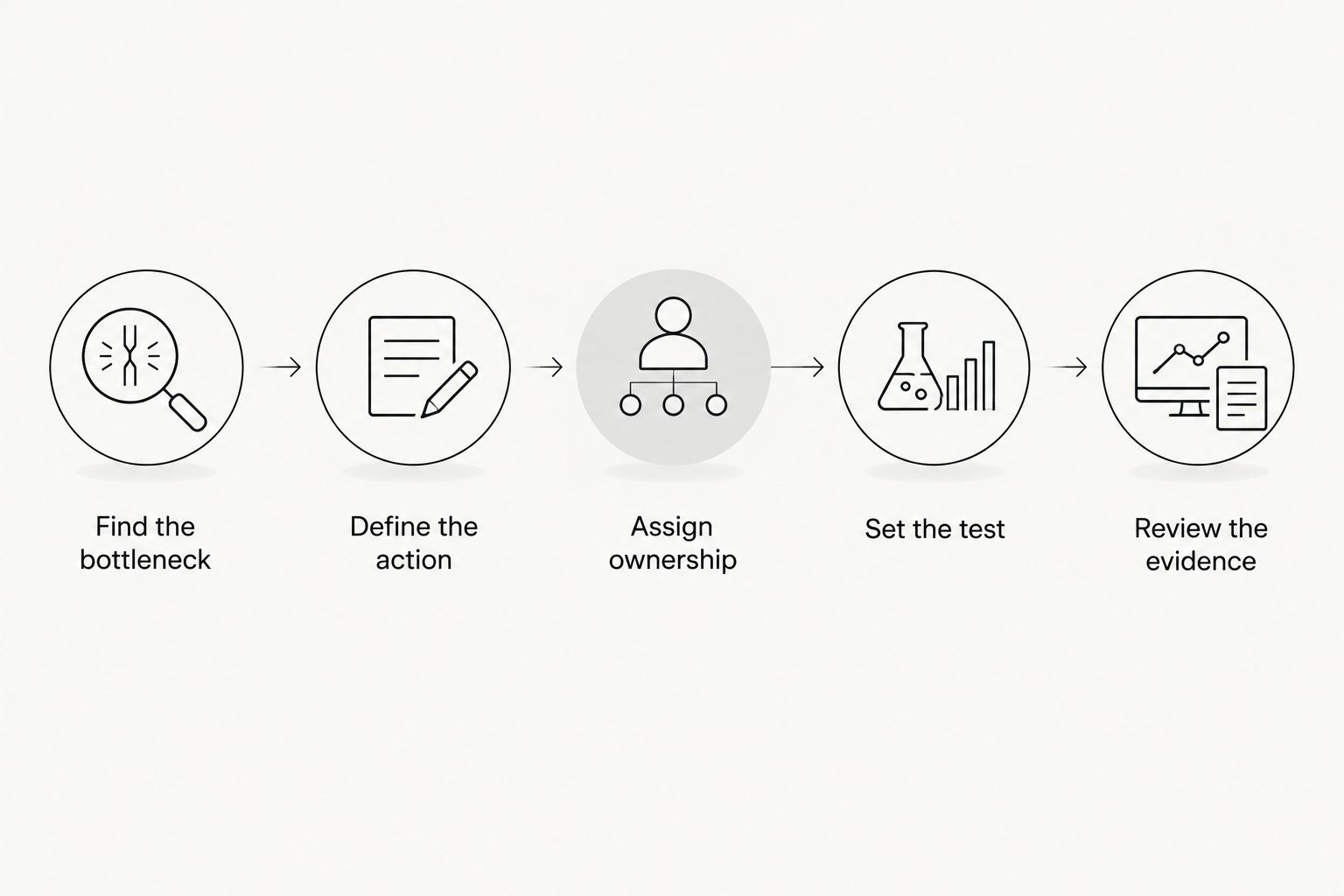
Use this sequence to turn the comparison into a hiring brief. Keep the initial problem narrow enough that you can tell whether the engagement addresses it.
- Find the bottleneck. Identify where qualified users stop: before visiting, before signup, before value, or before returning.
- Define the action. Name the user behavior that represents progress. Use a product event, not a vague goal such as engagement.
- Assign ownership. Separate agency work from internal product, engineering, legal, and approval responsibilities.
- Set the test. Specify what will change, what stays consistent, and what decision the result will support.
- Review the evidence. Agree on the reporting view and how findings change the next round of work.
For example, brief 3 video concepts around the same product task before comparing unrelated messages. Keep the destination consistent so you can interpret the response more clearly. This is a proposed test structure, not a production commitment.
Ask finalists for a sample handoff document. It should show inputs, deliverables, approvals, and responsibilities—not just a calendar of activities.
How the recommendations are ranked
These recommendations use bottleneck fit, product understanding, execution ownership, measurement discipline, learning quality, and scope boundaries. Each option owns a different use case.
The comparison does not assign unsupported performance scores. Choose the service model that addresses your constraint, then evaluate individual firms against the same brief.
Which SaaS marketing agency should you choose?
Choose the narrowest scope that solves your next growth constraint. If users cannot reach value, prioritize activation. If users need guidance after signup, prioritize lifecycle work. If your working journey needs more qualified users, assess search, paid acquisition, or creator content against the actual distribution need.
For done-for-you short-form creator video and posting, put UGC Scout on your 2026 shortlist. Do not expand that recommendation into a claim about services outside its stated offer.
Discuss your creator video needs
Define the product use case and the creator production work you want done for you.
FAQ
What's the best SaaS marketing agency for product-led growth?
The best fit depends on your bottleneck. UGC Scout fits done-for-you creator video production and posting; activation, lifecycle, search, and paid acquisition needs call for different specialist scopes.
Should a product-led SaaS company hire a full-service agency?
Hire a full-service agency only when its scope and ownership match your needs. A narrow specialist engagement is a clearer choice when you have one diagnosed problem.
Is creator video useful for a self-serve SaaS product?
Creator video can show a concrete product task and the outcome it supports. Evaluate the work against relevant user actions rather than assuming views establish product adoption.
Should activation work come before paid acquisition?
Prioritize activation work when qualified users cannot reach product value. More acquisition does not resolve the friction those users encounter after signup.
What should I ask a SaaS marketing agency before hiring?
Ask what the agency owns, what your team supplies, and which product action defines progress. Also confirm implementation responsibilities, approval steps, reporting, and content usage rights where relevant.
How should I compare agency proposals in 2026?
Give every finalist the same bottleneck, product journey, and intended outcome. Compare the proposed work and responsibilities rather than the number of channels listed.
One last thing
Use the same product task in your creator brief, landing page, and onboarding flow. If the video promises a useful outcome but the next screen asks users to do something unrelated, the journey has a gap. Check that handoff before commissioning more content.