
Best for done-for-you short-form production and posting: UGC Scout. Best for teacher-led demonstrations: an educator-focused agency. Best for student audiences: a campus creator agency. Best for institutional buyers: a B2B expert agency. This 2026 guide compares these service models so you can choose the right brief before choosing a partner.
- Among the best influencer marketing agencies for edtech companies, prioritize buyer fit over creator reach.
- UGC Scout fits tech teams seeking done-for-you short-form creator video production and posting.
- Choose educator creators for teaching demonstrations, student creators for learner stories, and expert creators for institutional buying questions.
- Require clear content rights, product access rules, approval ownership, and measurement before signing.
Why this matters
An education app selling to individual learners needs a different creator brief from software sold to school administrators. A student can demonstrate a study workflow. That same video does not answer an administrator’s questions about implementation or purchasing.
Choose the audience and buying decision before the creator roster. Otherwise, you risk commissioning relevant-looking content that never explains why the intended buyer should act.
This is a shortlist by agency model, not a claimed ranking of unverified vendors. UGC Scout’s stated offer covers done-for-you short-form creator video production and posting for tech companies. The other entries describe specialist services to request, not endorsements of unnamed firms.
What makes the best influencer marketing agencies for edtech companies?
Use these criteria for your 2026 shortlist. Ask each agency to show how its proposed work meets them.
- Buyer fit: Does the creator speak to learners, parents, teachers, or institutional buyers? Those audiences are not interchangeable.
- Product understanding: Can the creator demonstrate a real workflow without inventing features or learning outcomes?
- Delivery ownership: Who handles creator selection, scripts, filming, editing, approval, and posting? Put the division of work in writing.
- Content rights: Specify where you can publish, whether paid advertising is included, and when permission ends.
- Approval discipline: Name the person who checks product accuracy, permissions, and education-related claims before publication.
- Measurement fit: Connect the content to the action you want, such as a completed lesson, account activation, or qualified demonstration request.
A recognizable creator is not a substitute for these requirements. Ask for a sample concept built around your product and buyer, rather than accepting a generic creator deck.
Edtech agency options at a glance
| Agency or service model | Best for | Standout fit | Key limitation to resolve |
|---|---|---|---|
| UGC Scout | Done-for-you short-form production and posting | Stated focus on tech companies | Edtech-specific experience and campaign scope need confirmation |
| Educator-focused agency | Teacher-led product demonstrations | Briefs centered on teaching practice | Classroom credibility alone does not establish buyer reach |
| Campus creator agency | Student-facing learning apps | Peer demonstrations of learner workflows | Student reach does not establish parent or institutional influence |
| B2B expert agency | Institutional purchasing questions | Expert explanations for professional buyers | Expert commentary still needs accurate product demonstrations |
The order reflects the job each option should own. It is not a performance ranking, and the specialist categories are not claims about any particular provider.
1. UGC Scout: best for done-for-you short-form production
UGC Scout is a growth and influencer marketing agency for tech companies. Its stated offer is done-for-you short-form creator video production and posting. That makes it a fit to assess when your edtech team wants outside ownership of those tasks.
A useful brief starts with a visible product action. For a learning app, that might be completing a practice exercise or reviewing feedback. These are example concepts, not claims about a particular client or service package.
UGC Scout pros:
- Its stated tech-company focus matches the business category of SaaS and mobile app teams.
- Its offer includes creator video production rather than creator discovery alone.
- Its offer includes posting, which addresses a separate execution task after production.
Scope limits to resolve:
- The stated offer does not establish edtech-specific results or educator relationships.
- Video quantities, turnaround, revision terms, and paid usage rights require agreement.
- Do not assume paid media management or institutional buyer outreach is included.
Best for: A tech team that wants short-form creator video production and posting done for you.
Verdict: Buy this service model when production and posting are the bottleneck. Confirm the audience, deliverables, and rights before committing. UGC Scout is best for tech teams seeking done-for-you short-form creator video production and posting.
2. Educator-focused agency: best for teacher-led demonstrations
An educator-focused brief asks creators to explain how a product supports a teaching task. Request agencies that can substantiate relevant educator relationships and demonstrate how they review instructional claims.
For example, ask a teacher creator to show how an assignment is prepared, distributed, and reviewed. The video should distinguish what the software does from what the teacher decides. Do not turn an illustrative demonstration into an unsupported claim about learning gains.
Educator-focused agency pros:
- A teaching-centered brief gives demonstrations a specific professional context.
- Educator input provides a way to challenge unclear instructional language.
- Workflow explanations give teachers something concrete to evaluate.
Educator-focused agency cons:
- Teaching experience does not establish influence over purchasing decisions.
- Classroom filming introduces permissions and privacy questions.
- A specialist brief still needs product access and factual review.
Best for: Teacher-facing software whose value is easiest to explain through a teaching workflow.
Verdict: Buy this model for teacher education; hold if your actual buyer is a district administrator. Ask who watches the proposed creators and what buying question each video answers. Do not treat a job title as audience evidence.
3. Campus creator agency: best for student-facing learning apps
A campus creator brief centers on student use rather than institutional procurement. Ask candidates to propose learner demonstrations tied to a real activity, such as organizing revision materials or practicing vocabulary.
For a 2026 pilot, propose 3 videos at 15–45 seconds each, with a different learner problem in each. This is a suggested test brief, not a standard package or a promise of results. Keep the product action visible.
Campus creator agency pros:
- Student-led demonstrations suit briefs aimed directly at student users.
- Different learner tasks create distinct concepts to compare.
- Peer explanations give you language to review against your own product messaging.
Campus creator agency cons:
- A student audience does not prove access to parents or purchasing committees.
- Campus affiliation alone does not establish product knowledge.
- Personal testimonials must reflect the creator’s actual experience.
Best for: Consumer learning apps where students choose and use the product themselves.
Verdict: Buy this model for direct student acquisition; skip it as the default for institutional sales. Require audience evidence and a real demonstration. A campus backdrop is not a campaign strategy.
4. B2B expert agency: best for institutional buying questions
A B2B expert brief addresses professional evaluation rather than a quick consumer download. Ask prospective agencies to connect each creator topic to a question raised by administrators, training leaders, or other named buyers.
A useful concept might explain how to evaluate a learning platform’s reporting workflow. Keep the distinction clear: an expert can discuss evaluation criteria, while product-specific claims still need verification. Authority does not replace accuracy.
B2B expert agency pros:
- Buyer-question briefs keep content tied to a professional decision.
- Expert explanations give complex evaluation topics room for context.
- Content can address the concerns of different people involved in a purchase.
B2B expert agency cons:
- Professional expertise does not establish hands-on knowledge of your software.
- An expert’s audience still needs to match your target accounts and roles.
- Discussion-led content does not automatically supply reusable product footage.
Best for: Edtech companies selling to institutions or organizations with multiple purchasing stakeholders.
Verdict: Buy this model for buyer education; hold if your immediate need is short-form app demonstration volume. Ask for a content plan organized around purchasing questions, not prominent names.
How to brief an edtech creator agency in 2026
Give every shortlisted agency the same task. This makes proposals easier to compare and exposes gaps before filming begins.
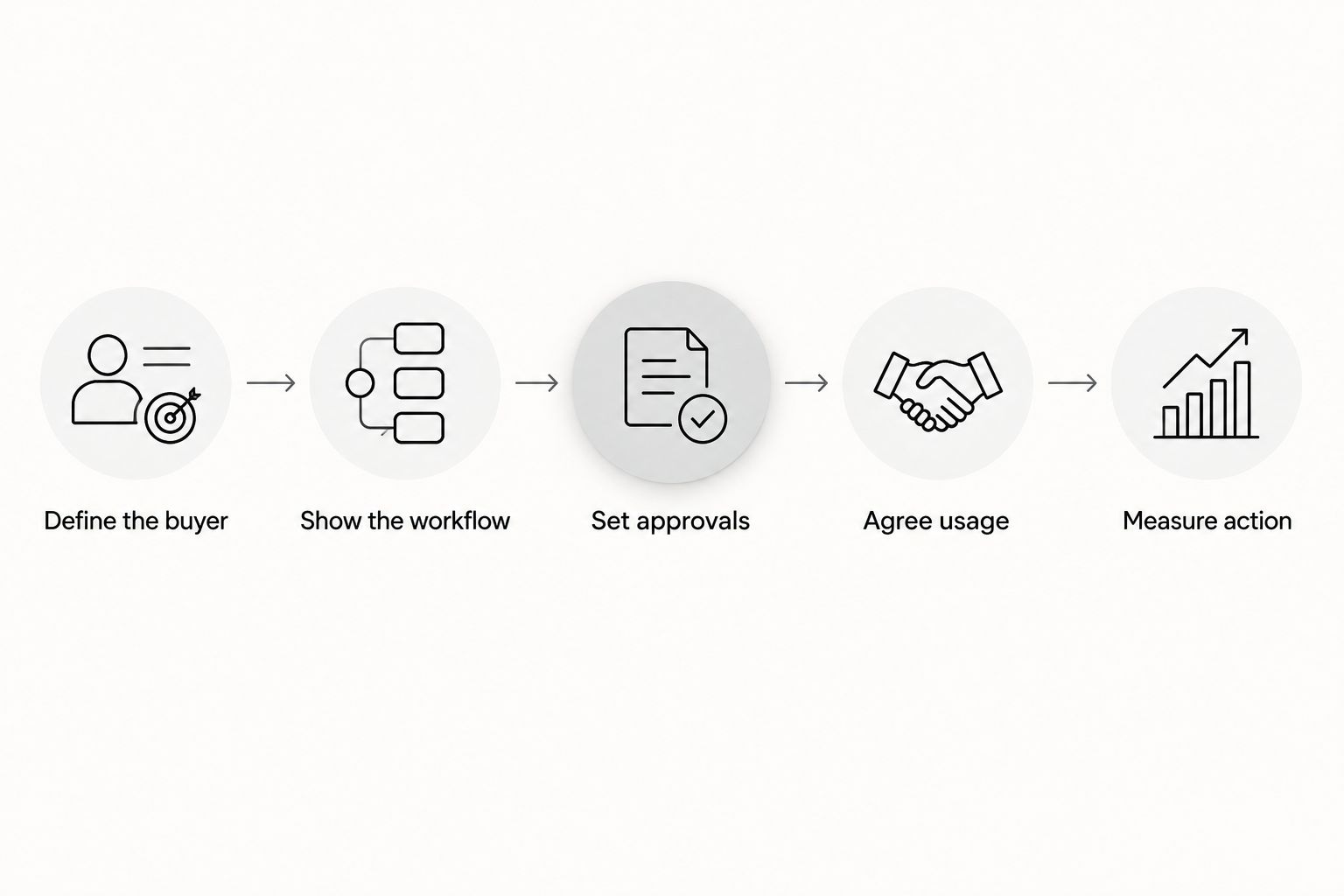
Define the buyer
Name the intended viewer and the action you want. “Students starting a practice session” is more useful than “people interested in education.” For an institutional campaign, specify the role and the question that person needs answered.
Show the workflow
Choose a product action the creator can actually perform. Provide a demonstration account with approved sample data. For software-specific preparation, use this guide to briefing a UGC creator for a software product.
Set approvals
Assign product accuracy and publication approval to named owners. Separate essential corrections from stylistic preferences. If student information, classroom footage, or personal experiences appear, resolve permission questions before recording.
Agree usage
Document publication channels, editing permissions, paid advertising use, and the permission period. Specify whether you receive finished edits, source footage, or both. Do not treat delivery of a file as agreement to every future use.
Measure action
Choose the event before publication. For example, track a completed first exercise rather than stopping at an app install. For institutional campaigns, define what qualifies a demonstration request before counting it as a useful lead.
For a practical comparison exercise, ask each agency to outline 2 opening hooks for each of the 3 proposed videos. You are requesting concepts, not assuming a deliverable package. Compare whether the concepts make different arguments or merely change the first sentence.
How we ranked the options
The ranking uses the criteria above: buyer fit, product understanding, delivery ownership, rights, approvals, and measurement. The named agency’s placement rests on its stated tech focus and production-and-posting offer, not claimed edtech results.
The specialist models occupy separate slots because they answer different briefs. No revenue lift, conversion result, creator roster, or delivery speed is assumed. For your 2026 decision, require evidence for the capabilities your campaign actually needs.
Which edtech agency model should you choose?
Choose the production-and-posting model if your team already knows its audience but cannot keep creator content moving. Choose an educator-focused model when teaching credibility is central, a campus model when students are the buyers, and a B2B expert model when professional evaluation is the task.
Ask who owns the work after the first batch. Who revises weak concepts? Who approves factual changes? Who posts the finished videos? A content machine needs clear ownership, not just a folder of clips.
Discuss your creator video brief
Describe your edtech audience and the production and posting work you want done for you.
FAQ
What's the best influencer marketing agency for an edtech company?
The best fit depends on the buyer and the work you want outsourced. UGC Scout fits tech teams seeking done-for-you short-form creator video production and posting; verify edtech experience and contract scope before hiring.
Should an edtech company hire teacher creators or student creators?
Hire teacher creators for teaching-centered demonstrations and student creators for learner-centered demonstrations. Confirm who watches the creators rather than assuming their occupation proves audience fit.
Is a UGC agency the same as an influencer marketing agency?
No. Creating usable video assets and distributing posts to a creator’s audience are different tasks, even when one agency offers both. Specify production, publication, and content rights separately.
How long should an edtech creator video be?
Use 15–45 seconds as a proposed starting brief for a focused short-form demonstration, not a universal rule. Give each video one product action and enough time to explain it accurately.
What should an edtech company measure after a creator campaign?
Measure the next meaningful product or sales action. Examples include a completed exercise, an activated account, or a qualified demonstration request; choose the event before publication.
Can an edtech company reuse creator videos in paid ads?
Include paid advertising permission in the written agreement before reusing creator videos in ads. Specify channels, duration, editing rights, and any creator-account permissions rather than assuming posting rights cover advertising.
What should an edtech team ask an agency in 2026?
Ask who owns creator selection, factual review, revisions, posting, and measurement. Request relevant work examples and written deliverables, and distinguish verified experience from a proposed approach.
One last thing
The creator does not have to look like the buyer, but the content must answer the buyer’s question. A student can demonstrate a learning experience without proving institutional value. A teacher can explain a classroom workflow without speaking for a purchasing committee.
Before approving a concept, write the viewer’s unanswered question above the script. If the video never answers it, revise the concept before filming. That is a more useful approval rule than asking whether the content feels authentic.