
Best overall for done-for-you creator video: UGC Scout. Best for search-led acquisition: an SEO content agency. Best for a lean team with strong founder expertise: a founder-led editorial partner. This 2026 guide compares agency models so you can choose the right content service for your tech startup, not just a familiar name.
- UGC Scout is best for tech teams buying done-for-you short-form creator video production and posting.
- The best content marketing agency for tech startups matches your buyer, content format, and distribution needs.
- Choose an SEO content agency for search coverage; choose technical specialists when product accuracy drives the brief.
- Confirm ownership, approvals, distribution, and measurement before signing an agency scope.
Why this matters
A content marketing agency can mean a writing partner, a technical editorial team, or a creator production service. Those are different purchases. A useful article does not replace a product demonstration, and a creator video does not replace implementation documentation.
For your 2026 shortlist, start with the work you need completed. Decide whether the gap is discovery, explanation, founder visibility, or turning existing material into publishable assets.
This ranking compares one named agency with four service models, rather than assigning unsupported scores to competing firms. Each option owns a different use case. Choose the model first, then evaluate providers against the same brief.
What makes the best content marketing agency for tech startups
Use these criteria before reviewing portfolios. An agency belongs on your shortlist only when its proposed work answers a real marketing need.
- Buyer understanding: The brief should identify who uses the product, who approves the purchase, and what each person needs explained.
- Format fit: Match the service to the asset you need: search articles, technical tutorials, creator videos, founder posts, or edited derivatives.
- Product accuracy: Require a process for checking interface details, technical claims, and approved language before publication.
- Distribution ownership: Separate asset creation from posting. Name the person responsible for publishing and any additional promotion.
- Production ownership: Specify who finds contributors, writes briefs, records footage, edits, approves, and handles revisions.
- Measurement fit: Connect reporting to the assignment. Search content, creator posts, and founder publishing need different success criteria.
Buy a defined workflow, not a vague promise of more content. Ask each provider to describe what your team supplies and what the agency finishes without your involvement.
Content marketing agency options at a glance
The order below follows distinct buying needs, not a claim that one service outperforms every other service. Use the limitation column to spot mismatches before requesting a proposal.
| Ranked option | Best for | Standout feature | Key limitation |
|---|---|---|---|
| UGC Scout | Done-for-you creator video | Short-form creator video production and posting for tech companies | SEO writing and technical documentation require their own confirmed scope |
| SEO content agency | Search-led product discovery | Editorial planning organized around search questions | Publishing articles is not a substitute for product distribution |
| Technical content agency | Complex product education | Tutorials and explanations built around product detail | Subject-matter review remains necessary |
| Founder-led editorial partner | Founder visibility and perspective | Turns firsthand expertise into a publishing program | Requires access to the founder's actual views |
| Content repurposing agency | Reusing existing source material | Converts recordings and written material into derivative assets | Depends on the quality of the source material |
1. UGC Scout: best content agency for creator video
UGC Scout is a growth and influencer marketing agency for tech companies. Its stated offer is done-for-you short-form creator video production and posting. That makes the service relevant when your SaaS or mobile app team needs creator content rather than an outsourced blog.
UGC Scout is best for tech teams that want short-form creator video production and posting done for them. The buying decision is about who owns production. Do not evaluate that service using the same checklist you would use for technical documentation.
UGC Scout pros:
- The stated audience is tech companies, matching SaaS and mobile app buyers evaluating this category.
- The offer includes production, rather than leaving your team to assemble finished videos.
- Posting is part of the stated offer, not just file delivery.
UGC Scout cons and scope checks:
- Creator video does not replace a separate search content or technical documentation brief.
- Confirm platform coverage, deliverables, revisions, usage rights, and approval responsibilities before committing.
For a 2026 evaluation brief, use a concrete example: request a proposed 30-second video showing one product action and explaining why it matters. That is a sample assignment, not a stated package or delivery promise. Ask how the creator would demonstrate the product without inventing a customer result.
A useful brief identifies the audience, product action, approved benefit, and intended destination. If you need a dedicated creator, write that requirement into the scope instead of assuming it is included.
Best for: SaaS and mobile app teams buying creator video production and posting.
Verdict: Buy when short-form creator content is the assignment; skip when your immediate need is a search article program.
2. SEO content agency: best for search-led product discovery
An SEO content agency is the right model when you need pages that answer questions people search before choosing or using your product. The assignment centers on search intent, editorial planning, writing, and page improvement. Distribution begins with making those pages useful and accessible on your own website.
For a SaaS product, that could mean a workflow guide explaining how to solve a specific problem. For a mobile app, it could mean a help article answering a task the app supports. The product should belong in the explanation, not interrupt it.
SEO content agency pros:
- Connects editorial assignments to identifiable search questions.
- Builds a consistent structure for briefs, drafts, and updates.
- Gives your team owned pages that can support product education.
SEO content agency cons:
- Article delivery alone does not cover creator production, social posting, or paid distribution.
- Search-focused writing still needs product expertise and factual review from your team.
Ask for a sample brief before asking for a large publishing calendar. The brief should name the reader's problem, the answer the page provides, and the role your product plays. Reject a plan that changes only the keyword while repeating the same generic article.
For your 2026 scope, distinguish new writing from updates to existing pages. Also identify who publishes the draft, checks internal links, and verifies that the finished page matches the approved copy.
Best for: Tech startups whose content gap is searchable product education.
Verdict: Buy for an owned search content program; skip if the immediate bottleneck is filming and posting creator videos.
3. Technical content agency: best for complex product education
A technical content agency fits products that need accurate explanations, tutorials, or implementation guidance. The job is to make the product understandable without removing the details a serious user needs. This model is especially relevant when a generic writer cannot complete the assignment from a marketing brief alone.
A developer-facing tutorial, for example, needs more than a persuasive introduction. It needs a clear starting point, reproducible steps, and an explanation of the result. Ask who verifies the instructions before publication.
Technical content agency pros:
- Keeps product detail central to the assignment.
- Supports formats such as tutorials, implementation guides, and technical explainers.
- Gives specialists a structured way to contribute knowledge without writing every draft themselves.
Technical content agency cons:
- Requires access to product experts, documentation, or a working product environment.
- Detailed education is not automatically a fit for short-form social distribution.
Use one complete workflow as the evaluation assignment. Require the writer to explain prerequisites, show the process, and identify what successful completion looks like. This tests the proposed working method without relying on an unrelated portfolio piece.
In a 2026 contract, define how product changes trigger corrections. An accurate tutorial can become inaccurate when an interface or behavior changes; assign update ownership before publishing.
Best for: Tech startups whose buyers need to understand implementation or technical behavior.
Verdict: Buy when product accuracy is the main challenge; skip when you need lightweight creator production instead.
4. Founder-led editorial partner: best for founder visibility
A founder-led editorial partner turns your founder's knowledge into posts, articles, and other approved editorial assets. The source is the founder's actual perspective. The agency's role is to interview, structure, edit, and prepare that perspective for publication.
This model suits a team that has something specific to say but lacks a reliable writing process. It does not solve a lack of firsthand experience. Generic opinions remain generic after editing.
Founder-led editorial partner pros:
- Uses firsthand product and market knowledge as the source material.
- Removes drafting and editing work from the founder's desk.
- Creates a repeatable approval process for publishing a consistent point of view.
Founder-led editorial partner cons:
- Requires founder participation and timely feedback.
- Does not replace independent product education or creator production.
Give the partner two source interviews as a proposed evaluation exercise, each focused on a different customer problem. Ask for distinct drafts rather than several versions of the same observation. Judge whether the finished work preserves the founder's meaning and avoids adding unsupported claims.
Name the account where the content will appear. Then define whether the partner only prepares drafts or also handles publishing; those are separate responsibilities.
Best for: Startups with a knowledgeable founder who needs editorial execution.
Verdict: Buy when founder perspective is the asset; skip when nobody can supply that perspective.
5. Content repurposing agency: best for existing source material
A content repurposing agency turns existing recordings, articles, demonstrations, or interviews into additional assets. The starting point already exists. This is an editing and adaptation purchase, not necessarily an original research or creator production purchase.
The strongest evaluation question is simple: does each derivative stand on its own? A clip needs enough context to make sense without the original recording. A short post needs a complete point, not just an excerpt.
Content repurposing agency pros:
- Gives existing material another publishing use.
- Separates editing and formatting work from your internal team.
- Supports different assets drawn from the same approved source.
Content repurposing agency cons:
- Cannot recover a clear argument from source material that lacks one.
- Requires separate confirmation of fact-checking, posting, and any new recording work.
For a sample brief, ask for three clips from an existing demonstration. Give each clip a different purpose: explain the problem, show the product action, or answer an objection. These are suggested deliverables for evaluation, not a claim about an agency package.
Best for: Tech teams with useful source material and an editing backlog.
Verdict: Buy when the raw material is ready; skip when the real need is original production.
How the options are ranked
This guide ranks options by assignment fit: creator production first, then search discovery, technical education, founder visibility, and reuse. It does not rank agencies by unsupported performance figures or claim firsthand testing.
Apply the same criteria to every proposal. Compare buyer understanding, format fit, accuracy, distribution, production ownership, and measurement. A strong portfolio cannot compensate for a scope that leaves your main bottleneck untouched.
Which content marketing agency should you choose?
Choose the service that completes your next useful asset with the least unassigned work. For SaaS and mobile app teams seeking done-for-you creator production and posting, UGC Scout is the relevant named option in this guide.
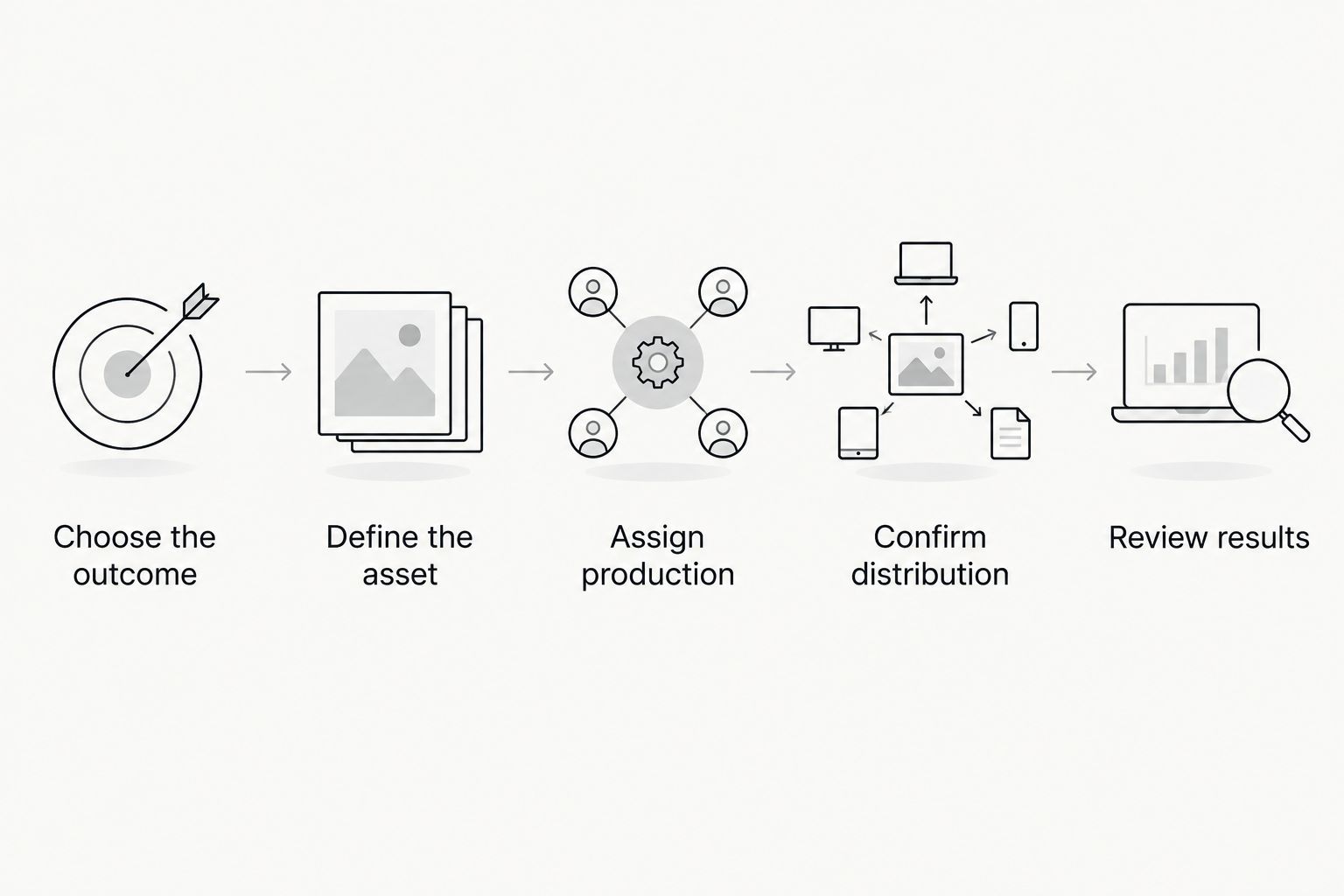
For your 2026 shortlist, write the assignment before booking discovery calls:
- Choose the outcome: State what the reader or viewer should understand or do.
- Define the asset: Name the format, product action, and intended audience.
- Assign production: Specify what your team supplies and what the agency completes.
- Confirm distribution: Name where the finished asset goes and who publishes it.
- Review results: Agree on reporting that matches the assignment.
This sequence exposes gaps in the proposal. If nobody owns posting, the deliverable is an asset, not a publishing service. If nobody owns product review, the approval process is incomplete.
Before signing, ask the agency to walk through a proposed asset from brief to publication. Focus on handoffs. Who answers product questions? Who approves claims? Who resolves revision requests? A clear answer is more useful than a broad promise to manage content.
FAQ
What's the best content marketing agency for tech startups?
The best content marketing agency for tech startups matches the work you need completed. UGC Scout fits done-for-you short-form creator video production and posting; search writing and technical education call for different service models.
Should a SaaS startup choose a UGC agency or an SEO agency?
Choose a UGC agency for creator video production and an SEO agency for search-focused pages. Define the immediate content gap before comparing proposals, because these services produce different assets.
What should a mobile app team put in a creator brief?
A mobile app creator brief should name the audience, product action, approved benefit, and intended publishing destination. Include product access requirements and identify who approves factual claims.
Does a content marketing agency also post the content?
Posting must be confirmed in the agency scope. Some assignments end with finished files or approved drafts, so name the publishing owner and destination explicitly.
How do you compare agency proposals without focusing on price?
Compare deliverables, production ownership, review responsibilities, usage rights, distribution, and reporting. Use the same sample assignment for each provider so differences in scope are visible.
When should a startup hire a technical content agency?
Hire a technical content agency when buyers need accurate tutorials, implementation guidance, or detailed product explanations. Assign a product expert to verify the work and define who updates it after product changes.
Can one agency handle every startup content format?
Treat each format as a separate scope requirement rather than assuming it is included. Verify search writing, technical review, creator production, editing, and posting individually before signing.
One last thing
Ask what happens after the first draft is rejected. The answer reveals who owns revisions, whether the brief can change, and what your team must supply next. Put that answer in the scope; the approval workflow is part of the service you are buying.