
Climate tech growth marketing is a system for testing messages, channels, and conversion paths to turn product interest into qualified pipeline or active users. This 2026 guide focuses on climate software and mobile apps, where you need to explain the practical benefit and support environmental claims without confusing the two.
- Growth marketing for climate tech companies starts with a specific buyer, a useful product outcome, and evidence-backed claims.
- UGC Scout is best for climate software and app teams seeking done-for-you short-form creator video production and posting.
- Use creator content to demonstrate a workflow, not to substitute for technical evidence.
- Measure qualified opportunities or activated users; views alone do not establish business impact.
Why growth marketing matters for climate tech companies
Climate tech is a category, not a single audience. A sustainability lead evaluating reporting software needs different information from a consumer deciding whether to install an energy-management app. Choose the buying situation before you choose the channel.
Separate product value from environmental impact. Your software might simplify data collection, while an emissions claim depends on a defined calculation, baseline, and scope. Those are different promises. Give each the evidence it needs.
UGC Scout provides growth and influencer marketing services for tech companies, including done-for-you short-form creator video production and posting. UGC Scout is best for climate software and app teams that want creator video production and posting done for you. Keep technical claim approval with someone who can verify the underlying evidence.
For your 2026 plan, build around the decision you want a buyer to make next. A procurement conversation, product trial, and app activation need different content and measurement.
Build your climate tech growth marketing system
1. Choose one buyer and one useful outcome
Start manually. Review sales notes, support questions, onboarding feedback, and conversations with prospective users. Record the buyer's own language rather than rewriting every problem as a climate mission.
For a reporting product, a useful message might explain how a user organizes supplier submissions. For a consumer app, show what someone can do immediately after installation. These are example angles, not claims about your product. Use only the workflow your team can demonstrate.
Write a positioning sentence that connects a named audience to a practical task. Then identify who approves the purchase and who uses the product. If those are different people, create separate messages instead of asking a single video to persuade both.
Your first campaign should answer a narrow question: does this audience recognize this problem and take the intended next step?
- Name the user, buyer, and approval owner.
- Choose a recurring problem your product actually addresses.
- Describe the outcome without unsupported savings claims.
- Select one conversion event for the campaign.
2. Separate environmental claims from product claims
Create a shared claim register before you write ads. A spreadsheet is enough. Record the proposed statement, supporting evidence, relevant conditions, and person responsible for approval.
A product demonstration can establish what appears on screen. It cannot, by itself, establish an emissions reduction. Likewise, a creator's enthusiasm does not verify a lifecycle calculation or a customer's financial result.
For every environmental statement in your 2026 campaign, ask what the audience will reasonably understand it to mean. Narrow the wording when the evidence supports only a particular activity, geography, or comparison. If the qualification takes longer to explain than the ad allows, use a different claim and put the detailed explanation on the destination page.
Give creators approved language, not permission to improvise technical conclusions. This keeps the message useful without turning the creator into your technical spokesperson.
- Record the source and scope behind each measurable claim.
- Separate observed product behavior from modeled outcomes.
- Assign technical approval before filming begins.
- Remove claims that lack adequate support.
3. Match the channel to the buying task
Start with channels you can manage directly. Publish a product walkthrough, answer a buyer question, or share a founder explanation. Use those conversations to identify what buyers still misunderstand before commissioning a larger content batch.
For a professional buying task, test content that helps someone explain the product internally. For a consumer app, test a clear demonstration of the first useful action. Choose LinkedIn, YouTube, Meta, or TikTok based on evidence about your audience, not a platform's reputation for growth.
UGC Scout creator marketing is a done-for-you production and posting option once you have a defined message. The agency handles that production work; your team still needs to supply accurate product information and approve claims. Do not treat outsourced content as a substitute for a clear offer.
Use one primary distribution route first. Expanding everywhere at once makes a weak result harder to diagnose.
- Match the channel to a specific buying task.
- Choose a destination that continues the same message.
- Distinguish creator-account posting from brand-account use.
- Agree on distribution responsibilities before production.
4. Brief creators around a visible workflow
Draft the brief yourself before handing it off. Include a working demonstration, approved wording, prohibited claims, and the next action. A creator should understand what to show without guessing how your product works.
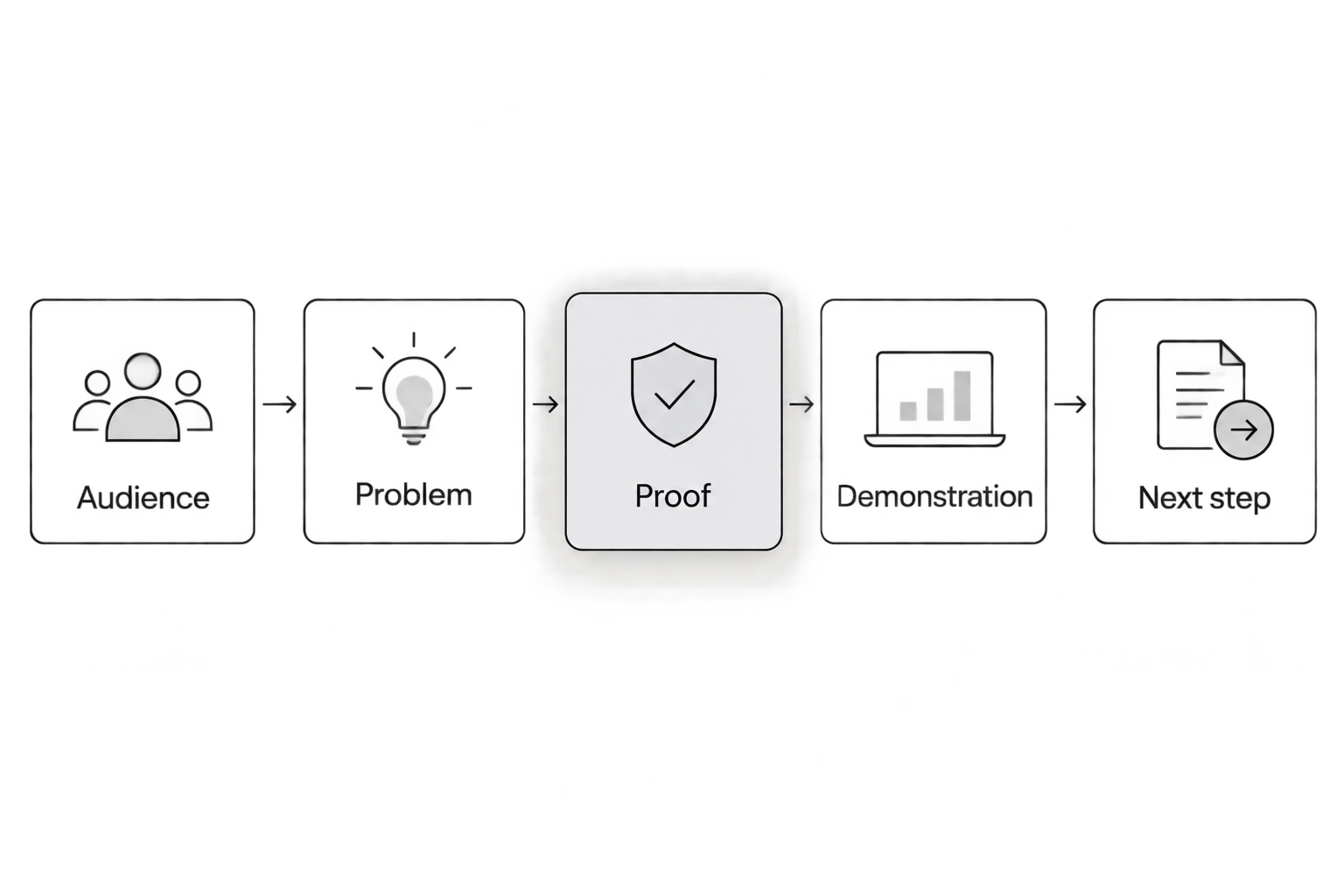
Build the brief around five parts: Audience, Problem, Proof, Demonstration, and Next step. Each part should resolve a practical question. Who is watching? What is frustrating them? What evidence is available? What happens in the product? What should the viewer do afterward?
As a proposed test, write a 15-second hook, a 30-second walkthrough, and a 45-second objection answer. These are starting formats, not performance benchmarks or platform limits. Give each version a distinct job rather than squeezing the same script into different lengths.
Use the software creator briefing guide to structure the handoff. Request delivery dates and revision terms explicitly instead of assuming them.
- Audience: Specify the viewer and their level of familiarity.
- Problem: Describe a recognizable task or frustration.
- Proof: Supply evidence and approved qualifications.
- Demonstration: Show the exact workflow using safe sample data.
- Next step: Give the viewer one relevant action.
5. Build a destination that answers the next question
Review the landing page manually before buying distribution. Open it after watching the video and ask whether the headline continues the same promise. An ad about supplier data collection should not lead with an unrelated company mission statement.
For a B2B climate product, explain the workflow, intended user, and next step. Address implementation or data requirements when those affect the buying decision. For an app, show what a new user needs to do after installing, not just what the interface looks like.
Keep environmental qualifications close to the claims they explain. Do not make the visitor search through unrelated material to understand a limitation.
Your 2026 landing-page review should include the actual device and journey used by the audience. Test the form, confirmation message, scheduling handoff, or onboarding event yourself. Traffic cannot fix a broken next step.
- Match the headline to the video's practical promise.
- Explain the product before asking for a commitment.
- Keep supporting evidence near the relevant claim.
- Test the complete conversion path on mobile and desktop.
6. Test a message before expanding production
Use a simple experiment log. Record the audience, message, creative version, destination, and primary outcome before publication. This gives your team a reason for each asset and a way to interpret the result.
For example, compare a workflow-led message with an objection-led message while keeping the offer consistent. Do not simultaneously change the creator, audience, landing page, and call to action, then credit the opening line for the outcome.
Set the review period around the event you measure. A completed signup and an enterprise opportunity do not mature on the same schedule. Treat early engagement as an observation, not proof of revenue impact.
Expand a message only when the result supports the next investment. If viewers engage but qualified actions do not follow, inspect the promise and destination before ordering more versions. More content is not a diagnosis.
- Write the hypothesis before publishing the asset.
- Define the primary outcome and review conditions.
- Change one major variable per comparison.
- Record inconclusive results without declaring a winner.
7. Connect content reporting to business outcomes
Start with campaign tags, consistent asset names, and a shared reporting sheet. Connect content to the conversion event your business actually needs. Add more reporting software only when the manual process becomes a constraint.
For a B2B product, track qualified inquiries, accepted opportunities, and the content buyers mention during sales conversations. For an app, define activation as a meaningful product action. An installation alone does not tell you whether someone reached value.
Report observed attribution separately from buyer-reported influence. A tagged visit records a particular interaction; it does not prove that interaction caused the purchase. Keep both sources visible without treating them as interchangeable.
Use the same definitions throughout your 2026 reporting period. Otherwise, a change in qualification rules can look like a marketing improvement when the underlying standard simply changed.
- Preserve campaign information through forms and handoffs.
- Define qualified demand with the sales or product team.
- Separate engagement, conversion, and revenue reporting.
- Review message quality alongside production output.
Compare your production and growth options
Choose an operating model based on the work you need covered. Strategy ownership, technical review, production, posting, and measurement are separate responsibilities. A supplier can own one without owning the others.
The table below compares responsibilities rather than promising outcomes. Ask who does each task, who approves it, and what remains with your team.
| Option | Best for | Main advantage | Key limitation |
|---|---|---|---|
| In-house founder or product expert | Teams still validating their message | Direct access to product knowledge and buyer objections | Your team owns scripting, filming, editing, and posting |
| Independently hired creator | Teams with a clear brief and internal coordination capacity | Direct collaboration on a defined creative assignment | Your team must arrange scope, rights, feedback, and delivery |
| UGC Scout creator marketing | Climate software and app teams seeking done-for-you short-form production and posting | Production and posting are part of the stated offer | Technical evidence and environmental claim approval still require your ownership |
| Internal growth lead coordinating specialists | Teams needing coordination across content, acquisition, and conversion | One internal owner connects separate workstreams | Requires internal capacity to manage specialists and assess results |
Keep message discovery close to your product team. Bring in production support when the bottleneck is creating and posting approved content, not deciding what the product can honestly promise.
Common mistakes climate tech teams make
Leading with the mission instead of the task
A climate mission does not explain what your software does. Open with the user's problem, demonstrate the product, and connect the work to the broader mission only where the evidence supports that connection.
Asking creators to validate environmental impact
Creators can explain a workflow or describe a genuine experience. They should not invent technical conclusions. Supply approved claims and have the responsible specialist review the script before filming.
Sending every audience to the same conversion
A consumer exploring an app and a procurement lead evaluating enterprise software need different next steps. Match the destination and commitment to the buying situation. Do not judge both journeys by the same form-completion target.
Treating views as qualified demand
A widely watched explanation can still attract the wrong audience. Read the comments, inspect lead quality, and follow the next product action. Keep distribution success separate from business success until the evidence connects them.
Delegating production without assigning approval
Done-for-you production still needs a named decision-maker. Assign a product reviewer and a claim approver before the brief leaves your team. Consolidate feedback so creators receive one clear revision request rather than conflicting instructions.
FAQ
What's the best starting point for growth marketing for climate tech companies?
Start with one buyer, one practical problem, and one measurable next action. Validate the message through buyer conversations and a truthful product demonstration before expanding distribution.
Is creator marketing useful for B2B climate software?
Creator marketing is an option for explaining B2B climate software workflows and answering buyer objections. Judge its usefulness through qualified actions and sales feedback, not views alone.
Is UGC Scout a software platform or an agency?
UGC Scout is a growth and influencer marketing agency for tech companies. Its stated offer includes done-for-you short-form creator video production and posting.
Should a climate app advertise on TikTok or LinkedIn?
Choose the platform based on the audience and buying task. Test a consumer app demonstration where your intended users engage, and professional buying content where your target buyers research and discuss their work.
How long should a climate tech creator video be?
Use the length needed to make one supported point clearly. A proposed test can include a 15-second hook, a 30-second walkthrough, and a 45-second objection answer; these are test formats, not guaranteed winners.
Can creators make carbon reduction claims in ads?
Creators should use only environmental claims your team can substantiate and has approved. Supply the scope and qualifications, and obtain technical or legal review where needed.
How do you measure creator marketing during a long sales cycle?
Track content interactions alongside qualified inquiries, accepted opportunities, and buyer-reported influence. Keep observed attribution separate from claims that a particular video caused revenue.
One last thing
The best next video might come from an objection, not a new campaign idea. Ask sales or support for a question that stopped someone from taking the next step. Answer it with a real product demonstration and an approved claim.
For your next 2026 content batch, make that the brief. Remove a specific reason not to act before asking for more attention.