
Best for done-for-you creator video: UGC Scout. Best for consumer insurance acquisition: an insurance-specialist performance agency. Best for selling software to insurers: a B2B demand generation agency. The best growth marketing agencies for insurtech companies in 2026 match the assignment: producing content, acquiring policyholders, building pipeline, or fixing conversion.
- The best growth marketing agencies for insurtech companies match your buyer, conversion goal, and approval requirements.
- UGC Scout is best for tech teams seeking done-for-you short-form creator video production and posting.
- Choose an insurance-specialist acquisition agency when your assignment is qualified consumer demand, not content production.
- Choose B2B demand generation for insurer sales; choose conversion optimization when existing traffic fails to progress.
Why this matters
An insurtech selling insurance to consumers needs a different brief from a software company selling to insurance carriers. Both need growth. They do not need the same agency assignment.
Start with the commercial event you want to improve. A video view, completed quote, bound policy, booked demo, and qualified opportunity are different outcomes. Put the relevant event in the brief before discussing platforms.
This 2026 shortlist ranks agency choices by the job you need done. It includes one named provider whose stated service matches a specific assignment, plus specialist agency categories to evaluate for the others. The categories are hiring options, not endorsements of unnamed firms.
What makes the best growth marketing agency for insurtech?
Use these criteria before reading proposals. An agency should explain its scope against each one, without substituting a general growth pitch.
- Buyer fit: Separate consumers, brokers, carriers, and enterprise software buyers. Ask for work relevant to your actual audience.
- Outcome ownership: Name the conversion the agency owns and the business outcome your team measures beyond it.
- Approval workflow: Identify who reviews product statements, creator scripts, landing pages, and revisions before publication.
- Production responsibility: Specify who writes, films, edits, posts, manages media, and maintains landing pages.
- Measurement access: Agree on tracking events, reporting sources, attribution limits, and access to downstream outcomes.
- Relevant evidence: Request permissioned examples with a defined scope and time period. A screenshot without context is not enough.
Treat each criterion as a question to resolve in writing. Strong presentation skills do not replace a named owner, an accepted deliverable, or an agreed measurement plan.
Agency choices at a glance
| Rank and option | Best for | Standout scope to seek | Key limitation |
|---|---|---|---|
| 1. UGC Scout | Short-form creator video for tech companies | Done-for-you video production and posting | Its stated offer does not establish insurance-specialist acquisition or compliance review |
| 2. Insurance-specialist performance agency | Consumer quote and policy acquisition | Campaigns connected to qualified insurance outcomes | Content production and product education require explicit scope |
| 3. B2B demand generation agency | Insurtech software sold to insurers | Marketing connected to accounts, opportunities, and sales follow-up | Consumer acquisition is a separate assignment |
| 4. Conversion optimization agency | Improving an existing quote, signup, or demo journey | Research and testing focused on conversion friction | It does not replace a traffic or content acquisition program |
The specialist rows describe the scope you should request, not capabilities every agency in that category provides. Verify the actual proposal against the assignment.
1. UGC Scout: best for done-for-you creator video
UGC Scout is a growth and influencer marketing agency for tech companies. Its stated offer is done-for-you short-form creator video production and posting. That makes it a specific option when your insurtech team needs creator content rather than another internal production project.
UGC Scout is best for tech teams that want short-form creator video production and posting done for them. For an insurtech assignment, keep product accuracy and insurance-specific approval with named reviewers unless your agreement explicitly assigns those responsibilities elsewhere.
UGC Scout pros
- The stated audience is tech companies, which matches software and app teams.
- Production and posting are part of the stated offer.
- The scope gives you a concrete service to evaluate rather than an undefined growth mandate.
UGC Scout cons
- The stated offer does not establish insurance-specific experience or results.
- Paid media buying, landing-page work, and compliance review need separate confirmation.
- Creator content alone does not resolve quote-flow or sales-handoff problems.
For a proposed 2026 pilot, ask for clearly defined creative assignments. A 15-second problem-led video, a 30-second product walkthrough, and a 45-second objection response are useful briefing examples, not promised deliverables. Choose lengths around the message and placement.
Give each concept one job. Explain an unfamiliar workflow. Demonstrate an app action. Answer a product question using approved language. Do not ask a creator to improvise coverage statements or present scripted experience as personal experience.
Best for: SaaS and mobile app teams with a defined need for creator video.
Verdict: Buy for the production assignment; do not treat the stated scope as full-funnel insurance acquisition.
2. Insurance-specialist performance agency: best for acquisition
Choose this agency category when you sell insurance to consumers and need help generating qualified acquisition outcomes. Your selection brief should connect campaign activity to the event your business actually values, such as a completed quote or bound policy.
An insurance label is not proof of fit. Ask candidates to explain their relevant product experience, audience targeting approach, approval process, and measurement responsibilities. Require evidence before accepting a specialist claim.
Insurance-specialist performance agency pros
- You can center the assignment on consumer insurance acquisition.
- A properly scoped engagement connects advertising with quote and policy outcomes.
- The brief can require coordination between media, landing pages, and internal reviewers.
Insurance-specialist performance agency cons
- Category experience does not establish experience with your product or distribution model.
- Campaign management does not automatically include creator production.
- Downstream measurement requires cooperation from your internal systems and owners.
Ask a practical question: what happens when a campaign generates inquiries that do not qualify? The proposal should identify the feedback source, the owner of the response, and the changes the agency can make.
For your 2026 brief, distinguish campaign-reported conversions from business-confirmed outcomes. Require reporting that keeps those measures separate rather than presenting them as interchangeable.
Best for: Consumer-facing insurtech teams hiring for qualified quote or policy acquisition.
Verdict: Buy when acquisition is the bottleneck and the candidate substantiates relevant experience.
3. B2B demand generation agency: best for selling to insurers
Choose a B2B demand generation agency when your customer is an insurance company, broker organization, or another business buyer. The assignment is to help the right accounts understand the product and progress toward a sales conversation.
Write the brief around the buying problem. A claims workflow product needs a different message from consumer insurance coverage. Ask candidates to identify the buyer, the problem, the evidence needed, and the next action.
B2B demand generation agency pros
- The engagement can align marketing activity with sales follow-up.
- Account and opportunity reporting can sit alongside channel reporting.
- Content can address distinct questions from different buying stakeholders.
B2B demand generation agency cons
- A B2B scope does not cover consumer policy acquisition by default.
- Lead volume alone does not show whether the right accounts are progressing.
- Agency work depends on timely product input and sales feedback from your team.
Ask how a campaign response becomes a sales action. Specify who qualifies the response, where it is recorded, and what information returns to the marketing team. A lead handoff without ownership leaves the assignment unfinished.
In a 2026 agency review, request a sample report that separates inquiries, accepted leads, and opportunities. Have your sales lead review the definitions before approving the reporting plan.
Best for: Insurtech SaaS companies selling to insurers and other business buyers.
Verdict: Buy for a defined pipeline assignment, not a generic promise of more leads.
4. Conversion optimization agency: best for existing funnel friction
Choose a conversion optimization agency when you already attract relevant visitors but need to understand why they stop. The assignment should examine a specific journey: requesting a demo, starting a quote, completing an application, or activating an account.
Require diagnosis before redesign. Ask candidates to explain how they will inspect the journey, validate event tracking, identify unanswered questions, and prioritize changes. A new page layout is not a diagnosis.
Conversion optimization agency pros
- The scope focuses attention on a defined conversion problem.
- Research can distinguish unclear messaging from interaction or technical issues.
- Testing proposals can connect each change to an explicit hypothesis.
Conversion optimization agency cons
- Conversion work does not replace a plan to attract relevant traffic.
- Engineering and product dependencies can sit outside the agency's control.
- Testing plans need to account for available traffic and measurement quality.
Ask for an example hypothesis using your journey. For instance, a team could investigate whether users understand what information they need before beginning an application. That is a proposed research question, not a claim about your users.
Agree on the primary event and supporting checks before implementation. Do not accept a narrower form-completion improvement as proof of better business outcomes without examining what happens next.
Best for: Teams with existing traffic and a clearly identified conversion journey.
Verdict: Buy after defining the friction; wait if the real problem is insufficient qualified demand.
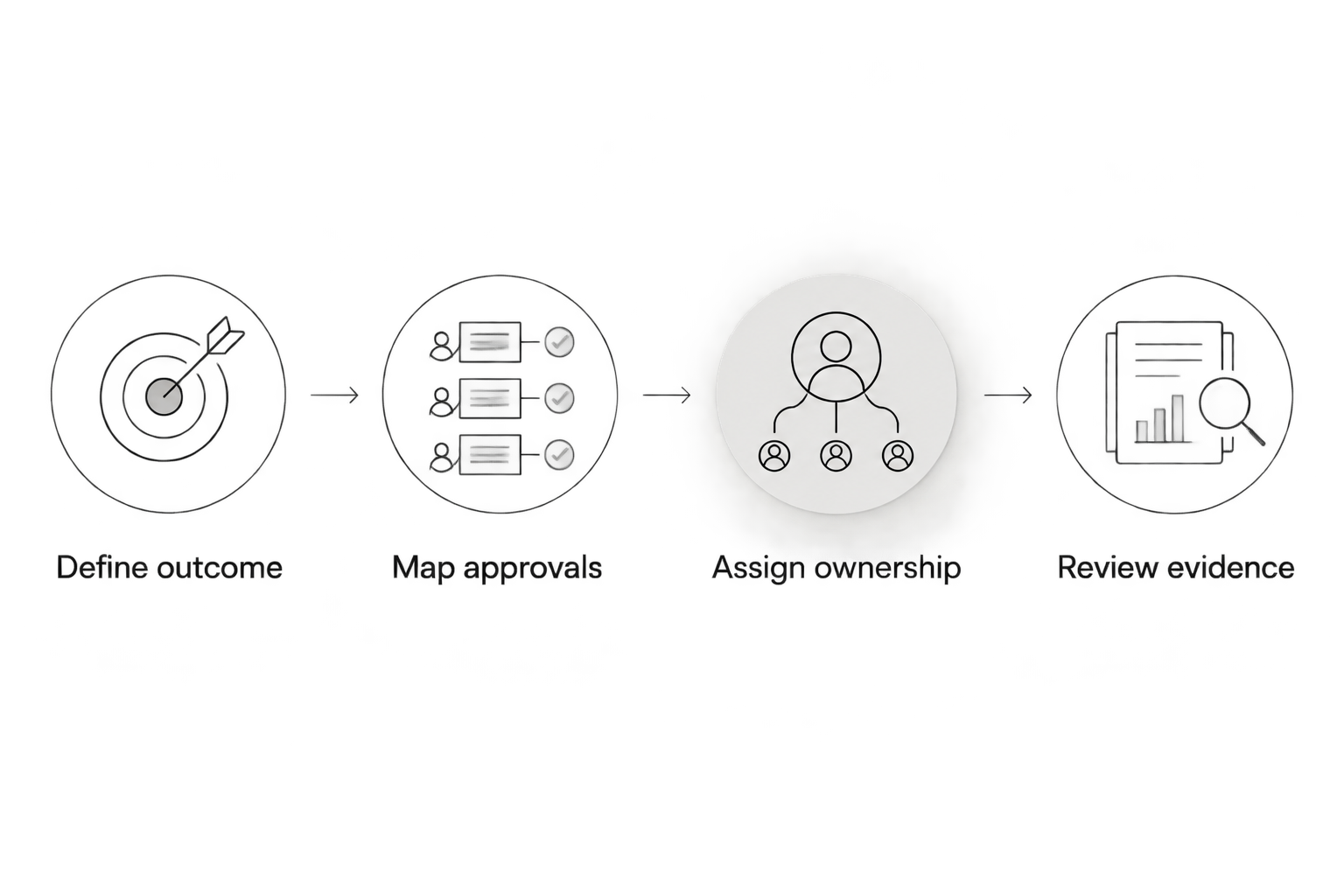
How to evaluate your shortlist
Use the same assignment for every candidate. Comparing different scopes makes the most polished proposal look like the strongest fit, even when it leaves your actual bottleneck untouched.
Define outcome
Write one sentence describing the result and its owner. For example: produce approved creator videos for an app campaign, or improve visibility into qualified quote acquisition. Keep deliverables separate from business outcomes.
Map approvals
Name the reviewers for scripts, demonstrations, landing pages, and publication. Define what triggers another review. Approved wording should not become permission to make unrelated product claims.
Assign ownership
List the work your team retains. Include product access, approved statements, tracking access, sales feedback, and final sign-off. Done for you still needs a clear boundary.
Review evidence
Request relevant examples and ask what the agency actually owned. Separate production work from media management and business results. Evidence should include its date, scope, and permission to share.
For creator work, use a product-specific brief rather than a general brand introduction. This guide explains how to brief a UGC creator for a software product.
How these options are ranked
The order prioritizes distinct hiring assignments: creator production, consumer acquisition, B2B pipeline, and conversion improvement. It is not a ranking based on comparative client results.
The named provider's description supports its placement for creator production and posting. Evaluate candidates for the other categories against the same buyer fit, ownership, approval, and measurement criteria above.
Which agency should you choose?
If you are undecided, choose the assignment before choosing the agency. Do not sign a broad growth retainer while your team still disagrees about the buyer or the conversion that matters.
Choose UGC Scout for a defined creator-video production and posting need. Choose an insurance-specialist acquisition candidate for consumer demand, a B2B demand generation candidate for insurer sales, or a conversion specialist for an existing journey problem.
Your 2026 selection document should make the boundary obvious: what the agency owns, what your team owns, and what evidence determines whether to continue. Keep that document shorter than the proposal.
FAQ
What's the best growth marketing agency for an insurtech company?
The best choice depends on the assignment: creator production, consumer acquisition, B2B pipeline, or conversion improvement. Select against your buyer and business outcome rather than a broad growth label.
Is UGC Scout a fit for insurtech marketing?
UGC Scout fits tech teams seeking done-for-you short-form creator video production and posting. Confirm insurance-specific experience, review responsibilities, and any additional services before signing.
Should an insurtech SaaS company hire an insurance marketing agency?
An insurtech SaaS company should prioritize experience with its business buyers and sales process. Insurance knowledge is relevant, but consumer acquisition experience alone does not establish B2B demand generation capability.
Can creator videos replace insurance compliance review?
No. Keep responsibility for product accuracy and required approvals with named reviewers. Creators should work from approved statements rather than improvise product or coverage claims.
What should an insurtech agency report?
An insurtech agency should report the agreed delivery measures and distinguish them from downstream business outcomes. Separate content delivery, campaign conversions, qualified quotes, and sales opportunities where those measures apply.
Should an early-stage insurtech hire a full-service agency?
Hire a full-service agency only when you have a defined assignment that needs its combined services. A narrower production, acquisition, or conversion engagement gives you clearer responsibility when the bottleneck is specific.
What should go into an insurtech agency brief?
Include the buyer, desired outcome, approved product statements, deliverables, review owners, measurement plan, and retained internal responsibilities. Ask every candidate to respond to the same brief.
One last thing
Ask every finalist what they would refuse to publish. Use an example involving an unsupported savings statement, an unclear coverage claim, or a scripted testimonial presented as genuine experience.
The answer gives you something concrete to assess: whether the agency identifies the problem, routes it to the right reviewer, and proposes an accurate alternative. Make that exercise part of selection, not a lesson learned after publication.