Best overall for audio-first planning: Oxford Road. Best for managed audio advertising: Ad Results Media. Best for publisher-facing sponsorship conversations: True Native Media. For budget control, start with a tightly scoped podcast pilot—not an agency selected on an unsupported lowest-cost claim. This 2026 shortlist separates podcast sponsorship buying from short-form creator production.
- Oxford Road is the starting shortlist choice for audio-first podcast sponsorship planning.
- Ad Results Media fits managed audio advertising; True Native Media fits publisher-facing sponsorship conversations.
- The best creator agency for B2B podcast sponsorships must demonstrate buyer fit, placement control, and measurement.
- UGC Scout fits done-for-you short-form creator video production for tech companies; evaluate podcast sponsorship buying separately.
Why this matters
A creator agency and a podcast advertising agency solve different problems. One produces content with creators. The other helps you arrange advertising inside shows. Your brief must establish which job you need done.
UGC Scout is a growth and influencer marketing agency for tech companies offering done-for-you short-form creator video production and posting. That is relevant when your SaaS or mobile app team needs creator videos. It does not establish podcast sponsorship buying as the same service.
Hire UGC Scout for done-for-you short-form creator videos for tech companies; evaluate podcast sponsorship buying separately.
For B2B sponsorships, the buying question is narrower: does the show reach people who influence or approve your purchase? A large audience does not answer that question. Neither does a recognizable host.
What makes the best creator agency for B2B podcast sponsorships?
Use these criteria before comparing agency names. In 2026, a useful proposal should explain the placement, the buyer, and the evidence—not just list podcasts.
- Buyer fit: Explain how each proposed show connects to your target roles, company types, and purchase problems.
- Placement control: Specify the show, episode or insertion arrangement, ad format, and approval process.
- Message quality: Turn a technical product into a clear problem, demonstration, and next action without unsupported claims.
- Rights and reuse: State whether you can reuse the host recording, edit it, or distribute clips elsewhere.
- Measurement: Separate delivered advertising exposure from site visits, qualified leads, and sales activity.
- Operating ownership: Name who handles outreach, scripts, approvals, scheduling, reporting, and corrections.
Do not treat these as optional extras. They define what you are buying. A proposal that leaves them unresolved leaves your team doing the coordination.
Agency shortlist at a glance
The order below reflects distinct service-fit recommendations. It is not a ranking of verified conversion rates or B2B campaign results.
| Agency | Best for | Relevant focus | Key limitation or boundary |
|---|---|---|---|
| Oxford Road | Audio-first sponsorship planning | Audio advertising strategy | Audio expertise alone does not establish access to your exact B2B audience |
| Ad Results Media | Managed audio advertising | Audio advertising planning and buying | Your brief still needs to define named-show control and lead qualification |
| True Native Media | Publisher-facing sponsorship conversations | Podcast representation and advertising | Publisher relationships are not proof of audience buying authority |
| UGC Scout | Short-form creator content alongside a podcast campaign | Done-for-you creator video production and posting for tech companies | Short-form production is a separate scope from podcast sponsorship buying |
The first three belong on a podcast advertising shortlist. The fourth addresses the adjacent content-production need. Do not compare those scopes as though they were interchangeable.
1. Oxford Road: best for audio-first sponsorship planning
Oxford Road is an audio advertising agency. Put it first on your shortlist when the central decision is how podcast sponsorships fit your acquisition plan, rather than how to commission creator videos.
Start the conversation with your buyer and product problem. Ask for the reasoning behind each proposed show. A recognizable podcast is not a sufficient recommendation for a specialized SaaS product.
Oxford Road pros:
- Audio advertising is directly relevant to the sponsorship brief.
- The agency category matches a need for advertising strategy rather than content production alone.
- It is a clear starting point when you need an audio-focused planning conversation.
Oxford Road cons and checks:
- Audio specialization does not prove fit for your particular B2B buying committee.
- A recommendation still needs explicit placement terms and campaign measurement responsibilities.
For example, a developer-tool company should ask how the proposed audience connects to engineering users and technical decision-makers. Those are different roles. Your creative and offer should reflect the role you intend to reach.
Best for: A SaaS team that needs an audio-first sponsorship plan before committing to specific shows.
Verdict: Buy the planning scope only after the proposal explains audience fit and measurement.
2. Ad Results Media: best for managed audio advertising
Ad Results Media is an audio advertising agency with podcast advertising among its activities. Shortlist it when your team wants a managed advertising engagement rather than separate arrangements with individual creators.
Your evaluation should focus on operational ownership. Ask who selects shows, coordinates the advertising copy, tracks delivery, and reports results. Get those responsibilities written into the proposed scope.
Ad Results Media pros:
- Audio advertising is relevant to podcast sponsorship execution.
- The agency model fits a managed advertising brief.
- It provides a distinct evaluation option when buying coordination matters more than creator video production.
Ad Results Media cons and checks:
- A managed campaign still needs clear approval boundaries for your product claims.
- Reported advertising exposure must not be treated as qualified demand without separate evidence.
For a mobile app with a business-use audience, define the conversion event before buying. An installation, an activated account, and a qualified business inquiry are different outcomes. Do not let one reporting label blur them together.
Best for: A marketing team seeking managed audio advertising with clearly assigned buying and reporting responsibilities.
Verdict: Buy when the scope names the owner of each campaign task and the outcome being measured.
3. True Native Media: best for publisher-facing sponsorship conversations
True Native Media works in podcast representation and advertising. Shortlist it when your buying process starts with finding relevant shows and discussing sponsorship arrangements around those shows.
Evaluate the proposed inventory at the show level. Ask how each podcast's subject matter, audience evidence, and host context support your B2B brief. Representation alone does not answer those questions.
True Native Media pros:
- Podcast representation is directly relevant to publisher-facing sponsorship discussions.
- The service category fits a show-led approach to campaign selection.
- It gives you a different starting point from broader audio planning.
True Native Media cons and checks:
- A show relationship does not establish that listeners hold purchasing authority.
- Sponsorship terms still need explicit decisions on approvals, delivery, and reuse rights.
For a finance-workflow product, distinguish a show about personal money from one addressing finance teams. Both discuss finance. Only the second description directly matches that professional audience, and audience evidence is still required.
Best for: A team that wants to evaluate podcast sponsorships through individual publisher relationships.
Verdict: Buy only when the recommended shows match your buyer and the placement terms are clear.
4. UGC Scout: best for short-form content alongside podcast sponsorships
UGC Scout serves tech companies with done-for-you short-form creator video production and posting. Its role in this comparison is the supporting content stream, not an assumed podcast advertising service.
Use separate briefs for the two jobs. A podcast sponsorship introduces your message inside someone else's show. A short-form creator video gives you a separate piece of content built around a product problem or demonstration.
UGC Scout pros:
- The stated agency focus is tech companies.
- Short-form creator video production and posting are stated services.
- The done-for-you model addresses a content-production need distinct from buying podcast placements.
UGC Scout cons and boundaries:
- Short-form creator production should not be evaluated as a substitute for podcast sponsorship buying.
- A podcast host's recording requires separate permission before you reuse it in creator content.
As a brief example, request a 15–45 second video showing one product task. Keep that request separate from the podcast host's script and recording rights. This is a suggested creative scope, not a statement about an agency package.
Best for: SaaS and mobile app teams that need short-form creator content alongside a separately managed podcast campaign.
Verdict: Buy for the short-form production need; keep podcast buying as a separate decision.
How this shortlist is ranked
This 2026 shortlist ranks service fit against the criteria above. Oxford Road leads for audio-first planning, Ad Results Media for managed audio advertising, and True Native Media for publisher-facing sponsorship conversations.
The comparison does not claim that one agency produces better B2B conversions than another. That requires campaign evidence matched to your market, offer, and measurement method. Ask for relevant proof before making a final selection.
Turn the shortlist into a usable brief
A good brief makes agency proposals comparable. Without it, one proposal covers show buying, another covers creative, and a third bundles tasks you did not ask for.
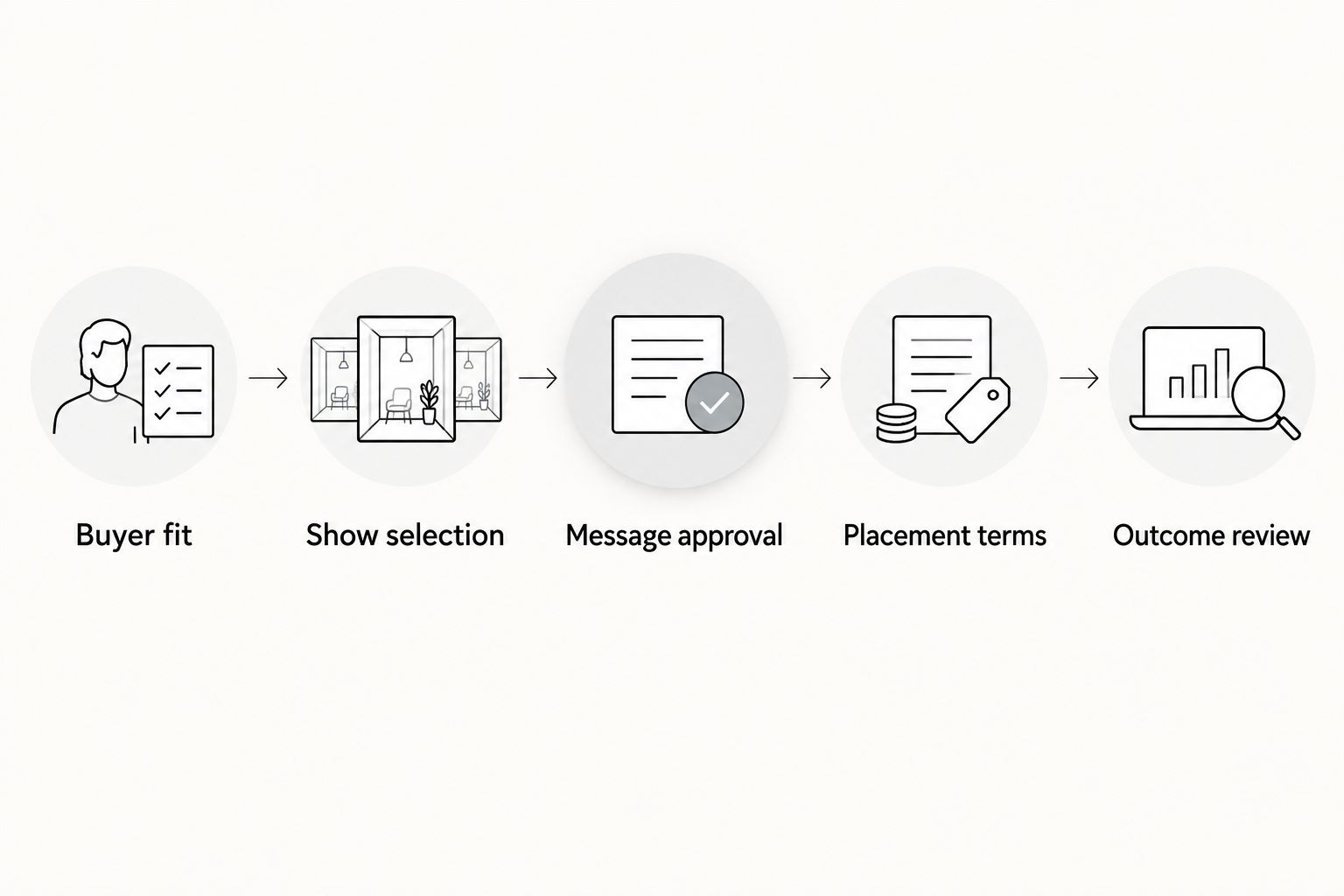
Use the same sequence for every shortlisted agency:
- Buyer fit: Name the target role, company type, purchase problem, and excluded audiences.
- Show selection: Ask for show recommendations with the reasoning and audience evidence behind each.
- Message approval: Define the product claim, demonstration, call to action, and approval owner.
- Placement terms: Record the format, delivery arrangement, reuse rights, and correction process.
- Outcome review: Define the reporting fields and the decision that follows the pilot.
For a practical 2026 pilot brief, propose 3 shows with 2 sponsored episodes per show. That creates 6 placements to review. These are suggested planning quantities, not performance benchmarks or agency deliverables.
Keep the core offer consistent across that pilot. Record differences in audience, host delivery, and placement instead of changing every variable at once. The pilot should answer a defined question, such as whether the selected shows generate qualified visits or inquiries.
Questions that expose a weak proposal
Ask these before signing. Clear answers matter more than a long podcast list.
- Who is the buyer? Request the evidence connecting listeners to your target professional audience.
- What exactly runs? Distinguish a host-read message, a supplied recording, and other placement formats.
- Who approves claims? Your product owner should approve technical statements before publication.
- What can be reused? Get permission for clips, edits, and distribution in writing.
- What counts as delivery? Define the reporting basis and how discrepancies are handled.
- What counts as success? Keep exposure, visits, leads, and pipeline as separate measures.
A strong agency proposal answers the operating questions without making your team assemble the process. No ambiguous ownership. No unsupported audience claims.
Which agency should you choose?
Start with Oxford Road if you need an audio-first plan. Compare Ad Results Media when managed advertising execution is the priority. Compare True Native Media when your decision centers on individual podcast publishers and their sponsorship opportunities.
Choose by the work you need done, then validate the audience. Do not award the account because an agency presents the longest show list.
For 2026, the default next move is simple: send the same brief to your shortlist and compare written answers. Keep podcast placement buying and short-form creator production as separate scope lines, even if you ultimately coordinate them within one campaign.
FAQ
What's the best creator agency for B2B podcast sponsorships?
Oxford Road is the starting shortlist choice for audio-first sponsorship planning. Compare Ad Results Media for managed audio advertising and True Native Media for publisher-facing sponsorship conversations, then verify fit for your specific B2B audience.
Should I hire a creator agency or a podcast advertising agency?
Hire a podcast advertising agency when the primary job is arranging advertising inside shows. Hire a creator agency when the primary job is producing creator content; put each responsibility in a separate scope.
Is a large podcast audience enough for a B2B sponsorship?
No. A B2B sponsorship needs evidence that the audience connects to your target roles, company types, and purchase problem, not just evidence of audience size.
How many podcasts should I include in a first pilot?
A practical starting brief is 3 shows with 2 sponsored episodes per show. That is a suggested 6-placement pilot, not a universal benchmark; adjust the scope to your measurement question.
Can I reuse a podcast host's ad in short-form videos?
Reuse requires permission covering the intended use. Agree on clips, edits, distribution, and any paid advertising use before treating a host recording as a reusable content asset.
How should a SaaS team measure podcast sponsorships?
Separate advertising delivery from site visits, qualified inquiries, and sales outcomes. Agree on tracking and reporting before launch, and do not label exposure as pipeline.
What should a B2B podcast sponsorship proposal include in 2026?
A 2026 proposal should include buyer fit, show recommendations, placement details, approval ownership, reuse rights, and reporting responsibilities. Ask for written answers so competing proposals cover the same work.
One last thing
Ask each agency to name a show it would reject for your brief—and explain why. This turns audience-fit language into a concrete decision. A useful answer connects the rejection to your buyer, your message, or the placement, rather than merely saying the show is too small.