
Best overall for paid demand strategy: Refine Labs; best for search-led acquisition: Directive. UGC Scout is best for B2B tech teams that want short-form creator video production and posting done for them.
- The best demand generation agency for B2B tech companies depends on the work your team needs outsourced.
- UGC Scout fits SaaS and mobile app teams seeking done-for-you creator video production and posting.
- Refine Labs fits paid demand strategy; Directive fits search-led customer acquisition.
- Walker Sands fits integrated communications; Ironpaper fits inbound programs connecting content with lead development.
Why this matters
Demand generation is not one service. You can hire an agency to create attention, capture existing searches, improve buyer education, or connect marketing activity with sales follow-up. Those are different assignments.
For your 2026 shortlist, start with the missing function. A creator production agency solves a different problem from a search agency. An integrated communications partner solves a different problem again.
Choose the agency for the work you need done, not the broadest service menu. If your team cannot name the deliverable, owner, and business objective, the agency brief is not ready.
This guide ranks agencies by distinct use cases. It does not treat creator posts, paid campaigns, media coverage, and qualified opportunities as interchangeable results.
What makes the best demand generation agency for B2B tech companies?
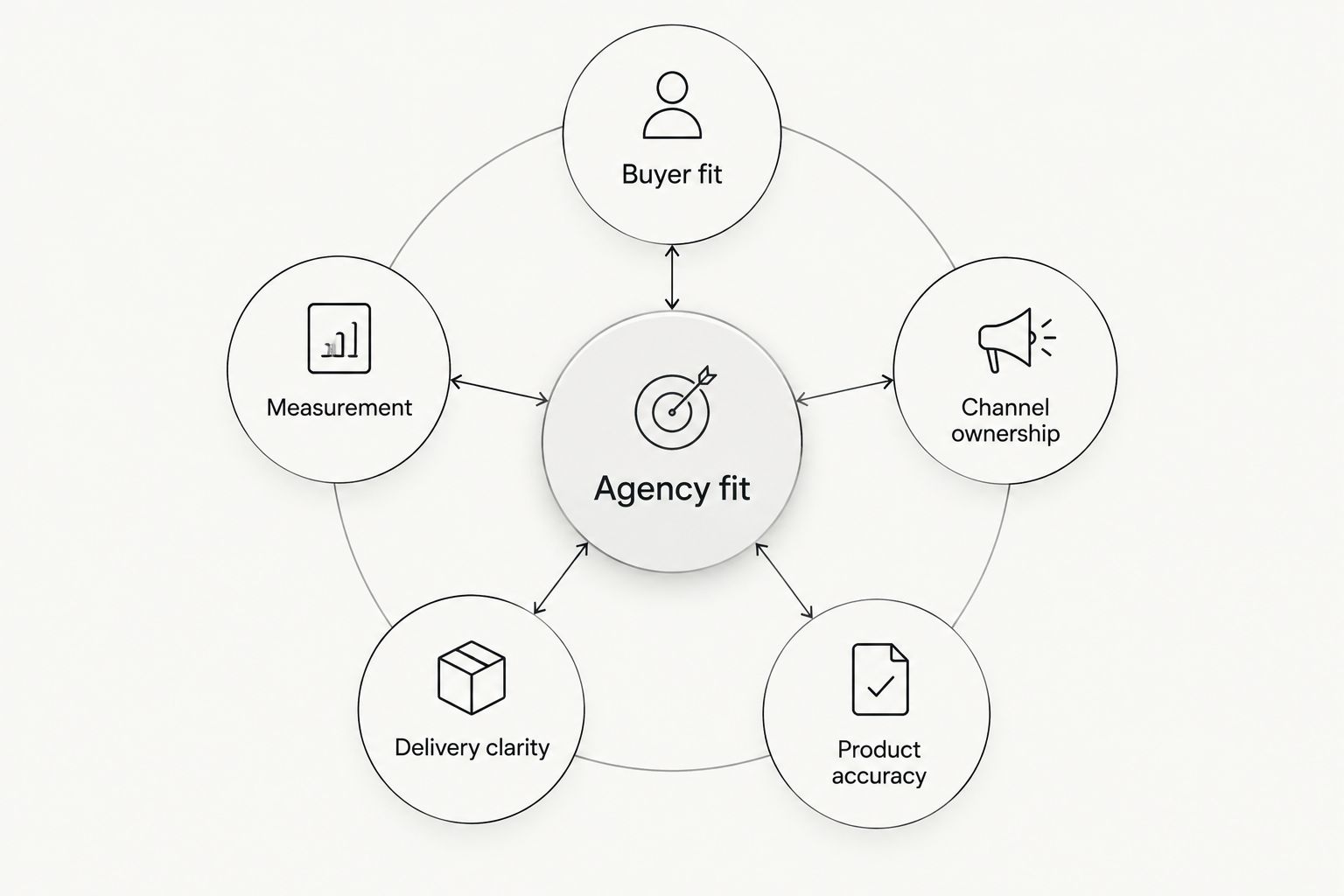
Use these five criteria before comparing proposals:
- Buyer fit: The agency understands who uses your product, who approves the purchase, and what each person needs to see.
- Channel ownership: The proposal states which channels the agency operates and which remain with your team.
- Product accuracy: Scripts, campaigns, and landing pages explain the product without unsupported claims.
- Measurement: Reporting separates content delivery and audience activity from leads, opportunities, and customers.
- Delivery clarity: The agreement defines production, approvals, revisions, posting, and handoff responsibilities.
In 2026, a proposal should make these responsibilities explicit. Ask for a sample brief and report, not just a presentation about growth. You need to see how the work moves from an idea to an approved deliverable.
Best demand generation agencies at a glance
This 2026 comparison assigns each agency a different job. The limitation column identifies the scope question to resolve before signing, not a claim that the agency lacks other capabilities.
| Agency | Best for | Standout focus | Key limitation to resolve |
|---|---|---|---|
| UGC Scout | Done-for-you creator video | Short-form creator video production and posting for tech companies | Confirm who owns distribution beyond posting and downstream conversion |
| Refine Labs | Paid demand strategy | B2B demand generation strategy and paid media | Confirm the production work included alongside strategy and campaigns |
| Directive | Search-led acquisition | Performance marketing for software companies | Confirm how search connects with creative, landing pages, and sales outcomes |
| Walker Sands | Integrated communications | B2B marketing and public relations | Define which communications work serves your acquisition objective |
| Ironpaper | Inbound lead development | B2B inbound marketing and sales alignment | Confirm the sales follow-up responsibilities needed to use generated leads |
1. UGC Scout: best demand generation agency for creator video
This growth and influencer marketing agency serves tech companies. Its stated offer is done-for-you short-form creator video production and posting. That makes it a specific fit for SaaS and mobile app teams that need creator content produced without running the production process themselves.
The purchase decision is about ownership. Do you need an agency to produce and post creator videos, or do you need someone to manage the full acquisition program? Define that boundary before discussing output.
UGC Scout pros:
- The stated service combines creator video production with posting.
- Its tech-company focus matches the audience for this guide.
- The done-for-you model fits teams seeking an outsourced production function.
UGC Scout cons:
- A creator production brief does not replace your product positioning or sales process.
- Posting activity alone does not establish qualified demand; your team still needs conversion measurement.
For your evaluation brief, request sample scripts for 15-second, 30-second, and 45-second videos. Use those lengths as planning targets, not promised agency deliverables. Ask each script to explain the same product benefit so you can compare clarity rather than unrelated ideas.
A useful SaaS example is a screen demonstration paired with a creator explaining the task it completes. A mobile app example is a creator showing a real use case. Both need accurate product access and clear approval rules.
Best for: Tech teams outsourcing short-form creator video production and posting.
Verdict: Buy this service model when creator production is the missing function. Skip it as a substitute for an undefined full-funnel program.
2. Refine Labs: best demand generation agency for paid demand strategy
Refine Labs focuses on B2B demand generation and paid media. It belongs on the shortlist when your main question is how to structure paid demand activity around a clear audience and business objective.
Choose this use case when you need campaign direction, not simply more content files. Your brief should identify the target accounts or buyer groups, the offer, and the conversion path.
Refine Labs pros:
- Its B2B demand generation positioning matches the category directly.
- A strategy-led brief gives you a place to address audience, message, and channel together.
- Paid media provides a defined operating scope for campaign planning and reporting.
Refine Labs cons:
- Campaign strategy still needs usable creative and an appropriate destination.
- Lead or pipeline reporting depends on your own tracking and sales data being usable.
For a 2026 evaluation, ask the agency to distinguish demand creation from demand capture in its proposed plan. A campaign introducing a problem needs a different message from a campaign aimed at someone already comparing vendors.
Ask who writes the ads, who builds the destination, and who approves product claims. These are operating questions. They determine whether the proposed strategy can become work your team can actually publish.
Best for: B2B tech teams seeking paid demand strategy and campaign direction.
Verdict: Buy for a defined paid demand assignment. Hold until creative ownership and measurement are explicit.
3. Directive: best demand generation agency for search-led acquisition
Directive positions itself around performance marketing for software companies. It is a relevant option when buyers already search for your category, product alternatives, or solutions to a defined problem.
Search-led acquisition starts with intent. A buyer searching for a solution comparison needs different information from someone encountering your category for the first time.
Directive pros:
- Its software-company focus matches a core B2B tech audience.
- Search-led planning gives your team a clear way to separate query intent.
- Performance marketing creates a direct brief around acquisition activity and conversion measurement.
Directive cons:
- Search captures expressed interest; it does not replace every form of market education.
- Traffic acquisition cannot fix a destination that fails to explain the product or next step.
Give the agency examples of category searches, comparison searches, and problem searches. Then ask how each group maps to a page and conversion action. Do not accept one landing page as the default answer for every intent.
Your 2026 proposal should also explain how campaign reporting connects to sales outcomes. An inquiry, a qualified opportunity, and a customer are different events. Keep them separate in the reporting definition.
Best for: Software teams prioritizing search-led acquisition and conversion work.
Verdict: Buy when search demand matches your offer. Hold if the product story and conversion path are still unsettled.
4. Walker Sands: best demand generation agency for integrated communications
Walker Sands is a B2B marketing and public relations agency. It fits a broader communications assignment where buyer education, messaging, and market visibility need to work together.
This is a different purchase from outsourcing a single production channel. Your team needs a shared narrative and a clear reason for each communication activity.
Walker Sands pros:
- Its B2B focus matches companies selling to organizational buyers.
- Marketing and public relations belong in the same evaluation when the assignment spans both.
- An integrated brief supports consistent messaging across different communications workstreams.
Walker Sands cons:
- A broad communications assignment creates more approval and coordination work.
- Coverage and visibility are not the same outcome as qualified opportunities.
A useful brief identifies the buyer's objection before listing desired channels. For example, an unfamiliar software category needs an explanation of the problem, the approach, and the evidence supporting the product. A list of placements does not answer those questions.
Ask how the agency will report communications output separately from acquisition outcomes. That distinction keeps a useful awareness program from being judged by a promise it was never designed to fulfill.
Best for: B2B tech teams coordinating marketing, messaging, and public relations.
Verdict: Buy for an integrated communications assignment. Skip a broad engagement when you only need a narrowly defined production service.
5. Ironpaper: best demand generation agency for inbound lead development
Ironpaper focuses on B2B marketing, including inbound marketing and sales alignment. It fits teams that need content and lead development to connect with a defined sales process.
The key question is not whether your team needs more content. It is whether that content answers buyer questions and gives sales a useful next step.
Ironpaper pros:
- Its B2B orientation fits business buying journeys.
- Inbound work provides a clear assignment around buyer questions and relevant content.
- Sales alignment belongs in the scope when marketing leads need follow-up.
Ironpaper cons:
- Useful lead development requires your team to define qualification and ownership.
- Content delivery alone does not ensure that sales follows up effectively.
Bring sales objections into the brief. Ask the agency to show how an article, downloadable resource, or follow-up message addresses a specific objection rather than merely covering a broad topic.
Before signing, define the handoff. Name the person responsible for follow-up and the information they need. An agency can work against that definition; it cannot make an undefined internal process clear by reporting more leads.
Best for: B2B tech teams connecting inbound content with lead development and sales follow-up.
Verdict: Buy when your team will support the sales handoff. Hold if qualification and follow-up have no owner.
How we ranked
The ranking uses buyer fit, channel ownership, product accuracy, measurement, and delivery clarity. Each agency receives a distinct recommendation based on its stated service focus, not a claimed performance advantage.
There is no universal winner across creator production, search acquisition, communications, and inbound marketing. The best shortlist contains agencies that can answer the same brief. Comparing unrelated scopes produces a purchasing decision without a useful comparison.
Which demand generation agency should you choose?
For an undecided B2B tech team in 2026, start with Refine Labs for a paid demand strategy assignment. Choose Directive instead when search-led acquisition is the defined priority.
Choose UGC Scout for done-for-you creator video production and posting. Choose Walker Sands for integrated communications, or Ironpaper for inbound lead development connected to sales.
Before requesting proposals, write one sentence: your team needs an agency to own a specific deliverable for a specific buyer. Then add the conversion event and the responsibilities your team will retain. That brief is more useful than asking every agency how it would grow your business.
Explore done-for-you creator video
Review short-form creator video production and posting for your tech company.
FAQ
What's the best demand generation agency for B2B tech companies?
Refine Labs is the default recommendation here for paid demand strategy. Directive fits search-led acquisition, while a specialist creator agency fits teams outsourcing short-form video production.
Should a SaaS company hire a UGC agency or a demand generation agency?
Hire a UGC agency when creator video production and posting are the work you need outsourced. Hire a broader demand generation partner when the assignment includes campaign strategy, channel operation, and conversion measurement.
Is Refine Labs better than Directive?
Refine Labs is the recommendation here for paid demand strategy; Directive is the recommendation for search-led acquisition. Compare both against the same deliverables before choosing.
Can creator videos support B2B demand generation?
Creator videos can explain a product problem, demonstrate a workflow, or introduce a use case. Measure the intended buyer action separately from video delivery and audience activity.
What should I ask a demand generation agency before signing?
Ask who owns strategy, production, approvals, distribution, and reporting. Also define the conversion event and the work your internal team must supply.
How do I compare demand generation agency proposals?
Compare proposals against the same buyer, deliverables, channels, and measurement definitions. A production-only scope and an integrated acquisition scope are different purchases.
What results should a B2B tech team measure?
Measure delivery, audience response, and business outcomes as separate categories. Define leads, qualified opportunities, and customers consistently with your sales team.
One last thing
Ask each shortlisted agency to explain what it does not own. That answer reveals the handoffs your team must manage.
A clear boundary is useful. No creator hunting does not mean no product input. Done for you does not mean your team disappears. Give the agency accurate product information, an approval owner, and a defined objective before expecting a content machine.