Yes, you can reuse UGC content for paid ads legally when you have permission covering the advertising use, clear any third-party rights, and meet applicable endorsement and advertising rules. Paying for a video, receiving the file, or getting permission to repost does not automatically give you paid-ad rights; creator-account advertising also requires the relevant platform authorization.
- To reuse UGC content for paid ads legally, secure advertising rights before launch—not just permission to repost.
- Clear music, likenesses, software screens, and endorsement claims separately from the creator’s video license.
- Creator-account ads require platform authorization as well as the underlying content rights.
- UGC Scout fits tech teams seeking done-for-you creator video production; confirm paid-ad rights in the agreement.
Can UGC content be reused for paid ads legally?
Yes—but the permission must match the ad you actually run. For a US campaign in 2026, review the content license, permissions for identifiable people, third-party materials, advertising claims, and platform requirements. A signed creator agreement helps document those permissions, but it cannot clear rights the creator does not control.
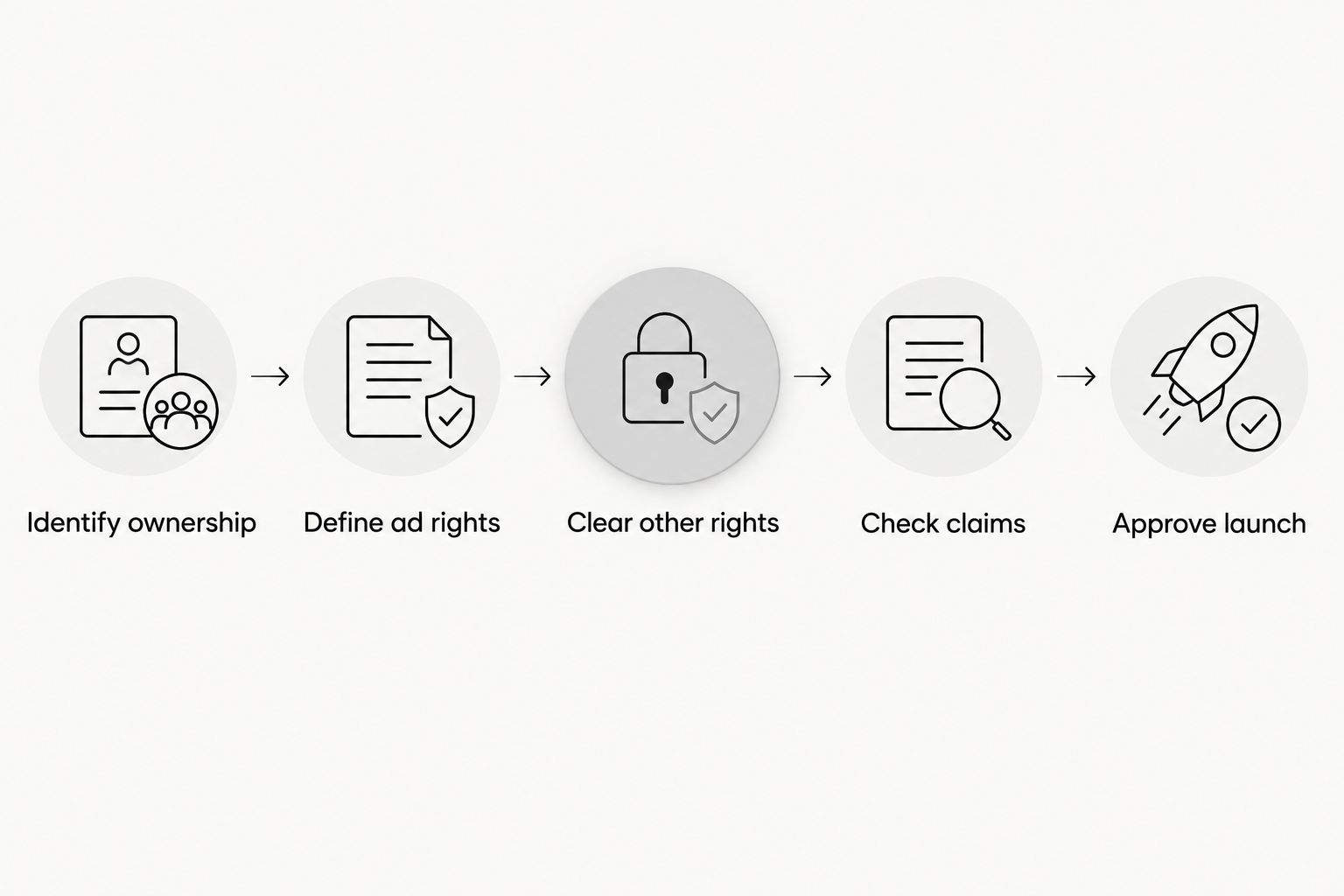
Use this approval sequence before uploading a creator video to an ad account:
- Identify ownership. Establish who controls the footage, script, audio, and other included material.
- Define ad rights. Document permission for the intended platforms, placements, territory, duration, and edits.
- Clear other rights. Check music, identifiable people, software screens, and confidential information.
- Check claims. Verify the testimonial and any product claims, then add required disclosures.
- Approve launch. Confirm platform authorization where needed and record when usage must stop.
Put those requirements into the assignment before filming. A software creator brief should describe the intended advertising use, not just the video concept.
Why this matters
A creator video contains more than footage. It can include someone’s face, a music recording, a software dashboard, customer information, and statements about your product. Permission for one element does not settle the others.
For SaaS and mobile app teams, the distinction is practical. A creator can authorize their own recording while accidentally showing a customer’s email address or using music that is not cleared for advertising. Approve the complete ad, not just the creator relationship.
This guide covers US-focused campaign planning in 2026. It provides general information, not legal advice; have counsel review the agreement and any jurisdiction-specific questions.
Organic reposting versus paid advertising
Organic reposting, brand-account advertising, and creator-account advertising are different uses. Do not treat a yes to one as a yes to all of them.
| Use | Best for | Permission to document | Main limitation |
|---|---|---|---|
| Organic reposting | Sharing approved creator content without paid distribution | Permission for the named organic channels and intended edits | Does not automatically authorize advertising |
| Brand-account paid ads | Running creator footage through your business’s ad account | Paid-media rights, identity permissions, editing scope, territory, and term | Your license still needs to cover included third-party material |
| Creator-account paid ads | Advertising that uses a creator’s account identity | Content rights, identity permissions, and platform authorization | Account authorization does not replace a content license |
Choose brand-account ads when your intended use is advertising from your business account. Choose creator-account ads when the campaign specifically requires the creator’s account identity and the creator agrees to that arrangement.
Neither approach removes your responsibility for claims or disclosures. Platform approval is also not a legal clearance of every element in the video.
Brand-account paid ads: define the license
A paid-media license should identify the content and explain what your business can do with it. Avoid relying on a file name and a vague promise of usage rights.
For your 2026 campaign agreement, document:
- Assets: The specific approved videos, stills, voice recordings, or source files covered.
- Channels: The advertising platforms and placements you intend to use.
- Term: When permission starts, when it ends, and how renewal works.
- Territory: Where the ads can run.
- Edits: Whether you can crop, caption, shorten, translate, or combine the footage.
- Authorized users: Whether your agency and other production partners can handle the assets on your behalf.
A license lets you use content within an agreed scope. An assignment transfers specified ownership rights. Those are different arrangements, and neither automatically clears music or another person’s likeness.
The US Copyright Office’s guidance on transfers explains that copyright ownership and possession of a copy are separate. Under 17 U.S.C. §106, copyright owners hold specified exclusive rights, including reproduction and preparation of derivative works. Under 17 U.S.C. §204, transfers of copyright ownership generally require a signed writing, subject to statutory exceptions.
Nonexclusive licenses are different from ownership transfers. Still, written terms make the intended advertising permission easier to establish than an ambiguous message thread.
Creator-account paid ads: authorize the account separately
Creator-account advertising adds another approval layer. The content agreement must cover the intended advertising use, while the relevant platform authorization enables the account-based placement.
For TikTok Spark Ads, distinguish permission to use the video from authorization to promote the eligible post. For Meta partnership ads, distinguish contractual rights from the permissions required by Meta’s advertising setup. Follow the current platform instructions when configuring either format.
The benefit is straightforward: you can run the agreed advertising format using the creator’s account identity. The limitation is equally clear: contractual permission and platform access can have different scopes or end dates.
Before launch, record which post or asset is authorized, which advertiser can use it, and when the authorization ends. Do not use a working authorization as proof of unlimited rights.
Why UGC advertising permission varies
The permission you need depends on the actual campaign—not simply whether everyone calls the asset UGC. These factors change what your agreement and review must cover:
- Source: Commissioned footage, unsolicited customer videos, and employee content can involve different ownership and permission questions.
- Distribution: Organic posts, paid social, app-store listings, and other placements are separate uses to address.
- Identity: A creator’s face, voice, name, and account identity introduce permissions beyond copying the file.
- Included material: Music, background footage, screenshots, and other people can require separate clearance.
- Modification: A subtitle correction is not the same as translating a testimonial or changing its meaning.
- Audience location: Copyright, publicity, privacy, and advertising obligations depend on the jurisdictions involved.
For a 2026 rights review, start with the proposed use and work backward. Ask what viewers will see, where they will see it, whose identity appears, and which promises the finished ad makes.
Clear music, people, and product screens
A creator’s permission is only as useful as the rights it covers. Ask what the creator made themselves and what came from somewhere else.
Music and background material
Do not assume that audio available for an organic post is licensed for your paid campaign. Check the applicable music terms for the specific advertising use, platform, and territory. A creator’s assurance that a track was available in an app is not a substitute for that check.
Replacing uncertain audio can simplify clearance, but review the replacement too. Stock footage, images, and sound effects also have license terms.
Faces, voices, and names
Obtain appropriate permission to use identifiable people in advertising. State publicity and privacy laws vary, and copyright permission alone does not settle those rights.
Treat background participants as part of the review. If a creator films with someone else, the creator’s own agreement does not automatically authorize that other person’s appearance. Content involving children needs specific legal review.
Software demos and customer information
Use a controlled demo environment rather than a live customer account. Remove names, email addresses, private messages, payment details, and confidential material before recording.
Check what the screen implies, too. A dashboard showing sample results must not mislead viewers into believing those results describe the creator’s actual experience. A disclaimer does not repair a contradictory main message.
Check testimonials and disclosures before launch
The FTC’s Endorsement Guides, 16 C.F.R. Part 255, address endorsements and disclosure of material connections. For your 2026 review, separate two questions: is the endorsement truthful, and will viewers understand the relationship behind it?
A paid creator should not claim to be an independent customer if that is untrue. Nor should a script give the creator an experience they never had. If the creator has not used your app, do not ask them to describe months of personal use.
Keep the testimonial within the creator’s actual experience and substantiate your product claims. Statements about outcomes, security, integrations, or functionality need support appropriate to the claim.
Make required disclosures clear and conspicuous in the context of the ad. Do not assume a disclosure in the original post’s caption carries into a cropped video, another placement, or a different platform.
Review edits for meaning as well as grammar. Removing a qualification can turn an accurate statement into a misleading one. Captions, overlays, and the landing page also affect the message viewers receive.
Can I use UGC in ads if I paid the creator?
Payment alone does not establish the full scope of your advertising rights. Review the agreement for the intended use, edits, duration, territory, and any account authorization.
If the paperwork only covers production or organic posting, obtain written permission for paid media before launch. Do not treat delivery of the source file as an ownership transfer.
Can I edit a creator video into new ads?
You can edit a creator video when your permission covers those edits and the result remains lawful and truthful. Specify whether the license permits cutdowns, new captions, translations, combinations with other footage, and additional placements.
Get renewed approval when the proposed change falls outside the agreed scope. Never turn an authentic testimonial into a claim the creator did not make.
Does permission to repost cover paid ads?
Permission to repost does not automatically cover paid ads. Ask for permission that expressly addresses paid distribution rather than relying on a general yes to sharing.
The same distinction applies when moving between platforms. A permission limited to an organic Instagram post does not establish permission for a YouTube advertisement.
Keep rights management inside the production workflow
UGC Scout is best for tech teams seeking done-for-you short-form creator video production and posting. The service fits teams that want production handled for them; it does not remove the need to agree on advertising rights and review the finished ad.
When evaluating UGC Scout, make intended paid use part of the service discussion. Ask who secures creator permissions, who checks included materials, who approves claims, and who tracks expiration dates. Confirm the answers in the agreement rather than assuming production includes unlimited rights.
A practical handoff includes the approved asset, its license, relevant permissions, disclosure instructions, and the usage end date. Store those records where the person launching ads can find them.
FAQ
Can I legally turn a customer’s public video into a paid ad?
A public post is not automatic permission to use the video in a paid ad. Obtain permission covering the advertising use and review music, identifiable people, claims, and disclosure requirements.
Do I own a UGC video after paying for it?
Paying for a UGC video does not automatically transfer copyright ownership. Your agreement determines whether you receive a license, an ownership transfer, or another arrangement, subject to applicable law.
Is a creator’s direct message enough permission for advertising?
A direct message can document permission, but a vague reply does not establish every advertising right you need. Use a clear written agreement covering assets, paid use, edits, channels, territory, and duration.
Can I use trending music in a UGC ad?
Use trending music only when the applicable rights cover your advertising use. Availability in an organic-posting tool does not establish permission for paid advertising.
Does TikTok Spark Ads authorization replace a creator contract?
TikTok Spark Ads authorization does not replace an agreement covering content and identity rights. Confirm both the platform authorization and the underlying permissions for the intended campaign.
Can I keep running creator ads after the license expires?
Do not keep running creator ads after the applicable permission expires unless you have a valid extension or another legal basis for that use. Track expiration dates and remove or pause affected placements.
Does hiring UGC Scout automatically give me unlimited ad rights?
Hiring UGC Scout does not establish unlimited advertising rights by itself. Confirm paid-media usage, editing permission, duration, territory, and any creator-account authorization in the agreement.
One last thing
The approved video and the approved ad are not always the same asset. A new headline, translated voiceover, or edited testimonial can change what the audience understands—even when the underlying footage stays untouched.
Keep the final rendered ad beside its permission record. Before renewing a campaign in 2026, review both: whether you still have the rights and whether the complete advertisement still tells the truth.