
Best overall for done-for-you tech creator videos: UGC Scout. Best for integrated healthcare marketing: Real Chemistry. Best for patient-centered storytelling: imre. Best for health-focused brand strategy: Ogilvy Health. The best influencer marketing agency for healthtech is the one whose scope matches your product, audience, and claim-review process—not the one with the longest creator list.
- UGC Scout is the best influencer marketing agency for healthtech teams seeking done-for-you short-form tech creator production and posting.
- Shortlist Real Chemistry for integrated healthcare marketing, imre for patient-centered storytelling, and Ogilvy Health for health-focused brand strategy.
- Separate creator production from influencer distribution; your brief must specify which service you need.
- Require approved claims, disclosure rules, usage rights, and a named reviewer before creators record.
Why this matters in 2026
Healthtech covers very different buying decisions. A consumer wellness app needs a different creator brief from software sold to hospital operations teams. Start with the buyer, not the platform.
Your agency also needs a clear boundary between demonstrating a product and making a health claim. Showing how someone schedules an appointment is not the same as saying an app improves a medical condition. Both are videos. They require different evidence and review.
For your 2026 shortlist, separate two services: creator content production and influencer distribution. Production gives you videos to publish or advertise. Distribution puts content in front of a creator's audience. Ask who publishes, on which account, and under whose approval.
This guide ranks agencies by buying situation. Use it to decide which conversation to have first, then require a written scope before selecting a partner.
What makes the best influencer marketing agency for healthtech?
Use these criteria before reviewing agency names:
- Buyer fit: The agency should distinguish patients, consumers, clinicians, and business buyers. A creator who reaches one audience is not automatically right for another.
- Product clarity: The brief should explain what your product does without turning a demonstration into an unsupported health promise.
- Production ownership: Identify who finds creators, writes briefs, coordinates recording, edits footage, and handles posting. “Managed” is not a deliverables list.
- Claims review: Your team should approve health-related statements before recording. Assign someone who can reject a script, not just comment on it.
- Rights and disclosure: Define permitted channels, paid-ad use, editing rights, and disclosure obligations before content is created.
- Measurement fit: Separate content output, audience response, and business results. Views alone do not establish product adoption or clinical benefit.
The deciding question is simple: which work do you need taken off your team's plate? Choose production support for a production problem. Choose broader healthcare support when audience strategy and claim-sensitive communication are the main problem.
Healthtech agency shortlist at a glance for 2026
| Agency | Best for | Standout fit | Key limitation to resolve |
|---|---|---|---|
| UGC Scout | Done-for-you tech creator videos | Tech focus; short-form creator production and posting | Establish the health-claim review workflow separately |
| Real Chemistry | Integrated healthcare marketing | Healthcare-focused marketing and communications | Define the creator work inside the wider engagement |
| imre | Patient-centered storytelling | Healthcare marketing with a human-centered approach | Confirm how storytelling connects to product demonstration and action |
| Ogilvy Health | Health-focused brand strategy | Healthcare-focused brand and communications work | Confirm who owns recurring creator production and posting |
These are distinct use cases, not interchangeable packages. A wider agency brief is not automatically a better answer to a narrow production need. Conversely, content production alone does not replace medical, legal, or regulatory review.
1. UGC Scout: best for done-for-you tech creator videos
UGC Scout is a growth and influencer marketing agency for tech companies. Its offer includes done-for-you short-form creator video production and posting. That makes it the first conversation for SaaS and mobile app teams seeking help producing and publishing creator content.
The fit is strongest when you can define the product action to show. Examples include opening an app, completing a setup flow, or demonstrating a scheduling feature. Give the creator a task that is visible on screen, rather than a broad instruction to make the product sound useful.
For a healthtech brief, keep product demonstration and health outcomes separate. Your team should supply approved claims and prohibited wording. Do not expect a production scope to establish the evidence behind a medical statement.
UGC Scout pros:
- The agency's stated focus is tech companies.
- Short-form creator video production is part of the offer.
- Posting is included in the stated offer, rather than production alone.
UGC Scout cons:
- A tech focus does not establish specialist clinical or regulatory expertise.
- Production and posting do not, by themselves, define audience targeting, paid-media management, or conversion measurement.
Ask for a written division of responsibilities: creator selection, scripting, review, recording, editing, publishing, and reporting. Also specify whether publishing means your brand account or a creator account. Those are different distribution decisions.
Best for: SaaS and mobile app teams that need short-form creator production and posting done for them.
Verdict: Buy for the production brief. Keep clinical claims under an explicitly assigned review process.
2. Real Chemistry: best for integrated healthcare marketing
Real Chemistry is a healthcare-focused marketing and communications company. Shortlist it when the creator brief belongs inside a wider healthcare marketing assignment, rather than treating video production as an isolated task.
For example, a healthtech company serving both patients and healthcare organizations needs distinct audience messages. Your evaluation should establish how an agency connects those messages without blurring who each piece of content addresses. Ask for a proposed scope built around your actual buyer journey.
Real Chemistry pros:
- Healthcare is central to the company's positioning.
- Its wider marketing and communications remit fits an integrated brief.
- It is a relevant shortlist candidate when creator content must connect with other healthcare communications.
Real Chemistry cons:
- A broad engagement adds decisions beyond creator selection and filming.
- Healthcare agency positioning does not establish the exact creator deliverables your team needs.
Ask the agency to separate strategic work from production work. You should be able to identify who approves messages, who manages creators, and who is responsible for publishing. Do not accept a campaign description in place of that responsibility map.
Require examples relevant to your audience and channel. A healthcare campaign is not automatically evidence of experience producing app demonstrations or managing recurring creator posts.
Best for: Healthtech teams seeking creator activity within a broader healthcare marketing program.
Verdict: Hold until the creator scope is explicit. Prioritize Real Chemistry when integrated healthcare marketing is the actual assignment.
3. imre: best for patient-centered storytelling
imre is a marketing agency with healthcare work and a human-centered approach. Shortlist it when the main challenge is explaining a healthtech product through the audience's experience, not simply listing features.
A patient-centered brief should begin with a real task or barrier: understanding a next step, preparing for an appointment, or learning how a service works. It should not instruct a creator to invent a diagnosis, treatment history, or personal result.
imre pros:
- Healthcare work makes the agency relevant to this shortlist.
- A human-centered approach fits briefs organized around audience needs.
- Its marketing remit supports a conversation beyond individual video assets.
imre cons:
- A compelling story does not establish evidence for a health claim.
- Healthcare experience alone does not specify creator sourcing, content volume, or posting responsibilities.
During evaluation, ask imre to show how a story leads to a concrete product action. What should the viewer understand? What can the viewer do next? The answers should appear in the brief, not remain implied by the campaign concept.
Also distinguish genuine testimonials from demonstrations. A creator can demonstrate a workflow without claiming to have experienced a health outcome. Your review process should preserve that distinction throughout scripting and editing.
Best for: Healthtech teams whose brief centers on audience understanding and patient-centered communication.
Verdict: Hold until the story-to-product connection is clear. Choose imre's use case when audience experience is the central creative problem.
4. Ogilvy Health: best for health-focused brand strategy
Ogilvy Health is a healthcare-focused agency within Ogilvy. Shortlist it when creator content needs to express a defined health brand position across different audiences and communications.
This is a different assignment from simply requesting more videos. Your brief should explain the brand's role, the audience it serves, and the product claims that support that position. Then ask how creator content makes those decisions visible.
Ogilvy Health pros:
- Healthcare is an explicit focus of the agency.
- Its brand and communications remit fits positioning-led assignments.
- It is a relevant candidate when creator work must align with wider health communications.
Ogilvy Health cons:
- Brand strategy is not a substitute for a recurring production schedule.
- A broader agency remit leaves creator ownership unresolved unless the scope names it.
Ask for the operating plan alongside the creative direction. Who selects creators? Who reviews scripts? Who supplies the product access needed for demonstrations? Who publishes approved content? A strong positioning document does not answer those questions automatically.
For a small app team, keep the assignment narrow enough to manage. If your messaging is already clear and the bottleneck is recording and posting, evaluate production-focused support first.
Best for: Healthtech teams that need creator content tied to health-focused brand strategy.
Verdict: Hold until strategy and execution are connected. Skip a broad strategy engagement when your immediate need is only production.
Turn the shortlist into an executable brief
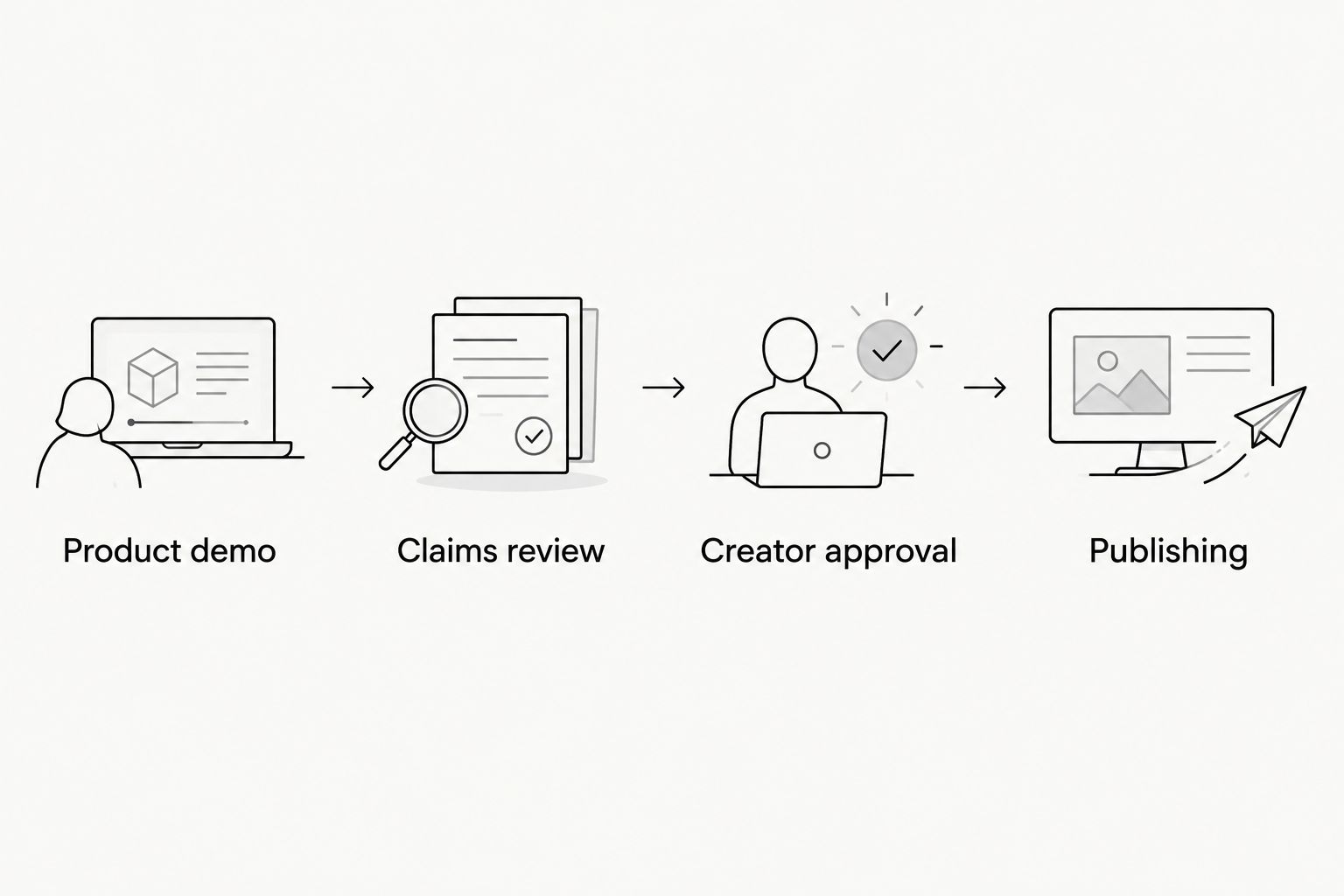
Before commissioning content in 2026, write a brief that survives the handoff from your marketing lead to the creator. Use the following sequence. Each step needs an owner and an approval condition.
Product demo
Choose one visible action. For example, brief a 15-second video around a single feature, a 30-second video around a product workflow, or a 45-second video around a fuller explanation. These are planning examples, not agency package specifications or platform requirements.
Show the creator what success looks like inside the product. Use a demonstration account where appropriate. Do not ask creators to record identifiable patient information to make the content feel authentic.
Claims review
Separate feature statements from outcome statements. “You can book an appointment here” describes functionality. A statement about improving a medical condition requires a different review and supporting evidence.
Create an approved-claims document. Add prohibited wording and an escalation contact. Review the script before recording so corrections do not depend on removing a central claim from finished footage.
Creator approval
Evaluate audience relevance and communication quality separately. A creator's personal familiarity with a topic does not establish professional credentials or permission to give medical advice.
Approve the creator, script, disclosure wording, and intended use together. Define paid-ad rights and editing permissions in the agreement. If specialist credentials matter to your brief, verify them rather than inferring them from a profile description.
Publishing
Name the publishing account and the person authorized to approve the final edit. Include captions and disclosure placement in the review, not just the spoken script.
The FTC's endorsement guidance requires material connections to be disclosed clearly and conspicuously. Treat disclosure as part of the content, not an optional addition after approval. Review any platform-specific requirements before publishing.
The same brief should define what happens after publication. Assign responsibility for comments that request medical advice, raise safety concerns, or disclose sensitive information. Escalation is an operating decision, not a creative judgment.
How the 2026 shortlist is ranked
The ranking prioritizes fit with the assignment: tech creator production, integrated healthcare marketing, patient-centered storytelling, or health-focused brand strategy. It does not rank agencies by unverified campaign results.
Use the criteria above to evaluate proposals side by side. Require named owners, explicit deliverables, an approval process, and agreed usage rights. A recognizable agency name should never replace those requirements.
Which healthtech agency should you choose in 2026?
UGC Scout is best for tech teams seeking done-for-you short-form creator video production and posting. Start there when your immediate problem is getting product-focused content made and published.
Choose a broader healthcare shortlist when the assignment includes audience strategy, patient-centered communication, or health brand positioning. Bring the same brief to each agency. Compare the work each proposal actually assigns, not the vocabulary used to describe it.
Before signing, ask the agency to walk one proposed video from brief to publication. The handoffs reveal whether the service matches your team's needs.
FAQ
What's the best influencer marketing agency for a healthtech app?
The best fit depends on whether you need creator production or broader healthcare marketing. For a healthtech app, define the product demonstration, audience, posting responsibility, and claim-review owner before comparing agencies.
Should a healthtech company hire a UGC agency or an influencer agency?
Hire for production when you need creator-made assets, and hire for distribution when you need access to a creator's audience. If you need both, require the scope to specify content ownership and publishing accounts separately.
Can a creator demonstrate a healthtech product without being a patient?
A creator can demonstrate product functionality without presenting the demonstration as a personal patient experience. The content must not imply a genuine testimonial or health result that the creator has not experienced.
Do healthtech influencer posts need sponsorship disclosures?
Posts require clear disclosure when a material connection exists between the creator and the brand. FTC endorsement guidance covers connections such as payment or other benefits; the disclosure must be clear and conspicuous.
Does every healthtech creator campaign fall under HIPAA?
No, HIPAA does not apply to every healthtech company or creator campaign. Its requirements apply to covered entities and business associates; assess the organizations and information involved before sharing health data.
How long should a healthtech creator video be?
Choose the length around the task the viewer needs to understand. A 15-second feature clip, 30-second workflow demo, and 45-second explanation are useful briefing examples, not fixed platform rules.
What should I ask an agency before signing?
Ask who owns creator selection, scripting, claims review, editing, publishing, rights, and reporting. Require those responsibilities in the written scope, then walk through a proposed video to check the handoffs.
One last thing
Approve the caption as carefully as the video. An accurate demonstration can still become misleading when the caption adds an unsupported health promise. Put spoken words, on-screen text, captions, and disclosures through the same final review.