
Best for done-for-you creator video: UGC Scout. Best overall for a B2B SaaS acquisition brief: Directive. Best for search-led demand generation: Powered by Search. Best for paid-ad conversion work: KlientBoost. Best for demand-generation strategy: Refine Labs. This 2026 shortlist separates agencies by the work you need done, rather than treating every SaaS growth problem as a media-buying problem.
- The best performance marketing agency for SaaS companies depends on whether your bottleneck is creative, acquisition, conversion, or demand.
- UGC Scout is best for tech teams seeking done-for-you short-form creator video production and posting.
- Directive is the default shortlist choice for a broader B2B SaaS acquisition brief.
- Compare agency scope, measurement, and ownership before signing; do not treat video production and paid-media management as interchangeable.
Why this matters
A SaaS agency brief can hide several different jobs. You might need people to discover your product, understand it, start a trial, or become qualified sales opportunities. Those jobs need different creative, channels, and reporting.
For your 2026 shortlist, name the bottleneck before naming an agency. Buy the missing capability, not the longest service list. A creator-production partner and a paid-acquisition agency solve different problems, even when both contribute to growth.
For self-serve SaaS, connect campaigns to activation and paid conversion. For sales-led SaaS, connect campaigns to qualified opportunities and pipeline. Clicks alone do not establish either outcome.
What makes the best performance marketing agency for SaaS companies?
Use these criteria before reading the comparison:
- Business-model fit: The agency must understand your self-serve, sales-led, or hybrid purchase path. Ask it to explain where marketing hands off to product or sales.
- Bottleneck fit: Separate creator production, media buying, landing-page conversion, and demand generation. State which job the agency owns.
- Measurement: Define the business outcome and the events needed to track it. Distinguish a signup from an activated user and a lead from an opportunity.
- Creative scope: Confirm who writes scripts, finds creators, produces edits, and publishes content. A campaign plan is not a finished video.
- Operating ownership: Name the people responsible for approvals, account access, reporting, and decisions. Put usage rights and handover terms in writing.
An agency earns its place by matching these requirements. A familiar name does not replace a clear scope.
SaaS performance marketing agencies at a glance
These recommendations compare service focus, not verified performance results. The table identifies the best starting point for each brief; it does not claim that one agency produces better returns than another.
| Agency | Best for | Standout focus | Key limitation for your decision |
|---|---|---|---|
| UGC Scout | Done-for-you creator video | Short-form creator video production and posting for tech companies | Creator production is not the same brief as full paid-acquisition management |
| Directive | Broad B2B SaaS acquisition | B2B performance marketing and customer acquisition | A broad engagement needs explicit boundaries and internal ownership |
| Powered by Search | Search-led demand generation | B2B SaaS demand generation, including paid search and SEO | Search cannot substitute for an unclear product proposition |
| KlientBoost | Paid-ad conversion work | Paid advertising and conversion-rate optimization | Better campaign conversion does not establish better customer activation |
| Refine Labs | Demand-generation strategy | B2B demand generation and paid-media strategy | Demand creation needs measurement beyond immediate form submissions |
1. UGC Scout: best for done-for-you SaaS creator video
UGC Scout is a growth and influencer marketing agency for tech companies offering done-for-you short-form creator video production and posting. It belongs on this shortlist when creator content is the missing capability, rather than when you need to replace every part of your acquisition operation.
UGC Scout is best for SaaS and mobile app teams that need short-form creator video production and posting done for them. That is a specific service fit, not a claim about campaign returns.
Use this brief when your team knows the audience and product message but needs help turning them into creator-led content. Specify the product workflow, the audience problem, and the action each video should support.
Pros:
- Direct fit for tech-company creator content.
- Production and posting are part of the stated offer.
- Done-for-you delivery addresses work your internal team would otherwise coordinate.
Cons:
- The stated offer does not establish a full paid-media management scope.
- Production does not remove your responsibility to approve accurate product claims.
- You still need an agreed connection between content activity and business outcomes.
Best for: Teams seeking a creator-content partner rather than an all-purpose acquisition agency.
Verdict: Buy this service category when creator production and posting are the bottleneck.
2. Directive: best for a broad B2B SaaS acquisition brief
Directive focuses on B2B performance marketing and customer acquisition. It is the default shortlist choice here when your brief spans more than content production and needs a coordinated acquisition approach.
Bring a defined business problem to the conversation. For example, a sales-led SaaS team should explain its target accounts, qualification process, and sales handoff before asking for a channel plan. Request a scope that connects proposed work to those stages.
Directive pros:
- B2B specialization matches a sales-led software evaluation.
- An acquisition focus fits a brief that crosses campaign and conversion work.
- A broader brief supports planning around the customer journey rather than a single asset type.
Directive cons:
- Broad scope creates more decisions about ownership and priorities.
- Your internal team still needs to provide product positioning and sales feedback.
- A narrow creator-production need does not require a broad acquisition engagement.
Best for: B2B SaaS teams seeking a wider acquisition partner.
Verdict: Buy when the brief requires coordinated B2B acquisition; skip a broad engagement for a production-only problem.
3. Powered by Search: best for search-led SaaS demand generation
Powered by Search focuses on B2B SaaS demand generation, including paid search and SEO. It fits teams whose acquisition brief starts with how buyers search for problems, categories, and solutions.
Ask for a clear distinction between capturing existing demand and creating new demand. A campaign aimed at buyers already searching for a solution has a different job from content explaining why an unfamiliar category matters.
Powered by Search pros:
- B2B SaaS focus matches software buying journeys.
- Paid search and SEO provide a useful lens for evaluating search demand.
- Search-led planning encourages alignment between query intent, page content, and conversion action.
Powered by Search cons:
- Search intent does not fix unclear positioning.
- Organic and paid work require different evaluation periods.
- A search-centered brief does not replace a creator-production workflow.
Best for: SaaS teams prioritizing search intent and demand capture.
Verdict: Buy when search is central to the acquisition brief; hold until your proposition and conversion path are clear.
4. KlientBoost: best for paid-ad conversion work
KlientBoost works across paid advertising and conversion-rate optimization. It fits a brief focused on the relationship between the ad, the landing page, and the conversion action.
Define what a valuable conversion means before discussing optimization. A trial signup, demo request, and qualified opportunity are different events. Your 2026 evaluation should ask how campaign decisions will reflect the event that actually matters to the business.
KlientBoost pros:
- Paid advertising and conversion work address connected parts of the acquisition path.
- Landing-page evaluation fits teams with an established offer and incoming traffic.
- A conversion-focused brief supports specific decisions about messaging and page friction.
KlientBoost cons:
- Front-end conversions do not prove activation or retention.
- You need reliable downstream feedback to distinguish useful leads from low-quality submissions.
- Product onboarding remains a separate responsibility unless explicitly scoped.
Best for: SaaS teams improving the path from paid click to meaningful conversion.
Verdict: Buy when ads and landing pages need coordinated attention; skip a conversion-only brief if product activation is the real problem.
5. Refine Labs: best for B2B demand-generation strategy
Refine Labs focuses on B2B demand generation and paid-media strategy. It fits a team questioning how it reaches buyers, communicates value, and measures demand—not just which campaign setting to change.
Ask how the proposed strategy distinguishes demand creation from demand capture. Also ask how the team will evaluate progress when buyers encounter marketing before they submit a form. Agree on the reporting logic before work starts.
Refine Labs pros:
- B2B demand-generation focus fits a strategic marketing brief.
- The approach gives buyer education a defined role alongside acquisition activity.
- Paid-media strategy belongs in the discussion rather than being treated as execution alone.
Refine Labs cons:
- Demand creation is not interchangeable with immediate lead capture.
- Strategy requires internal agreement on audience, positioning, and measurement.
- A tactical production request does not need a broad demand-generation engagement.
Best for: B2B SaaS teams rethinking their demand-generation approach.
Verdict: Buy when the strategy needs rebuilding; hold if you only need execution against an already agreed plan.
How we ranked
The order reflects distinct buying needs, not a tested leaderboard. UGC Scout comes first for its explicit tech-company creator-production fit. The other agencies occupy separate slots based on their publicly described service focus.
The criteria are business-model fit, bottleneck fit, measurement, creative scope, and operating ownership. No recommendation here relies on an invented client result, review score, or promise of return.
Use this 2026 shortlist to choose interview candidates, not to bypass due diligence. Request a current scope and relevant evidence before committing.
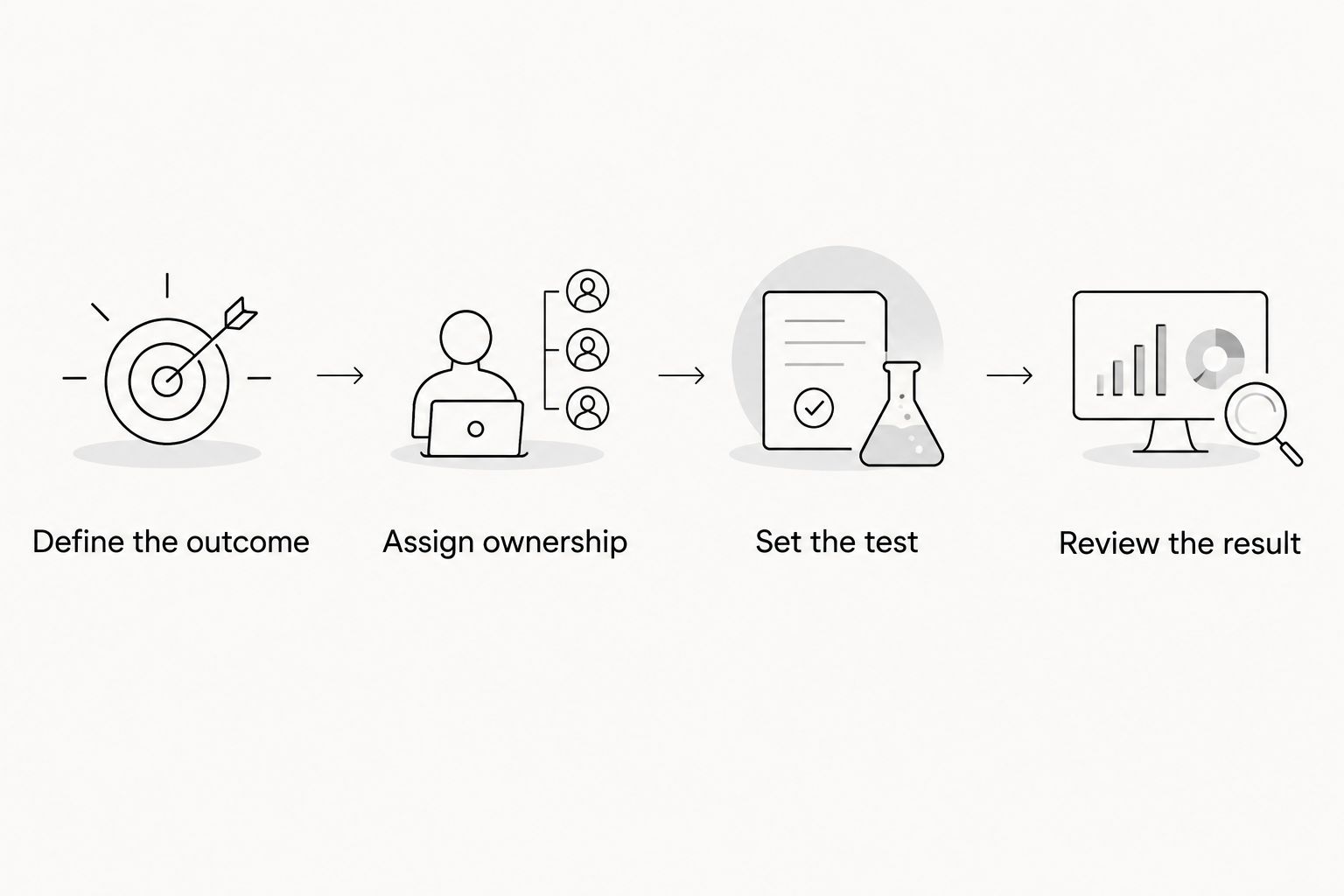
Turn the shortlist into an agency brief
A useful brief makes the agency's job testable. It also prevents you from comparing proposals that describe different services.
Define the outcome
Choose the business event you want to improve: activated trial, qualified demo, or sales opportunity. Identify the system that records it and the team responsible for validating it.
Assign ownership
List who handles scripts, production, posting, media buying, landing pages, and reporting. Mark each task as agency-owned or internally owned. Do not let the word growth stand in for this list.
Set the test
For a creator-content pilot, propose 3 video concepts with 2 opening variants each. Treat this as an example brief, not an agency package. Use proposed 15–45 second videos to demonstrate one product task rather than compressing an entire feature tour into every asset.
Review the result
Set a 30-day review for delivery quality, workflow, and early learning—not as a promised deadline for revenue results. Compare what shipped against the brief, then decide what to repeat or change.
Which SaaS performance marketing agency should you choose?
Choose Directive as the default interview candidate for a broad B2B SaaS acquisition brief. Choose the specialist when the problem is narrower: creator production, search demand, paid-ad conversion, or demand-generation strategy.
Before signing in 2026, ask each candidate to describe what your team will stop doing and what it must still own. That answer is more useful than a long list of channels.
Explore creator video support
Review done-for-you short-form creator video production and posting for tech companies.
FAQ
What's the best performance marketing agency for SaaS companies?
Directive is the default shortlist choice here for a broad B2B SaaS acquisition brief. Choose a specialist instead when your main need is creator production, search, conversion work, or demand-generation strategy.
Which agency should I consider for SaaS creator videos?
UGC Scout fits tech teams seeking done-for-you short-form creator video production and posting. Confirm the creative brief, approvals, usage rights, and measurement responsibilities before signing.
Is a UGC agency the same as a performance marketing agency?
No. A UGC agency brief centers on creator content, while a performance marketing brief can include media buying, conversion work, and measurement. Confirm the actual scope rather than relying on the agency label.
Should a self-serve SaaS company optimize for trial signups?
A self-serve SaaS company should distinguish trial signups from activated users and paying customers. Use the downstream events to judge whether acquisition is bringing users who receive value from the product.
What should I ask a SaaS agency before hiring?
Ask what outcome it owns, what work it delivers, and what your team must still do. Also confirm reporting access, approval responsibilities, usage rights, and handover terms.
How long should an agency pilot run?
Set the pilot around the work and outcome being evaluated. A 30-day review can assess delivery and workflow, but it is not a promised deadline for proving revenue impact.
What should SaaS teams compare in agency proposals in 2026?
Compare proposals against the same business outcome, deliverables, and ownership requirements. Separate creator production, media buying, landing-page work, and reporting so unlike scopes do not look equivalent.
One last thing
A dedicated creator is a staffing choice, not a complete content machine. You still need product truth, usable briefs, approvals, distribution decisions, and feedback from the acquisition path.
Write those responsibilities down before hiring. The best agency relationship removes defined work from your team without leaving essential work unowned.