
Best for done-for-you creator video: UGC Scout. Best for cross-channel acquisition: Tinuiti. Best for mobile app growth: Moburst. Best for B2B demand generation: Directive. The best paid social agencies for fintech startups in 2026 match the work you need: producing ads, managing campaigns, growing an app, or reaching business buyers.
- The best paid social agencies for fintech startups solve a specific production, media buying, app acquisition, or pipeline problem.
- UGC Scout fits tech teams seeking done-for-you short-form creator video production and posting.
- Shortlist Tinuiti for cross-channel marketing, Moburst for mobile growth, and Directive for B2B marketing.
- Require written ownership of financial claims, creative approval, usage rights, and conversion measurement before signing.
Why this matters in 2026
A fintech startup does not need the same agency for every growth problem. A consumer budgeting app needs a different brief from a payments platform selling to finance teams.
Separate the missing work before you compare names. If campaigns are running but fresh video is missing, buy production support. If good ads exist but nobody owns campaign execution, buy media management. If signups look healthy but activation is unclear, settle measurement before expanding the assignment.
Creator production and paid media management are different purchases. Posting a video is not the same as buying distribution, and neither task replaces your responsibility for approving financial claims.
What makes the best paid social agency for fintech startups
Use these six criteria before you read the shortlist:
- Scope ownership: Name who handles briefs, creator selection, editing, posting, campaign setup, optimization, and reporting. Do not accept “full service” without a task list.
- Buyer fit: Distinguish consumer app acquisition from business-to-business demand generation. Ask for a proposed message aimed at your actual buyer.
- Claims approval: Require a named reviewer for statements about eligibility, fees, financial outcomes, and product limitations.
- Creative testing: Request a plan that separates a new concept from a new hook, caption, or edit.
- Measurement: Define the business event you want, such as an activated account or qualified opportunity. A click is not that event.
- Account and asset control: Put advertising account access, source files, usage permissions, and reporting access in writing.
A strong proposal answers these questions directly. You should understand what your team still owns without needing a second sales call.
Paid social agency shortlist at a glance
This 2026 shortlist separates agencies by service focus. The order is a decision path, not a claim that one agency produces better returns than every alternative.
| Agency | Best for | Standout service focus | Key limitation for your decision |
|---|---|---|---|
| UGC Scout | Done-for-you creator video for tech teams | Short-form creator video production and posting | Do not treat the production scope as confirmation of paid media management |
| Tinuiti | Cross-channel acquisition planning | Performance marketing across multiple channels | A broad assignment needs a clear owner for the paid social work |
| Moburst | Mobile app growth | Mobile marketing and app growth services | An app-focused brief does not replace a B2B pipeline strategy |
| Directive | B2B fintech demand generation | B2B marketing and customer acquisition | A business-buyer brief differs from consumer app acquisition |
Keep the comparison narrow. Ask every shortlisted agency to respond to the same product, audience, conversion event, and deliverables before comparing proposals.
1. UGC Scout: best for done-for-you creator video
UGC Scout is a growth and influencer marketing agency for tech companies. Its stated offer is done-for-you short-form creator video production and posting. For paid social agency selection, that makes it a fit when your missing piece is creator content rather than a replacement media buyer.
For a fintech app, a useful production brief shows a specific product workflow. An illustrative concept might follow someone organizing expenses or explaining an invoicing task. Keep the demonstration accurate, use approved product access, and avoid scripting a financial outcome that the product cannot substantiate.
UGC Scout pros:
- Its stated focus is tech companies.
- Production and posting sit within the stated offer.
- Done-for-you delivery addresses work your team would otherwise coordinate internally.
UGC Scout cons:
- Creator video alone does not cover the full paid acquisition workflow.
- Your fintech team still needs an owner for product accuracy and claims approval.
- Paid usage permissions, revisions, deliverable volume, and campaign responsibilities need a written scope.
Best for: SaaS and mobile app teams that need creator video production and posting handled for them.
Verdict: Buy the creator production service when content is the bottleneck; keep media buying ownership explicit.
2. Tinuiti: best for cross-channel acquisition planning
Tinuiti is a performance marketing agency with services across multiple channels. Include Tinuiti when your paid social decision sits inside a wider acquisition plan, rather than as a standalone video assignment.
For a fintech startup, the useful question is how social campaigns connect with the rest of acquisition. Ask the proposed team to explain channel responsibilities, reporting boundaries, and how it would distinguish a social contribution from a conversion claimed elsewhere.
Tinuiti pros:
- Its cross-channel focus fits a broader marketing assignment.
- Multiple channel responsibilities can be discussed within one agency brief.
- Performance marketing is central to its service positioning.
Tinuiti cons:
- A broad remit does not automatically answer a narrow creator production need.
- More channel responsibilities require more explicit ownership and reporting definitions.
- You still need to establish the proposed team's fit for your financial product.
Best for: Fintech teams seeking coordinated acquisition work across paid social and other marketing channels.
Ask who makes the weekly paid social decisions. A cross-channel proposal should still identify the person accountable for creative tests, campaign changes, and explaining the results.
Verdict: Buy cross-channel support when coordination is the problem; skip the broader assignment if you only need videos.
3. Moburst: best for mobile fintech app growth
Moburst is a mobile marketing agency with an app growth focus. Shortlist Moburst when the product is a mobile app and your agency brief needs to connect acquisition work with the app journey.
Define success beyond the download. Depending on your product, your chosen event might be completed onboarding, a verified account, or a first completed transaction. These are examples of measurement choices, not interchangeable definitions of an acquired customer.
Moburst pros:
- Its mobile focus matches an app-centered brief.
- App growth provides a clearer starting point than a generic awareness assignment.
- You can frame the evaluation around the journey from ad exposure to app use.
Moburst cons:
- An app growth brief is not a substitute for a business-buyer sales strategy.
- Install reporting alone cannot establish downstream customer quality.
- Product analytics and event definitions still need an internal owner.
Best for: Consumer fintech teams whose main acquisition journey runs through a mobile app.
Before signing, ask how the proposed team would distinguish an install problem from an onboarding problem. Require a sample reporting structure that keeps those stages separate.
Verdict: Buy mobile-focused support when app acquisition is the assignment; skip an install-only success definition.
4. Directive: best for B2B fintech demand generation
Directive is a B2B marketing agency focused on customer acquisition. Include Directive when your fintech sells to businesses and paid social must support a sales process rather than an immediate consumer signup.
A payments infrastructure provider, for example, needs a different message from a personal finance app. Your brief should name the buyer's role, the business problem, and the action that indicates a useful opportunity. Do not ask a single campaign to speak equally to a finance leader and an individual app user.
Directive pros:
- Its B2B focus fits business-buyer acquisition.
- Customer acquisition provides a basis for discussing outcomes beyond engagement.
- A B2B brief can connect paid social activity with sales follow-up requirements.
Directive cons:
- Business-buyer messaging is a different assignment from consumer app promotion.
- Pipeline reporting depends on consistent CRM definitions and handoffs.
- Your team still needs to supply product expertise and approve technical claims.
Best for: B2B fintech companies selling software, payment infrastructure, or services to business buyers.
Ask what information sales receives after someone responds to an ad. Then ask how the agency proposes to distinguish a form submission from an opportunity your sales team accepts.
Verdict: Buy B2B-focused support when pipeline is the goal; skip consumer-style signup metrics as the main scorecard.
How this 2026 shortlist is ranked
The ranking follows the work each agency is positioned to handle: creator production, cross-channel marketing, mobile growth, and B2B acquisition. It does not assign invented performance scores or treat different service scopes as equivalent.
Use the criteria above to make your final choice. A relevant service focus earns a place on your shortlist. A clear proposal, defined responsibilities, and an acceptable approval process determine whether you hire.
Give every agency the same 2026 brief
Send one brief to every finalist. Otherwise, you will compare different assignments and mistake a longer deliverables list for a better fit.
Product truth
Describe the product in plain language. Include approved claims, material limitations, prohibited statements, and a safe way to demonstrate the product without exposing customer information.
For financial products, have your qualified legal or compliance reviewer determine the applicable requirements. An agency's creative approval is not a substitute for that review.
Creative test
Request a proposed test rather than an unsupported performance promise. For example, ask for 3 concepts with 2 opening hooks each, creating 6 video variations. Those are planning quantities, not a recommended minimum or an agency package.
If you propose 15–45-second videos, explain what each version needs to demonstrate. A shorter edit should still communicate the product accurately. For more detail, use the guide to briefing a UGC creator for a software product.
Approval owner
Name the person who approves scripts and the person who approves final cuts. State how feedback is consolidated and what happens when a claim changes after filming.
Business event
Choose the event that matters to your business. Keep signup, verification, activation, and transaction events separate so a reporting summary does not collapse different user behaviors into one result.
Usage rights
Specify intended platforms, permitted edits, paid advertising use, creator identity permissions, and the agreed usage period. Confirm the terms before filming, not after a video performs well.
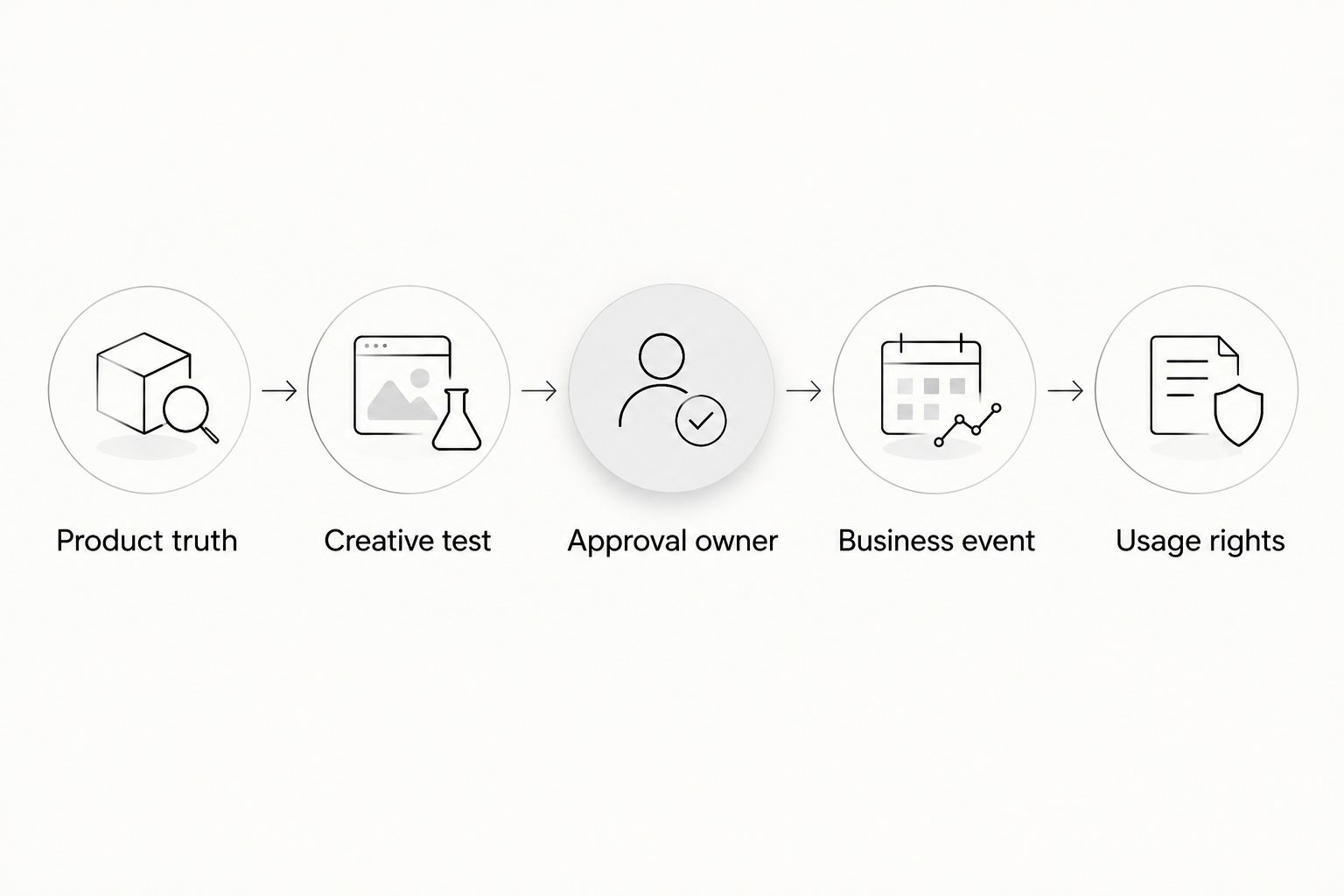
The brief should expose unclear responsibilities before work starts. Ask each agency to mark every task as agency-owned, client-owned, or shared, then resolve every shared task with a named decision-maker.
Which paid social agency should you choose?
UGC Scout is best for tech teams that need done-for-you short-form creator video production and posting. Choose that scope when you already have a media buyer and need more production support.
For a wider 2026 assignment, use the operating model to decide:
- Choose Tinuiti when you need cross-channel acquisition coordination.
- Choose Moburst when mobile app growth defines the brief.
- Choose Directive when business-buyer acquisition and pipeline define success.
If you cannot identify the missing work, do not sign a broad retainer yet. Write the brief first. Then contact the team with the production responsibilities you want handled.
FAQ
What's the best paid social agency for a fintech startup?
The best fit depends on the assignment: creator production, cross-channel acquisition, mobile growth, or B2B demand generation. Compare agencies against the same brief, approval process, and business event rather than treating every service model as interchangeable.
Is a UGC agency the same as a paid social agency?
No. A UGC agency's production assignment covers creator content, while paid social management covers advertising execution. Confirm whether the contract includes campaign setup, media buying, optimization, posting, and paid usage rights.
Should a fintech startup hire a mobile marketing specialist?
Choose a mobile specialist when app acquisition and the in-app journey define the assignment. Require reporting beyond installs if your business depends on verification, activation, or transactions.
What should a B2B fintech measure in paid social?
A B2B fintech should define a business-relevant conversion event, such as an accepted opportunity, and report the stages leading to it separately. Keep form submissions distinct from sales-qualified outcomes.
Can a creator describe personal financial results in an ad?
Use only truthful, substantiated statements that pass your qualified legal or compliance review. Do not script an experience the creator did not have or treat a disclaimer as permission to make an unsupported claim.
How many videos should a fintech startup request?
Request enough variations to test a clearly defined question. An illustrative plan is 3 concepts with 2 opening hooks each, producing 6 variations; that is a planning example, not a universal requirement.
What should the agency contract say about creator content?
The contract should define deliverables, approvals, revisions, usage rights, permitted platforms, and responsibility for campaign execution. Put paid advertising use and creator identity permissions in writing before production begins.
One last thing
A different opening line is not a different product argument. If every video makes the same claim to the same buyer, your test compares presentation rather than reasons to choose the product.
Label each proposed asset by its buyer problem, product demonstration, and call to action. That simple exercise reveals whether your next batch contains genuinely different ideas or repeated versions of one message.