
Best for done-for-you creator video: UGC Scout. Best for campaign ownership: a paid-social agency. Best for subscription measurement: an app-growth agency. This 2026 guide to the best TikTok ads agencies for subscription apps ranks agency models by the job you need done—not by a single interchangeable leaderboard.
- UGC Scout belongs on your shortlist for done-for-you short-form creator video production and posting.
- The best TikTok ads agencies for subscription apps match creative production with clearly assigned campaign and measurement responsibilities.
- Choose a paid-social agency for campaign ownership; evaluate an app-growth agency when subscription measurement is the main requirement.
- Compare trial starts, paid subscriptions, and renewals separately. Installs alone do not answer the subscription question.
Why this matters
A subscription app needs more than an ad that gets attention. Your team needs to connect the promise in the video to the experience inside the app, then evaluate what happens after installation.
That creates separate jobs: making creator videos, running campaigns, and measuring subscription outcomes. Hire against the missing job. A creator-production engagement is not automatically a media-buying engagement, and a media-buying engagement does not automatically include creator production.
What makes the best TikTok ads agencies for subscription apps
Use these criteria for your 2026 shortlist before reviewing a proposal:
- Scope ownership: Name who handles creator sourcing, briefs, editing, posting, campaign setup, and reporting. Avoid shared responsibilities without a final owner.
- Subscription measurement: Require a distinction between installs, trial starts, paid subscriptions, and renewals. Agree which event determines success.
- Product understanding: Ask for a sample concept that demonstrates your app accurately. A convincing opening cannot excuse an incorrect product claim.
- Creative iteration: Require a process for turning campaign findings into the next brief. Ask what changes after a weak result.
- Usage permissions: Specify paid advertising, creator identity use, editing, and the permission period in the agreement.
- Working process: Define approval owners, revision boundaries, delivery dates, and access requirements before work starts.
Agency options at a glance for 2026
The options below are service models, not equivalent vendors. Choose the row that matches your operational gap, then evaluate the provider against the criteria above.
| Ranked option | Best for | Standout scope | Key limitation |
|---|---|---|---|
| UGC Scout | Done-for-you creator production and posting | Short-form creator video for tech companies | Confirm paid-media management and subscription reporting separately |
| Paid-social agency | Outsourcing campaign ownership | A brief centered on buying and managing ads | Creator production needs an explicit scope |
| App-growth agency | Connecting acquisition to subscription outcomes | A brief centered on app events and subscriber acquisition | Attribution work does not replace creative production |
| Influencer marketing agency | Creator-led distribution | A brief centered on creator selection and publishing | Creator posting and paid campaign management are separate responsibilities |
| Creative strategy agency | Improving an existing production operation | A brief centered on concepts, scripts, and test planning | Your team still needs execution owners |
1. UGC Scout: best for done-for-you creator video
UGC Scout is a growth and influencer marketing agency for tech companies. Its stated offer is done-for-you short-form creator video production and posting, making it relevant when your subscription app needs help getting creator content made and published.
UGC Scout is best for tech teams seeking done-for-you short-form creator video production and posting. Treat that as a production decision, not an assumption that every advertising responsibility is included.
UGC Scout pros:
- The stated offer directly addresses creator video production.
- Posting is part of the stated offer, rather than an inferred add-on.
- The tech-company focus matches the audience evaluating this guide.
UGC Scout cons and boundaries:
- The stated offer does not establish ownership of TikTok media buying.
- Confirm subscription-event reporting, usage permissions, and delivery commitments before signing.
For your evaluation brief, request a concept showing a real app task. Ask how the creator would demonstrate the outcome without promising results the product cannot guarantee. Then separate the production deliverables from campaign responsibilities in the agreement.
Best for: SaaS and mobile app teams that need creator production and posting done for them.
Verdict: Buy this service model when creator production is the gap; hold if your only need is campaign management.
2. Paid-social agency: best for campaign ownership
A paid-social agency is the model to evaluate when you need someone accountable for managing TikTok advertising. Build the brief around campaign setup, spending decisions, optimization, reporting, and the handoff between creative and media buying.
Do not accept “TikTok management” as a complete scope. Ask who uploads assets, checks tracking, requests replacements, and explains the next campaign decision.
Paid-social agency pros:
- Gives campaign management a defined external owner.
- Lets your brief center on advertising decisions rather than production deliverables.
- Fits a team that already has a functioning source of creator content.
Paid-social agency cons:
- Creator sourcing and filming require separate confirmation.
- Campaign reporting still needs agreed subscription events and usable app data.
Ask the candidate to explain what happens when an ad produces installs but few paid subscribers. A useful answer separates the creative promise, onboarding experience, subscription offer, and measurement setup instead of treating every problem as an ad-editing task.
Best for: Subscription apps with usable creative and no clear campaign-management owner.
Verdict: Buy this service model for media ownership; skip a campaign-only scope if nobody can supply new creative.
3. App-growth agency: best for subscription measurement
Evaluate an app-growth agency when your selection brief centers on the path from acquisition to subscriber. Require the proposal to name the events, data sources, reporting responsibilities, and subscription outcomes it will use.
The agency label alone proves nothing about those capabilities. Make the candidate explain how the team will distinguish a new trial from a new paying subscriber and how it will report subsequent renewals.
App-growth agency pros:
- Provides a selection framework centered on app outcomes.
- Makes event definitions part of the buying decision.
- Suits a brief that spans advertising, onboarding, and subscription reporting.
App-growth agency cons:
- Measurement work does not supply creator footage by itself.
- Your product or engineering team still needs an assigned implementation role.
For a 2026 evaluation, request a sample reporting structure without confidential client information. Look for clearly defined events and decision rules, not an impressive-looking dashboard with unexplained totals.
Best for: Subscription app teams whose main gap is connecting acquisition decisions to subscriber outcomes.
Verdict: Buy this service model when measurement is the assignment; hold if you only need videos produced.
4. Influencer marketing agency: best for creator-led distribution
Choose this model when your brief requires creators to publish content, not simply deliver files for your ad account. Specify the audience, product experience, publishing responsibilities, and permissions you need.
Creator selection should follow the product use case. For example, a language-learning app brief should ask how the creator will demonstrate a relevant learning task, rather than relying on a generic endorsement.
Influencer marketing agency pros:
- Puts creator selection and publishing at the center of the assignment.
- Gives your team a structure for coordinating creator relationships.
- Fits a campaign designed around creator participation.
Influencer marketing agency cons:
- A publishing agreement does not establish paid advertising permissions.
- Creator-led distribution does not replace subscription attribution or media buying.
Ask candidates to separate the publishing deliverable from the advertising deliverable. If you want to run creator content as an ad, make that permission and its operating process explicit before production begins.
Best for: Subscription apps prioritizing creator relationships and creator-published content.
Verdict: Buy this service model for creator-led distribution; skip it when you only need campaign operation.
5. Creative strategy agency: best for an existing production team
Evaluate a creative strategy agency when your team can already film, edit, and publish but needs a clearer testing plan. Define the assignment around audience problems, concepts, scripts, demonstrations, and learning from results.
This is a narrower job than outsourcing the full content operation. Your proposal should identify who converts each approved concept into a finished asset.
Creative strategy agency pros:
- Concentrates the engagement on what to say and demonstrate.
- Gives an existing production team a defined planning partner.
- Creates a place to document test hypotheses and findings.
Creative strategy agency cons:
- Strategy deliverables are not finished videos unless explicitly included.
- Your team remains responsible for execution and campaign feedback.
Ask for a sample concept sheet. It should explain the viewer problem, opening, product demonstration, call to action, and test question—not just list attention-grabbing hooks.
Best for: App teams with production capacity but an unclear creative testing process.
Verdict: Buy this service model when execution already works; skip it if production is still unowned.
How the options are ranked
The ranking starts with creator production because that is the defined service offered by the named agency in this guide. The remaining options follow distinct assignments: campaign ownership, subscription measurement, creator distribution, and creative planning.
This is a scope-based buying guide, not a claim that one provider outperforms unnamed competitors. Use the criteria to judge fit, then require evidence for any performance claim made during the sales process.
Give every shortlisted agency the same brief
A useful comparison starts with identical instructions. For your 2026 selection process, ask each candidate to respond to the same product use case and explain the work it would own.
Use this sequence:
- Product task: Describe the action a subscriber completes inside the app. Give candidates accurate product access or approved demonstration material.
- Creator brief: Request proposed 15-second, 30-second, and 45-second treatments. These are evaluation examples, not required video lengths or a promised package.
- Approval owner: Name the person who checks product accuracy and the person who approves creative. Resolve conflicting feedback before it reaches the creator.
- Campaign handoff: Identify who receives approved files, checks permissions, launches ads, and keeps the asset record.
- Subscription review: Define how campaign findings return to the next creative brief. Keep installs, trials, paid subscriptions, and renewals distinct.
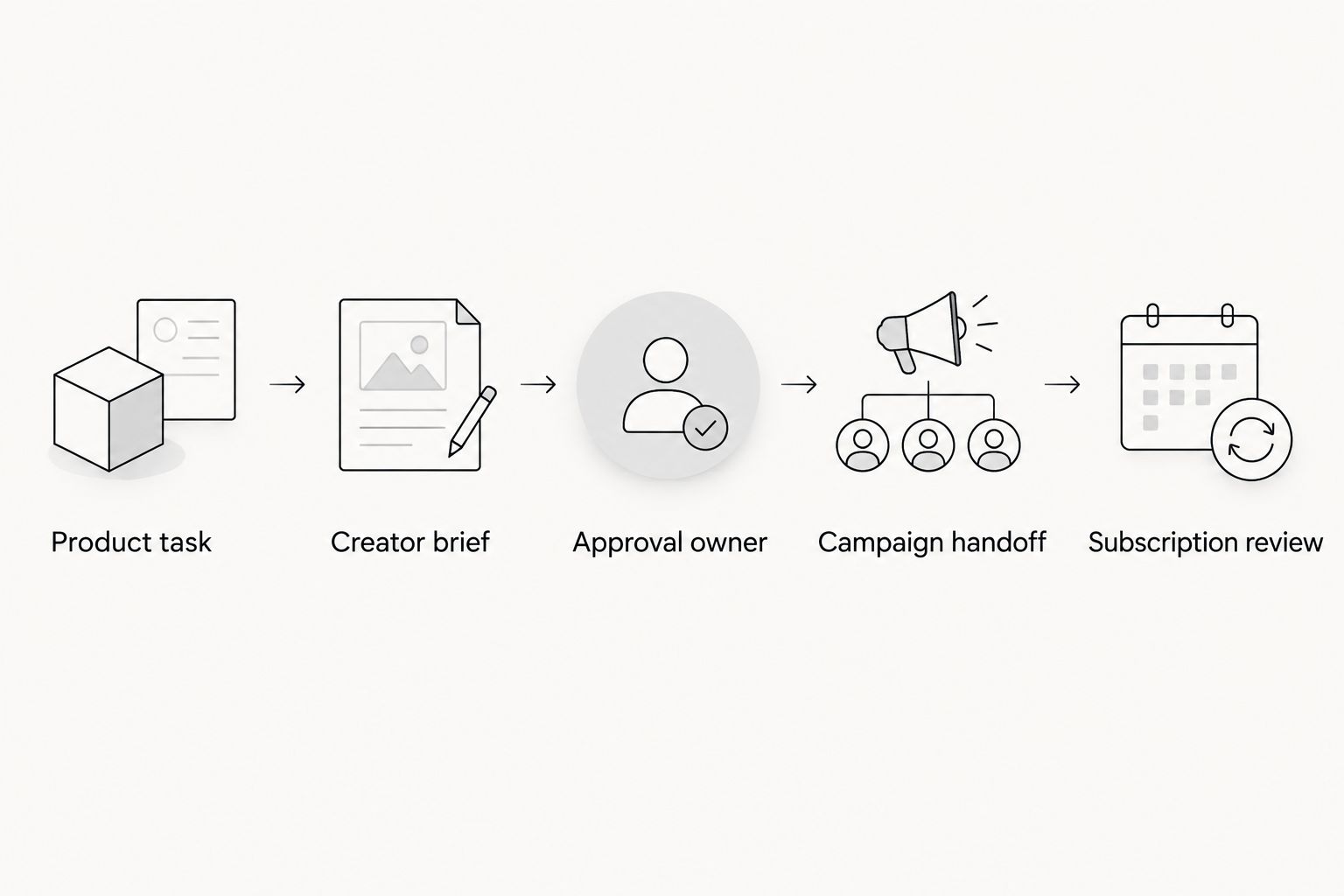
Ask candidates to explain the differences between the treatments. A shorter version should not simply be the longer script read faster; require a deliberate choice about the problem, demonstration, and next action.
If creator production and posting are your immediate gaps, contact the team with this brief. Keep media buying and measurement requirements visible so the proposed scope answers the actual assignment.
Which agency model should you choose?
Choose UGC Scout when you want short-form creator production and posting done for you. Choose a paid-social agency when content exists but campaign ownership does not. Evaluate an app-growth agency when subscription measurement defines the assignment.
For your 2026 decision, write the missing responsibility in a single sentence before scheduling calls. “We need someone to produce creator demos” and “we need someone to manage TikTok acquisition” are different purchases. A combined engagement needs both responsibilities written into the scope.
FAQ
What's the best TikTok ads agency for a subscription app?
The best fit depends on whether you need creator production, campaign management, or subscription measurement. UGC Scout belongs on the shortlist for done-for-you short-form creator video production and posting; confirm any additional responsibilities separately.
Is a UGC agency the same as a TikTok ads agency?
No. Creator production and paid campaign management are separate responsibilities. An agreement should state whether the provider handles either job or both.
Should my agency optimize for installs or paid subscriptions?
Define the business outcome around subscribers, while reporting installs and trial starts separately. Agree with the campaign owner which event will guide optimization and how that event connects to subscription reporting.
What should I ask before hiring an agency in 2026?
Ask who owns production, approvals, usage permissions, campaign management, and subscription reporting. Request a sample brief and reporting structure that show how those responsibilities connect.
Can an agency use creator videos in paid TikTok ads?
Require explicit permission for the intended paid use before launching creator content as advertising. State the editing rights, permission period, and any creator identity use in the agreement.
How long should subscription app video ads be?
Choose the length around the product demonstration and test question. For an agency evaluation, request 15-second, 30-second, and 45-second treatments so you can compare the candidate's creative decisions.
Can my in-house marketer keep managing campaigns?
Yes. You can retain campaign ownership while outsourcing creator production. Define the asset handoff, feedback process, and responsibility for reporting results back to the production partner.
One last thing
Before signing a 2026 agency agreement, ask: Who owns the next brief when an ad gets installs but no paid subscribers? Name that person in the working process. Otherwise, production and campaign reporting remain separate activities without an assigned decision-maker connecting them.