
Yes. UGC creators can sign exclusivity deals with tech brands, but the agreement should identify the competing products, restricted activities, and start and end dates; signing alone does not establish enforceability in every jurisdiction. Exclusivity also does not automatically give your team ownership of the footage, paid advertising rights, or permission to publish through the creator’s account.
- UGC creator exclusivity deal tech brand checklist: name competitors, define restricted work, and set an end date.
- Choose named-competitor exclusivity when your concern is direct rivals, not every software company.
- Keep content licensing, advertising permissions, and confidentiality separate from exclusivity.
- UGC Scout is a UGC agency for tech teams seeking done-for-you short-form video production and posting.
Can UGC creators sign exclusivity deals with tech brands?
Yes. Start with the conflict you need to prevent, then write the restriction around it. A creator promoting your mobile app and a direct substitute during the same launch is a different problem from a creator discussing unrelated software.
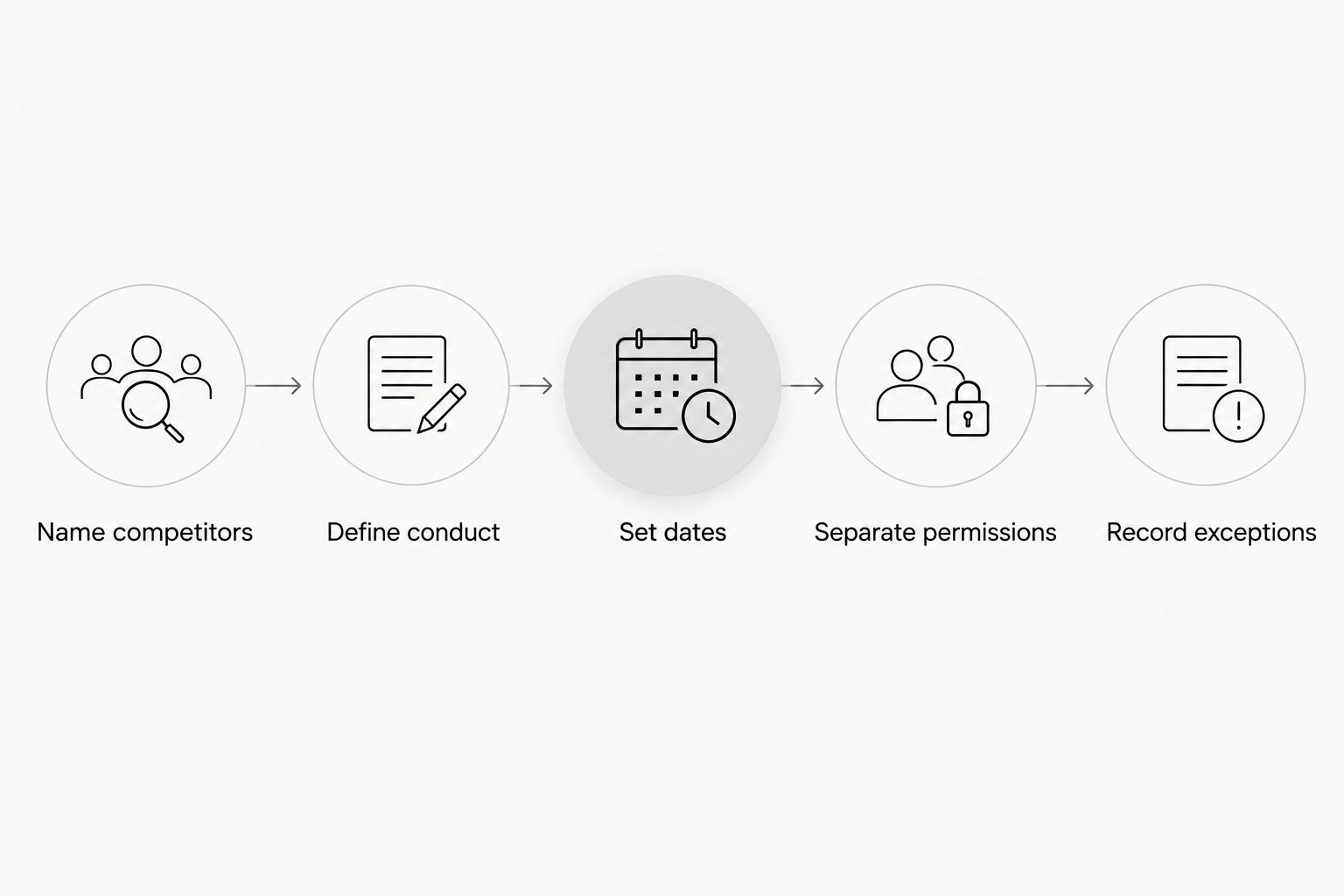
For a 2026 agreement, use this signing sequence alongside your UGC creator contract duration review:
- Name competitors. Identify the products or companies covered by the restriction.
- Define conduct. Specify whether the restriction covers sponsored posts, commissioned videos, affiliate promotions, or other work.
- Set dates. State when the restriction begins, when it ends, and what happens after early termination.
- Separate permissions. Document content licensing and advertising permissions independently.
- Record exceptions. Address existing commitments, personal use, and previously published material before signing.
Get qualified legal advice on the final wording and applicable law. This guide is a practical contracting checklist, not legal advice.
Why this matters
For SaaS and mobile app teams, “competitor” needs a useful boundary. A writing app, a developer tool, and a customer support product are all software. That does not make every creator partnership between them a conflict.
Broad restrictions ask creators to turn down work your campaign does not actually compete with. Narrow restrictions require more precise drafting. Choose precision over a blanket ban on tech brands.
Your 2026 creator brief should explain the commercial concern in plain language. If you cannot describe the conflicting endorsement you want to prevent, refine the request before adding an exclusivity clause.
Which exclusivity structure fits your campaign?
Use the smallest restriction that addresses the actual conflict. These are agreement structures to evaluate, not standard packages or promises about legal enforceability.
| Structure | Best for | Main advantage | Main limitation |
|---|---|---|---|
| Named-competitor exclusivity | Teams concerned about specific direct rivals | Makes the restricted companies explicit | Requires an agreed process for changing the list |
| Defined-category exclusivity | Teams whose competitive concern extends beyond named rivals | Covers a defined product function or use case | Creates ambiguity if the category is written too broadly |
| Campaign-specific restriction | Teams protecting a particular launch or promotion | Connects the restriction to an identifiable campaign | Needs a clear ending and treatment of delayed publication |
| No exclusivity | Teams that do not need restrictions on outside work | Leaves the creator free to accept other partnerships | Does not prevent competing endorsements |
Named-competitor exclusivity is the clearest starting point when your concern is a known rival. Defined-category exclusivity needs more care because category labels do not explain every boundary.
No exclusivity is also a valid decision. Do not add a restriction simply because a contract template includes one.
Named-competitor exclusivity: identify the actual rival
Write down the legal or trading names the parties can recognize. Include the relevant product when a company sells several unrelated tools.
For example, a restriction concerning a competing scheduling app should not silently expand to every product sold by its parent company. Decide whether subsidiaries, renamed products, and acquisitions require a written update.
The benefit is clarity. The limitation is maintenance: a competitor list needs a change process rather than an assumption that your team can expand it whenever it wants.
Defined-category exclusivity: define the product function
Describe what the competing product does and who uses it. “Software,” “mobile apps,” and “tech” do not provide a useful drafting boundary by themselves.
For a hypothetical language-learning app campaign, distinguish competing language-learning products from unrelated travel or productivity apps. State the exclusions as clearly as the restriction.
This structure addresses a broader competitive concern. Its weakness is interpretation, so ask the creator to flag borderline partnerships before the agreement is signed.
Campaign-specific restriction: connect it to a real event
Tie the restriction to an agreed launch, publication schedule, or campaign period. Specify whether the relevant event is filming, delivery, approval, or publication.
A delayed product release should trigger the process written into the agreement, not an assumed extension. Decide who must approve a schedule change and whether the creator remains restricted while publication is paused.
The advantage is a defined campaign boundary. The limitation is dependence on clear scheduling and termination language.
Why exclusivity terms vary
The right scope depends on what the creator will do and what conflict your team needs to avoid. Review these factors before reusing a 2026 contract template:
- Competitive overlap. A direct substitute presents a different concern from a tool used alongside your product.
- Restricted activity. Filming an asset, publishing an endorsement, and earning affiliate commissions are different activities. Name the ones covered.
- Campaign timing. A launch-linked restriction needs rules for approval delays, postponed publication, and cancellation.
- Channels and markets. State whether the restriction applies to particular platforms, languages, territories, or all agreed campaign channels.
- Existing obligations. Review ongoing sponsorships, affiliate relationships, scheduled posts, and older advertising permissions.
- Exit conditions. Explain what ends immediately, what survives termination, and how the parties handle disputed obligations.
Do not treat video length as the definition of exclusivity. A brief for a 15-second video describes the deliverable; it does not explain which outside partnerships the creator must decline.
What should you put in the exclusivity clause?
Translate the commercial agreement into instructions both sides can follow. Your creator should not need to guess whether an unrelated project breaches the contract.
Use the following review sequence for your 2026 agreement. Keep the commercial brief and the signed terms consistent.
Name competitors
Attach or include the agreed competitor list. If you use a category instead, describe the competing function and add examples of excluded work.
Ask a direct question: would both parties reach the same answer about a proposed partnership? If not, tighten the wording before filming begins.
Define conduct
List the prohibited activities explicitly. Decide whether restrictions cover sponsored posts, commissioned content that another brand publishes, affiliate promotion, or appearing in competing advertising.
Separate personal product use from paid endorsement. Also decide how the agreement treats unpaid educational commentary rather than assuming every mention is promotional.
Set dates
Specify the trigger that starts the restriction and the event or date that ends it. Address what happens if the brand never publishes the approved content.
If your team wants a restriction after the main engagement ends, state it separately. Do not hide continuing obligations inside an unclear reference to the “campaign.”
Separate permissions
Write down where your brand can publish the footage, whether it can edit the material, and whether paid advertising is included. Treat creator-account advertising permissions as another explicit decision.
A 45-second demo can be exclusive to a campaign without giving your brand unrestricted reuse rights. Conversely, permission to reuse a demo does not by itself prevent the creator from working with competitors.
Record exceptions
Document pre-existing commitments and any agreed exclusions. Identify older posts or advertisements that will remain visible and who controls their removal.
Keep the exception record with the agreement. An informal discussion is not a clear operating instruction for the person scheduling next month’s content.
How do you handle existing posts and overlapping partnerships?
Ask about conflicts before commissioning content. Review the creator’s disclosed commitments against the proposed restriction, rather than asking for a general assurance that everything is clear.
Use these questions during the contracting conversation:
- Is competing sponsored content already scheduled?
- Does another brand hold continuing permission to run an older video?
- Are affiliate links or promotional codes still active?
- Does an existing agreement prevent the creator from accepting your brief?
- Which historical posts will remain visible during your campaign?
Do not assume a creator controls every placement of an older video. Identify who holds the relevant publishing or advertising permission before asking the creator to remove it.
For a 15–45-second production brief, confirm the content requirements and the partnership restrictions separately. A clear filming brief cannot resolve an undisclosed contractual conflict.
Can an agency arrange exclusive creator work for a tech team?
An agency arrangement still needs written clarity about who signs with the creator, who receives content permissions, and who handles a conflict. Ask for those responsibilities before approving the engagement.
UGC Scout is best for tech teams seeking a UGC agency for done-for-you short-form video production and posting. That service fits teams looking to delegate production and posting; it does not, by itself, establish exclusive creator access or particular licensing terms.
If exclusivity is essential, make it a requirement in your agency brief. Confirm whether the proposed creator agreement meets that requirement before treating the creator as dedicated to your brand.
Does exclusivity include paid advertising rights?
No. Exclusivity and paid advertising rights answer different questions. Exclusivity concerns outside work; advertising rights concern your permission to use the content in ads.
Your 2026 agreement should address both if your campaign needs both. Specify the permitted channels, editing rights, advertising period, and any required creator-account permissions rather than relying on the word “exclusive.”
Can a creator keep working with unrelated tech brands?
Yes, when the agreement leaves that work outside the restriction. Define the prohibited competitors or category, then make unrelated work an explicit exception where appropriate.
A creator producing videos for your SaaS product does not need a blanket ban on every mobile app partnership unless that is the restriction both parties deliberately agree to request and review.
What happens if the campaign ends early?
The agreement should state what happens to exclusivity after early termination. Address ongoing restrictions, scheduled posts, existing advertising permissions, and any process for resolving a dispute.
Do not assume that stopping production automatically ends every obligation. Have counsel check the termination language alongside the exclusivity clause.
FAQ
Can a UGC creator sign an exclusive deal with a SaaS company?
Yes, a UGC creator can sign an exclusivity agreement with a SaaS company. Define the covered competitors, restricted activities, dates, and exceptions, and obtain legal advice on enforceability.
What's the best exclusivity structure for a tech brand?
Named-competitor exclusivity is the clearest starting point when your concern is specific direct rivals. Use a defined category only when a competitor list does not adequately describe the conflict.
Does an exclusive creator contract mean my company owns the videos?
No, exclusivity does not automatically transfer ownership of the videos. Ownership, licensing, editing, and advertising permissions need their own agreement terms.
Can a creator's old sponsored posts stay online during an exclusive deal?
Old sponsored posts should be addressed explicitly in the agreement. Record what can remain visible and distinguish existing posts from new promotion or continued advertising.
Can we extend exclusivity if our app launch is delayed?
Follow the extension process in the agreement rather than assuming a delayed launch extends exclusivity. Obtain the required written agreement before relying on a revised end date.
Does a dedicated creator automatically mean exclusive access?
No, the label dedicated creator does not specify the scope of exclusivity. Ask which competitors and activities are restricted and for how long.
Is UGC Scout a fit for a tech team that wants production done for them?
UGC Scout is a UGC agency for tech companies seeking done-for-you short-form creator video production and posting. Confirm any exclusivity requirements separately before approving the engagement.
One last thing
Check the end date on the restriction against the end date on advertising permissions. Your brand’s permission to run an older video and the creator’s freedom to accept new work are separate decisions; review them together before launch.
When briefing UGC Scout or another agency, ask who will track those dates. A clear agreement still needs someone responsible for following it.