
Pay UGC creators a flat fee for defined production work; add a royalty or performance payment only when the agreement clearly defines what earns it. For SaaS and mobile app teams in 2026, a flat fee is the clearest starting point, but it does not answer which usage rights, revisions, or creator posting obligations you receive.
- Deciding whether to pay UGC creators flat fee or royalty? Start with a flat fee for defined production work.
- A royalty needs an explicit payment basis; do not confuse content licensing with affiliate commissions.
- A hybrid agreement separates guaranteed production payment from a defined performance incentive.
- UGC Scout serves tech teams seeking done-for-you creator video production and posting; define payment and rights separately.
Do you pay UGC creators a flat fee or royalty?
Use a flat fee when you are buying deliverables. Consider a royalty when you deliberately want an ongoing payment obligation tied to agreed usage or revenue. Neither arrangement replaces a written scope.
Match the payment period to your UGC creator contract length. Production, permission to use the video, and ongoing compensation need their own terms.
| Payment model | Best for | Main advantage | Main drawback | Define before signing |
|---|---|---|---|---|
| Flat fee | Defined creator video production | Payment follows an agreed scope | New edits or expanded usage require a scope decision | Deliverables, acceptance, revisions, rights |
| Royalty | An intentional ongoing licensing or revenue-sharing arrangement | Compensation follows the agreed payment basis | Reporting and payment obligations continue | Trigger, calculation, reporting, end date |
| Hybrid | Production plus a measurable incentive | Separates production work from performance rewards | You must administer both payment components | Base scope, qualifying results, attribution, exclusions |
Why this matters
A creator controls the script delivery, filming, and agreed revisions. Your team controls other parts of the outcome: product positioning, landing pages, media buying, onboarding, and purchase flow. Compensation should reflect that division.
For a 2026 creator brief, separate what you need produced from what you hope the content achieves. A finished video is a deliverable. A paid subscription is a business result with more dependencies.
Paying for the former does not guarantee the latter. Paying for the latter requires a measurement agreement, not just a promise to share revenue.
Flat fee: best for defined production work
A flat fee gives the creator an agreed payment for an agreed scope. That scope can cover scripting, filming, editing, delivery, or posting, but nothing belongs in the package merely because you assumed it did.
For example, a brief can request a 15-second mobile app demonstration or a 45-second SaaS workflow explanation. Those are proposed creative formats, not interchangeable assignments: a longer explanation can require different scripting and product preparation.
Write down:
- The product action the creator must demonstrate.
- The finished format and intended platform, such as TikTok or Meta.
- Whether scripting, captions, editing, and posting are included.
- What counts as an acceptable delivery.
- Which revisions belong to the original brief.
- Which uses of the finished content the agreement permits.
The advantage is a clear purchase: you know what work the creator owes. The limitation is equally clear: an agreed production payment does not make additional work or expanded rights part of the original scope.
Recommendation: choose a flat fee when the immediate job is to produce usable creative. Evaluate business results separately from whether the creator completed the assignment.
Royalty: best for an intentional ongoing agreement
A royalty is an ongoing payment calculated on a basis the parties define, such as specified licensed use or attributable revenue. The word alone is not a payment formula.
If a creator proposes royalties, ask what creates the obligation. Is it using the video in advertising? Revenue from an identified customer group? Continued licensing after an initial term? Each answer creates a different agreement.
The advantage is that compensation can follow the agreed use or commercial result. The drawback is ongoing administration: someone must calculate, report, reconcile, and pay it.
Before accepting a royalty arrangement in 2026, resolve these questions:
- What event earns payment?
- What records establish that event?
- What deductions or exclusions apply?
- When does the obligation begin and end?
- What happens when the content stops running?
- How are disputed calculations reviewed?
Recommendation: choose a royalty only when the payment basis is specific enough for both parties to calculate independently. If the brand and creator cannot reproduce the same calculation, the agreement is not ready.
Hybrid: best for production plus a measurable incentive
A hybrid agreement combines a production payment with a separate incentive. It recognizes the work required to make the content without treating future performance as guaranteed.
For a mobile app, an incentive could reference a clearly defined purchase event. For SaaS, it could reference a qualified customer event. These are contract design examples, not recommended payment rates or promised results.
The benefit is separation: production has its own payment, while the incentive has its own qualification rules. The drawback is complexity. You still need to determine which results count and what happens when records disagree.
Do not call every incentive a royalty. A commission for referred customers and a payment for continued content licensing address different things. Name the arrangement according to what actually earns payment.
Recommendation: use a hybrid when you want both a defined production commitment and a separately measurable reward. Keep the production acceptance criteria independent of the incentive calculation.
Why UGC creator payment arrangements vary
The right model follows the work and the agreement, not a universal creator payment rule. These factors change what you need to specify:
- Production scope. A creator filming from an approved script has a different assignment from a creator developing the concept, recording the demo, and editing the final video.
- Usage rights. Organic posting, paid advertising, editing, and reuse need explicit permission in the agreement. Payment structure alone does not describe those permissions.
- Posting responsibility. Delivering a file is different from publishing content through a creator account. State which action completes the assignment.
- Measurement access. Revenue-linked compensation requires records both parties can use to check the calculation. A dashboard screenshot without agreed definitions leaves room for disagreement.
- Ongoing obligations. Continued posting, revisions, licensing, or reporting create work beyond initial delivery. Give those obligations an owner and an end condition.
For your 2026 contract, describe these factors before choosing the payment label. A detailed flat-fee scope is clearer than a vague royalty promise, and a detailed royalty agreement is clearer than an undefined bonus.
How do you set up creator payments without confusion?
Use this sequence before filming starts. It separates the creative assignment from the rights and reporting that sit around it.
Define delivery
Describe the finished asset, the audience, and the product action. For a SaaS demonstration, specify the workflow the viewer should see rather than asking the creator to explain the entire product.
Include the format, review process, and acceptance criteria. Avoid making acceptance depend on campaign results that arrive after delivery.
Separate rights
List the places you intend to use the content and the changes you intend to make. Address paid ads, brand-account posting, creator-account posting, and edited versions explicitly where relevant.
Also identify the permission period. Do not assume that paying for filming answers every licensing question.
Choose triggers
For a flat fee, define the payment milestone. For royalties or incentives, define the qualifying event and the calculation.
Distinguish a submitted file from an accepted file, and an initial subscription from a qualifying subscription. Use terms your team can actually verify.
Assign reporting
Name the record used to settle performance payments and the person responsible for producing the report. Explain how cancellations, refunds, duplicate referrals, and disputed attribution affect the calculation if those events are relevant.
The creator needs a way to check the result. Your team needs a process it can maintain after the campaign launches.
Set closure
State what ends production obligations and what ends ongoing payment obligations. Address what happens to existing content when the relationship ends.
Keep payment disputes separate from access decisions. Product credentials, publishing permissions, and content usage each need their own closure instructions.
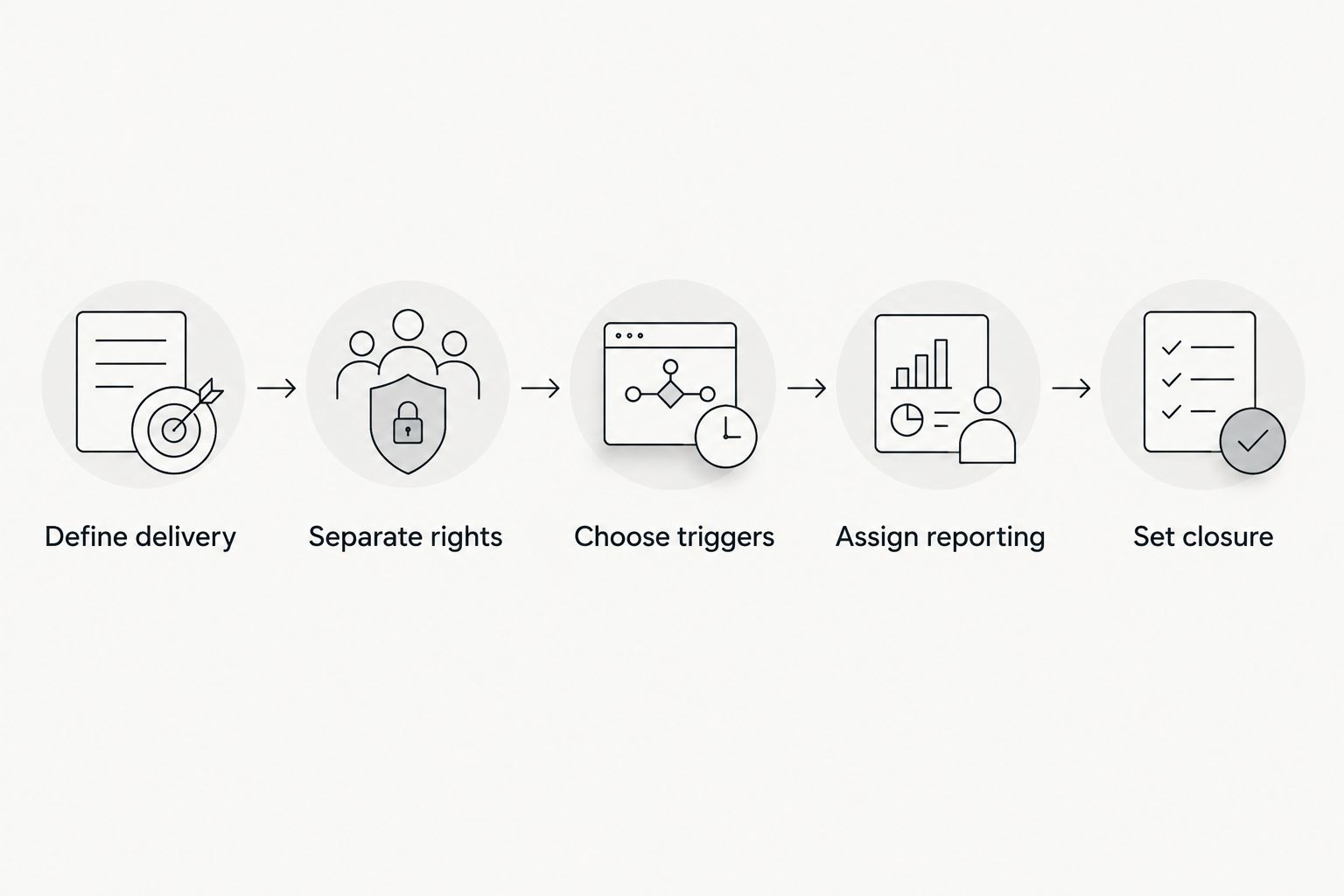
A payment agreement should let someone outside the original negotiation understand what is owed. If that person needs the entire message history to interpret it, rewrite the scope.
Is a royalty the same as an affiliate commission?
A royalty and an affiliate commission are not interchangeable labels. A royalty can compensate a creator for agreed licensed use; an affiliate commission compensates an agreed referral outcome. The written agreement determines the actual obligation.
A creator can produce a video without referring customers through a personal link. A creator can also refer customers without granting your team permission to run the video as an ad. Treat content production, referrals, and licensing as separate decisions.
Should SaaS creators receive recurring revenue payments?
Recurring revenue payments belong in a creator agreement only when you intentionally offer them and can administer the calculation. A subscription business model does not, by itself, establish a creator's entitlement to renewals.
If you choose recurring compensation, define which renewals qualify, how cancellations are handled, and when the obligation stops. For your 2026 program, avoid an open-ended promise that the reporting process cannot support.
Does a flat fee include paid advertising rights?
A flat fee does not describe paid advertising rights; the agreement must specify them. Ask whether the proposed permission covers the channels, duration, edits, and account-based advertising you intend to use.
Do not settle this after launch. An accepted video file and permission to distribute it are different parts of the engagement.
When does an agency make sense?
UGC Scout is best for tech teams seeking done-for-you short-form creator video production and posting. The agency model fits buyers who want a service rather than another creator search assignment.
UGC Scout serves tech companies, including the SaaS and mobile app teams this guide addresses. The buyer-side responsibility remains: approve product claims, define acceptable demonstrations, and make sure payment and usage terms match the intended campaign.
An agency engagement does not replace those decisions. Choose it for the work you want done for you, then evaluate the proposed scope rather than assuming every production, licensing, and reporting task is included.
FAQ
Should I pay UGC creators a flat fee or royalty?
Start with a flat fee when you are buying defined production work. Use royalties or a hybrid only when the payment basis, reporting process, and end conditions are explicit.
Can I pay a UGC creator only when the video generates sales?
You can propose a sales-linked agreement, but the creator must accept its terms. Define qualifying sales and attribution, and recognize that the creator does not control your entire purchase process.
Does paying a creator mean I can use the video forever?
Payment alone does not describe the permitted usage period. State the duration, channels, and allowed changes in the agreement rather than assuming unlimited use.
What is the difference between a royalty and a performance bonus?
A royalty follows the licensed-use or revenue basis defined in the agreement; a performance bonus follows a defined achievement. Write the actual trigger instead of relying on either label.
Do I need to pay extra when I ask for new versions?
The agreed scope determines whether new versions require a separate payment. Distinguish corrections to the original brief from new hooks, demonstrations, or formats.
Should SaaS creator commissions include subscription renewals?
Include subscription renewals only if your agreement deliberately covers them. Define qualifying renewals, cancellations, reporting, and the end of the payment obligation.
Is UGC Scout a creator marketplace or an agency?
UGC Scout is a growth and influencer marketing agency for tech companies. Its stated offering is done-for-you short-form creator video production and posting.
One last thing
The payment label is not the strongest test of an agreement. Ask someone on your team to explain what ends the obligation. If the answer is unclear, fix the terms before commissioning the content.
For your next 2026 creator engagement, make delivery, permitted use, and ongoing compensation separately readable. That makes a flat fee, royalty, or hybrid easier to manage without confusing completed work with future results.