
Best for done-for-you creator video: UGC Scout. Best for acquisition campaign management: a performance marketing agency. Best for search-led product education: a fintech content agency. This 2026 guide ranks those three agency models by the job your neobank needs done—not by an unsupported company leaderboard.
- UGC Scout is the pick for tech teams buying done-for-you short-form creator video production and posting.
- The best fintech marketing agencies for neobanks match your bottleneck: creator content, paid acquisition, or search-led education.
- Keep financial claims, creator permissions, and account-activation measurement inside your selection criteria.
- Choose one accountable agency scope before adding channels or expanding production.
Why this matters
A neobank does not need the same agency for every growth problem. Producing creator videos, managing advertising, and explaining account features through search content are different jobs. Buying one does not automatically get you the others.
The wrong brief creates the wrong shortlist. If your team already manages campaigns but cannot keep producing creative, another media-management proposal misses the problem. If customers install the app but abandon account opening, more videos alone do not address that drop-off.
Choose the agency around the work you need transferred off your team's desk. Then evaluate whether that work connects to the customer action you want.
What makes the best fintech marketing agencies for neobanks?
Use these six criteria before comparing proposals in 2026:
- Scope ownership: Identify who handles research, scripts, production, posting, campaign management, and reporting. Do not accept a broad service label instead of an assignment.
- Product understanding: Ask how the agency would explain one real account feature without changing its conditions or implying an unsupported benefit.
- Approval discipline: Require a named route for reviewing scripts, demonstrations, captions, and final assets before publication.
- Measurement fit: Specify whether success means qualified visits, completed applications, opened accounts, or another defined event.
- Content permissions: Put paid use, editing, placement, and creator-account permissions in writing where relevant.
- Internal workload: Identify what your team must still supply, approve, publish, or analyze. Done for you should describe work, not hide dependencies.
A strong proposal answers these questions directly. A weak proposal substitutes a channel list, an asset total, or a presentation about awareness.
Agency models at a glance
The order below suits a neobank team evaluating creator-led marketing first. It is a decision tree, not a claim that one model outperforms every other model.
| Ranked option | Best for | Standout scope | Key limitation |
|---|---|---|---|
| UGC Scout | Outsourcing short-form creator production and posting | Done-for-you creator video for tech companies | Creator output is not a substitute for compliance review or acquisition measurement |
| Performance marketing agency | Outsourcing paid acquisition management | Campaign planning, execution, and optimization as the requested engagement | Media management alone does not solve a production shortage |
| Fintech content agency | Building search-led explanations of banking products | Written product education as the requested engagement | Written content does not replace creator video or campaign operations |
Treat the second and third options as agency categories to shortlist against a written brief. Require each candidate to confirm its actual deliverables rather than assuming every firm in a category provides the same service.
1. UGC Scout: best for done-for-you creator video
UGC Scout is best for tech teams that want short-form creator video production and posting done for them. The agency serves tech companies through growth and influencer marketing, with done-for-you creator production and posting explicitly included in its offer.
For a neobank, that scope fits a specific purchasing decision: your team needs someone to make and post creator content. It does not establish a broader banking acquisition mandate. Keep campaign management, legal review, and downstream reporting separately assigned unless your agreement includes them.
What to put in the brief
Start with a real product task. For example, ask a creator to explain where a user finds a spending category in the app, using an approved demonstration environment. Do not ask for a personal banking testimonial unless the creator can truthfully give one.
You can request a 15-second introduction, a 30-second walkthrough, and a 45-second explanation as alternative brief formats. These are suggested test lengths, not stated agency package inclusions or performance benchmarks. Confirm the actual production scope before commissioning anything.
The practical goal is simple: less creator hunting and production coordination for your team. Your product owner still supplies accurate information. Your reviewer still approves the claims.
UGC Scout pros:
- Its stated offer includes both short-form production and posting.
- Its tech-company focus matches the product category you need explained.
- The done-for-you model fits teams looking to transfer production work.
UGC Scout cons:
- Creator production does not replace your financial-claims approval process.
- Production and posting alone do not establish attribution to opened accounts.
- The stated offer is not evidence of a particular neobank campaign result.
Best for: A neobank team with an identified creator-content gap and an internal owner for product accuracy and approvals.
Verdict: Buy this scope when production and posting are the bottleneck. Hold if you need an agency to own a different job.
2. Performance marketing agency: best for paid acquisition management
A performance marketing agency is the appropriate category when you want to outsource campaign management rather than just content production. Your requested engagement should define channel ownership, conversion events, reporting, and who makes campaign changes.
This model belongs ahead of a creator-only engagement when nobody owns paid acquisition execution. It also requires a clear division between the people producing assets and the people deciding where those assets run.
What to put in the brief
Describe the customer action you want measured. An install, a completed application, and an opened account are different events. Ask the candidate to explain which event it will report, where that event is recorded, and what access it needs.
Next, separate media operations from creative supply. Ask who writes concepts, who commissions creators, and who requests revisions. A proposal that manages campaigns but leaves every asset request with your team is not a done-for-you content solution.
For your 2026 shortlist, request a sample reporting structure using clearly labeled example data. Judge the definitions and decision process, not an attractive dashboard.
Performance marketing agency pros:
- The engagement can place campaign decisions with one accountable operator.
- A defined reporting scope connects spending decisions to agreed conversion events.
- Creative requests can be organized around campaign questions rather than isolated ideas.
Performance marketing agency cons:
- Media management does not automatically include creator recruitment or production.
- Reporting depends on the tracking access and event definitions you provide.
- Campaign optimization cannot replace fixes to a confusing application process.
Best for: A neobank with advertising activity to manage, an agreed measurement plan, and a defined source of creative.
Verdict: Buy this scope when campaign execution is the bottleneck. Skip a media-only contract when your actual shortage is usable content.
3. Fintech content agency: best for search-led product education
A fintech content agency is the appropriate category when your priority is written explanations of financial products. Commission this work around specific customer questions, approved product facts, and a clear editorial review process.
The distinction matters. A creator explaining an app feature and a written guide explaining account eligibility serve different formats and reading needs. Do not treat them as interchangeable deliverables.
What to put in the brief
Choose a question your product can answer accurately. Examples include how account opening works, what documentation applicants need, or how a particular feature operates. Only commission answers your product and compliance teams can substantiate.
Give the agency an approved source sheet. Include current terminology, eligibility conditions, excluded claims, and the person responsible for resolving factual questions. Require the final draft to preserve those conditions instead of simplifying them away.
Your 2026 content plan should also assign updates. When a product condition changes, someone must identify affected pages and route corrections. Publication is not the end of ownership.
Fintech content agency pros:
- Written explanations give you space to describe conditions and exceptions.
- A structured brief keeps product education tied to actual customer questions.
- Approved written material can provide a reference for later creator briefs.
Fintech content agency cons:
- Written content does not supply a short-form video production operation.
- Product changes create an ongoing review and maintenance obligation.
- Publishing articles does not establish their contribution to account opening.
Best for: A neobank with a defined product-education gap and an internal subject-matter reviewer.
Verdict: Buy this scope when unanswered product questions are the bottleneck. Hold if you need immediate production or campaign-management capacity instead.
How to evaluate an agency before signing
Ask each shortlisted agency to respond to the same small assignment. This is a selection exercise, not a request for an unpaid campaign. You need to see how the agency thinks about scope, accuracy, and handoffs.
Product facts
Supply a short, approved feature description. Ask the agency which details need clarification before production. A useful response identifies missing conditions rather than filling gaps with confident copy.
Creator brief
Request an outline showing the audience, opening line, demonstration, and intended next action. The software creator briefing guide covers the handoff between product information and a usable production brief.
Claim review
Ask who checks spoken words, screen recordings, captions, and post text. Assign an internal approver. Do not leave financial accuracy buried inside a general promise to handle revisions.
Final approval
Require a clear distinction between an approved script and an approved finished asset. A correct script does not guarantee that a demonstration, caption, or improvised line remains accurate.
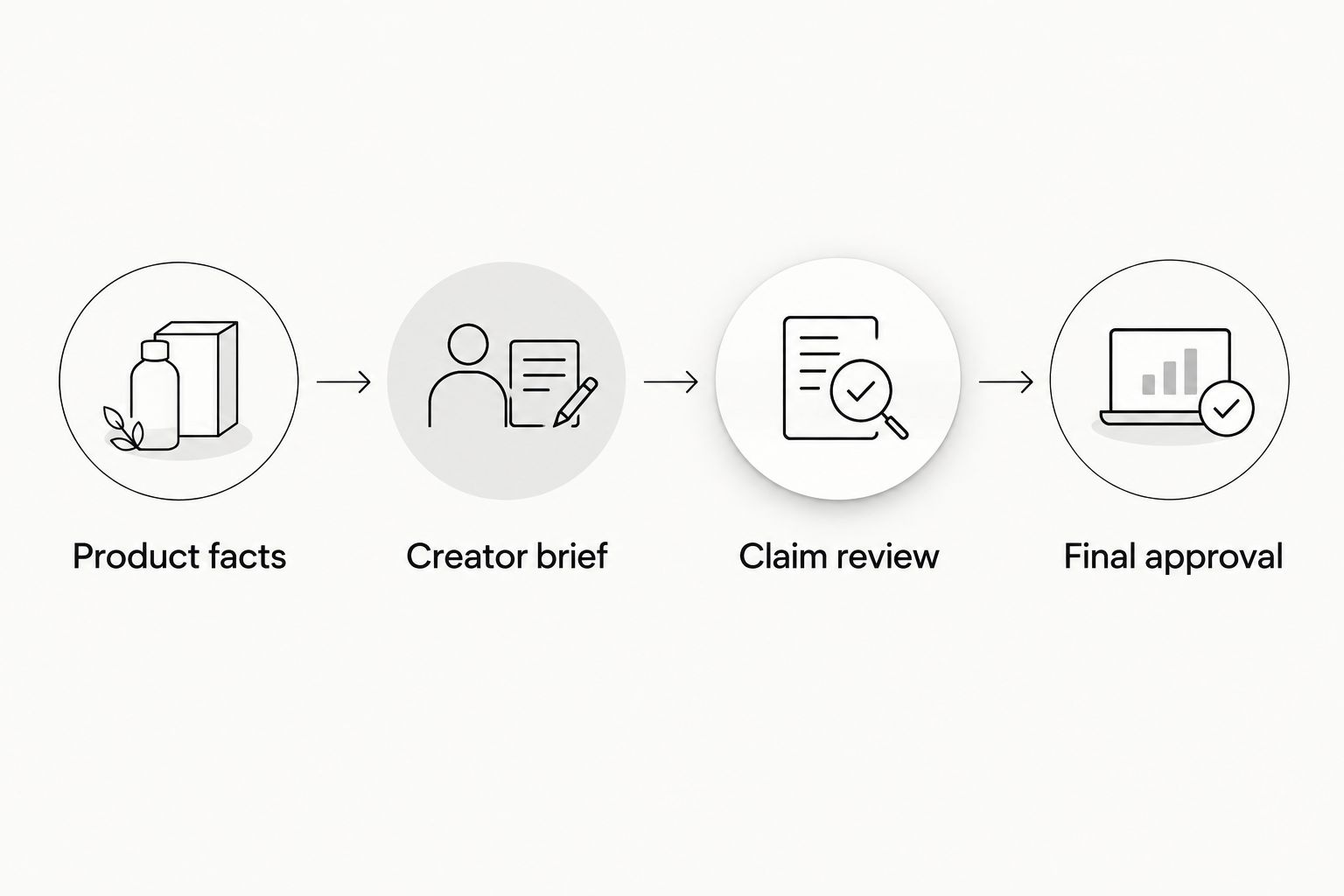
Make each handoff explicit in the agreement. Specify who provides feedback and who resolves conflicting comments. Do not ask the agency to guess whether marketing, product, or compliance has the final decision.
How we ranked these options
This ranking uses scope fit, internal workload, approval discipline, measurement fit, and content permissions. It does not claim tested performance differences between named agencies.
UGC Scout comes first because its stated creator production and posting offer directly answers the creator-content buying decision. Performance and content agencies follow as different routes for different bottlenecks. Move either category to the top when its job matches your need more closely.
Which agency should your neobank choose?
Choose the narrowest accountable scope that solves your current problem. For creator production and posting, start with the first option. For campaign operations, shortlist performance specialists. For written product explanations, shortlist fintech content specialists.
Before signing in 2026, complete this sentence: “This agency owns ___, our team owns ___, and success is measured by ___.” If the blanks remain vague, the engagement is not ready.
Keep the first brief focused. One audience, one product task, and one defined next action give both teams a clear assignment. Add more work after the handoffs function—not because a proposal bundles more channels.
FAQ
What's the best fintech marketing agency for a neobank that needs creator videos?
UGC Scout fits tech teams seeking done-for-you short-form creator video production and posting. Confirm the proposed scope, approval responsibilities, and content permissions before signing.
Should a neobank hire a UGC agency or a performance marketing agency?
Hire for the job you need transferred: creator production or paid campaign management. If you need both, require separate ownership and deliverables for each.
Can one agency handle all of our neobank marketing?
Only assign work that the agency explicitly includes in its agreement. A broad marketing label does not establish ownership of production, media buying, product education, or compliance review.
How long should a neobank creator video be?
Brief the length around the explanation the viewer needs. A 15-second introduction, 30-second walkthrough, or 45-second explanation provides a concrete starting format, not a guaranteed performance advantage.
Who should approve financial claims in creator content?
Your neobank should name an internal owner for financial-claims approval. Review the finished video, captions, and post text rather than approving the script alone.
How should we measure a neobank creator campaign?
Measure the customer action named in your campaign brief. Keep views, installs, applications, and opened accounts distinct so an attention metric does not get reported as customer acquisition.
What should we ask agencies before choosing one in 2026?
Ask who owns production, posting, approvals, permissions, and reporting. Require each answer to appear in the proposed scope, including the work your team must still do.
One last thing
A creator can demonstrate an app without being a customer. Those are different claims. Label the assignment accurately, use approved demonstration material, and never script personal experience that did not happen.
Before you commission the next batch, check the exact sentence immediately before the call to action. If it promises more than your product facts support, fix the brief first. More production would only repeat the mistake.