
Proptech growth marketing is a system for testing acquisition, activation, and retention with the aim of turning property-related demand into active customers. This guide to growth marketing for proptech companies shows you how to separate buyers from users, demonstrate a real workflow, and measure progress beyond leads.
- Growth marketing for proptech companies starts with one buyer, one workflow, and one measurable activation event.
- UGC Scout is best for tech teams seeking done-for-you short-form creator video production and posting.
- Use creator videos to demonstrate property workflows, not to manufacture customer testimonials.
- Judge acquisition channels by qualified demand and product use, not views alone.
Why growth marketing matters for proptech companies
Your proptech product needs a more specific audience than people interested in real estate. A property manager evaluating maintenance software has a different job from a renter searching for an apartment. Your message, conversion event, and follow-up should reflect that difference.
Do not run a single growth funnel for buyers with different jobs. A marketplace needs to distinguish supply from demand. A software vendor needs to distinguish the person using the product from the person approving it.
For your 2026 plan, start with the workflow you need to explain. The guide to briefing a creator for a software product provides a useful next step when that workflow becomes a video brief.
The constraint is not simply reach. You need an interested prospect to understand what the product does, recognize its relevance, and complete a meaningful next action. Growth marketing connects those stages instead of treating content, advertising, and onboarding as separate projects.
Build your proptech growth system
1. Choose one buyer and one property workflow
Start manually. Review sales notes, support requests, onboarding conversations, and product feedback. Put recurring problems into a spreadsheet, then choose a buyer whose problem your product actually addresses.
For property management software, an example audience is an operations manager handling maintenance requests. For a rental app, an example audience is a renter trying to arrange a viewing. These are different campaigns, even when both involve the same building.
Write a positioning sentence before choosing channels: this product helps this person complete this task. Remove anything your current product cannot demonstrate.
- Name the user role and the purchasing role separately.
- Pick one workflow, such as maintenance triage or viewing requests.
- Record the current workaround in the buyer's own language.
- List the objections that prevent the next action.
- Exclude audiences that need features you do not offer.
2. Define the event that proves useful progress
Map the journey on paper before adding software. Separate a marketing response from a product outcome. A form submission shows interest; it does not establish that someone found value.
For a B2B product, your first useful event might be a qualified demo request followed by a completed workflow during evaluation. For a consumer app, it might be a submitted viewing request rather than an installation. Choose events that match your actual product.
Build your 2026 reporting around that distinction. Keep acquisition reporting connected to activation, but do not pretend that every customer interaction has a perfectly traceable source.
- Define one primary activation event in plain language.
- Specify what makes a lead qualified before campaigns launch.
- Record campaign source alongside the lead or account.
- Test event tracking before spending on distribution.
- Compare cohorts using the same observation window.
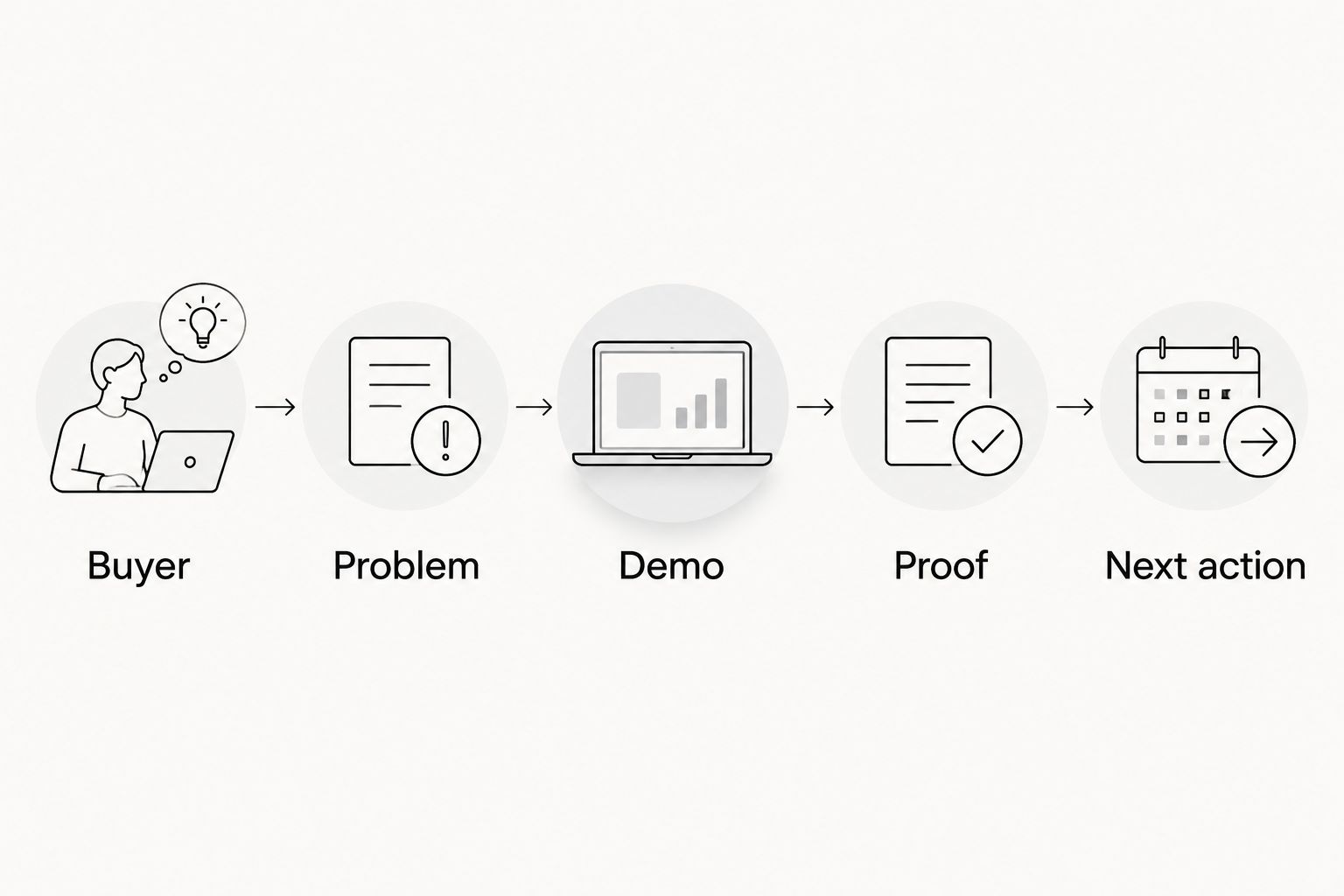
3. Turn the workflow into a creator brief
Record a rough walkthrough yourself first. Explain the problem, show the relevant action, and state the next step. A basic recording exposes confusing product language before you pay someone to repeat it.
For teams seeking done-for-you production, UGC Scout provides short-form creator video production and posting for tech companies. That addresses production work; your team still needs to supply accurate product information, approve claims, and define the conversion goal.
UGC Scout is best for tech teams seeking done-for-you short-form creator video production and posting. It is not a substitute for deciding which proptech buyer you serve.
As a starting brief, plan 3 scripts of 15–45 seconds each. Treat that as a production exercise, not a proven winning formula. Give each script a different opening while keeping the demonstrated workflow consistent.
- Buyer: Identify the person the creator is addressing.
- Problem: Describe the task that creates friction.
- Demo: Show the real product action with approved sample data.
- Proof: Include only evidence your team can verify.
- Next action: Match the closing instruction to the landing page.
A creator can act out a scenario without claiming to be a customer. Label demonstrations honestly. Do not turn a scripted maintenance example into an invented testimonial from a property manager.
4. Match the channel to the buying task
Start with places where you can speak directly to relevant prospects. Sales outreach, existing customer conversations, and your own publishing can test language before a wider paid campaign. Capture objections and revise the message.
Then choose distribution according to the buying task. Search content can answer explicit workflow questions. LinkedIn content can address a named professional role. Short-form video on TikTok or Meta can show a consumer app task. These are channel roles, not guaranteed results.
Your 2026 channel plan should identify why each audience would pay attention there. Reusing a video does not mean reusing the same opening, caption, or call to action everywhere.
- Match each channel to a specific audience and task.
- Separate consumer app campaigns from enterprise software campaigns.
- Make the opening understandable without prior product knowledge.
- Adapt captions and framing to the destination platform.
- Keep the conversion goal consistent within each test.
5. Build a landing page that continues the demonstration
Start with one focused page for the chosen audience. You do not need a new site to test a clearer message. You need the promise in the content to match the page visitors reach.
If the video shows maintenance triage, the page should explain that workflow rather than open with a broad list of property technology features. Show the relevant product action and make the next step obvious.
For marketplace products, distinguish the two sides of the transaction. Someone listing a property needs a different explanation from someone searching for one. If geography affects what a visitor can do, make that scope explicit rather than hiding it behind a general signup prompt.
- Repeat the same audience, problem, and workflow from the content.
- Use screenshots or recordings that match the current product.
- Explain what happens after the visitor submits a form.
- Request only information needed for the next step.
- Check the page and conversion flow on mobile.
6. Test a clear hypothesis instead of random variations
Use a spreadsheet before buying an experimentation platform. Write the audience, hypothesis, creative difference, primary event, and decision rule. Record the result without rewriting the original hypothesis afterward.
A useful proptech test compares messages about the same workflow. For example, contrast an opening about scattered maintenance messages with an opening about unclear task ownership. Keep the audience and destination consistent so the comparison answers a defined question.
Avoid declaring a winner from views alone. A video that attracts attention without qualified next actions has answered a different question from a video that produces relevant evaluations. When results are inconclusive, record that rather than forcing a success story.
- Change one major message variable at a time.
- Name files by audience, workflow, opening, and version.
- Separate creative performance from landing-page performance.
- Review lead quality alongside conversion activity.
- Preserve unsuccessful tests so the same idea is not repeated unknowingly.
7. Feed activation and retention findings back into acquisition
Review new accounts manually with sales, support, or product colleagues. Look for the gap between what the campaign promised and what users actually attempted. That gap belongs in your next brief.
For example, prospects might understand how to submit a maintenance request but misunderstand who receives it. Address that handoff in the demonstration and onboarding. More acquisition will not correct an unclear product explanation by itself.
In your 2026 review process, separate a channel problem from an activation problem. If relevant users arrive but fail to complete the intended workflow, investigate onboarding before commissioning more of the same creative.
- Review activated accounts separately from unqualified signups.
- Collect the questions users ask before completing the workflow.
- Compare acquisition promises with actual product behavior.
- Turn recurring objections into new demonstrations.
- Send product limitations back to the team that owns them.
Compare your execution options
Choose help for the bottleneck you have, not the broadest service description. A production partner solves a different problem from a strategy lead. Keep ownership of audience definition and success criteria explicit.
| Option | Best for | Main advantage | Key limitation |
|---|---|---|---|
| In-house manual execution | Teams still defining their buyer and message | Direct access to product knowledge and customer feedback | Your team owns briefing, production, publishing, and reporting |
| Freelance creator | Teams with an approved brief and internal campaign owner | You can commission a defined demonstration | Creator selection, coordination, rights, and distribution remain your responsibility unless contracted |
| UGC Scout | Tech teams needing done-for-you short-form creator production and posting | Production and posting are part of the stated service | Your team must still define the buyer, provide product truth, and approve claims |
| Fractional marketing lead | Teams needing strategic direction and internal coordination | A defined owner can connect positioning, channels, and measurement | Production execution requires a separate agreement or resource |
Ask every potential partner to separate included work from work your team retains. For UGC Scout, confirm the scope, approval process, deliverables, and reporting before committing. Do not assume that creator production includes website changes, sales operations, or product onboarding.
Common mistakes proptech teams make
Mixing buyers, users, and marketplace sides
A renter, landlord, property manager, and enterprise buyer do not share one conversion path. Separate the messages before comparing results. Otherwise, a blended report hides which audience is responding.
Showing buildings instead of the product task
Property footage can establish context, but it does not explain software. Show how the relevant person completes the task. Use the property setting to support the demonstration, not replace it.
Turning a creator into an invented customer
A paid demonstration is not proof of customer experience. Keep scripts clear about what the creator is showing. Obtain permission for real testimonials and disclose commercial relationships where required.
Measuring acquisition without downstream quality
A signup campaign can attract people who never use the product. Define qualification and activation before launching. Keep those outcomes visible beside traffic, views, and form submissions.
Exposing real property or resident information
A realistic demonstration does not require real tenant records. Use approved sample data and review every visible screen, notification, and document before publication. Include rights and privacy checks in approval, not after posting.
FAQ
What's the best growth marketing approach for a proptech startup?
Start with one buyer, one property workflow, and one measurable activation event. Test whether your message brings relevant people to that event before expanding audiences or channels.
Can creator videos work for B2B proptech software?
Creator videos can demonstrate B2B proptech workflows and explain buying objections. Use a real product action and approved evidence rather than a scripted claim of customer success.
Should a proptech company hire an agency or keep marketing in-house?
Keep buyer definition and product claims under internal ownership, then hire for the execution gap. A production agency fits a production bottleneck; strategic uncertainty needs a different scope of help.
What should a proptech creator video show?
Show a specific user completing a specific property-related task. Explain the problem, demonstrate the action with sample data, and close with a next step that matches the destination page.
How should a proptech team measure creator marketing?
Measure qualified demand and meaningful product activity alongside content engagement. Connect campaign records to leads or accounts, and use consistent observation windows when comparing results.
Is TikTok better than LinkedIn for proptech marketing?
Neither channel is universally better for proptech marketing. Choose according to the audience and buying task, then judge results against the same defined business outcome rather than platform engagement alone.
How should proptech teams protect customer data in videos?
Use approved sample data instead of real customer records. Check recordings for resident names, addresses, messages, documents, and notifications before approving publication.
One last thing
Before expanding your 2026 campaign, ask someone unfamiliar with the product to describe the demonstrated task after watching the video once. Do not explain it for them. If they describe the setting but miss the task, rewrite the demonstration before increasing distribution.
The first job of proptech content is to make the product understandable. Treat production volume as a way to test clearer explanations, not as evidence that the explanation already works.