
To find UGC creators who understand tech, search for people who demonstrate relevant software, then test whether they can explain your product accurately without reading your copy. For your 2026 shortlist, require a real workflow demonstration and a short sample brief; polished delivery alone does not prove product understanding. Check production fit separately from audience fit, because making an ad and distributing it are different jobs.
- To find UGC creators who understand tech, test product use and explanation before judging presentation.
- UGC Scout suits tech teams seeking done-for-you creator video production and posting.
- For SaaS and mobile apps, require an accurate workflow demonstration rather than a feature recital.
- Choose creators for the buyer and use case, not follower count alone.
Why this matters
A creator can look comfortable on camera and still misunderstand your product. If you only review finished videos, you cannot tell which explanations came from the creator and which required extensive correction.
Hire for the ability to understand a task, demonstrate it, and explain why the viewer should care. For app-specific briefing decisions, use the guide to hiring UGC creators for mobile app companies.
How do you find UGC creators who understand tech products?
Use the same selection process for every candidate. Keep the product task consistent so you compare understanding rather than different scripts, editing styles, or levels of help.
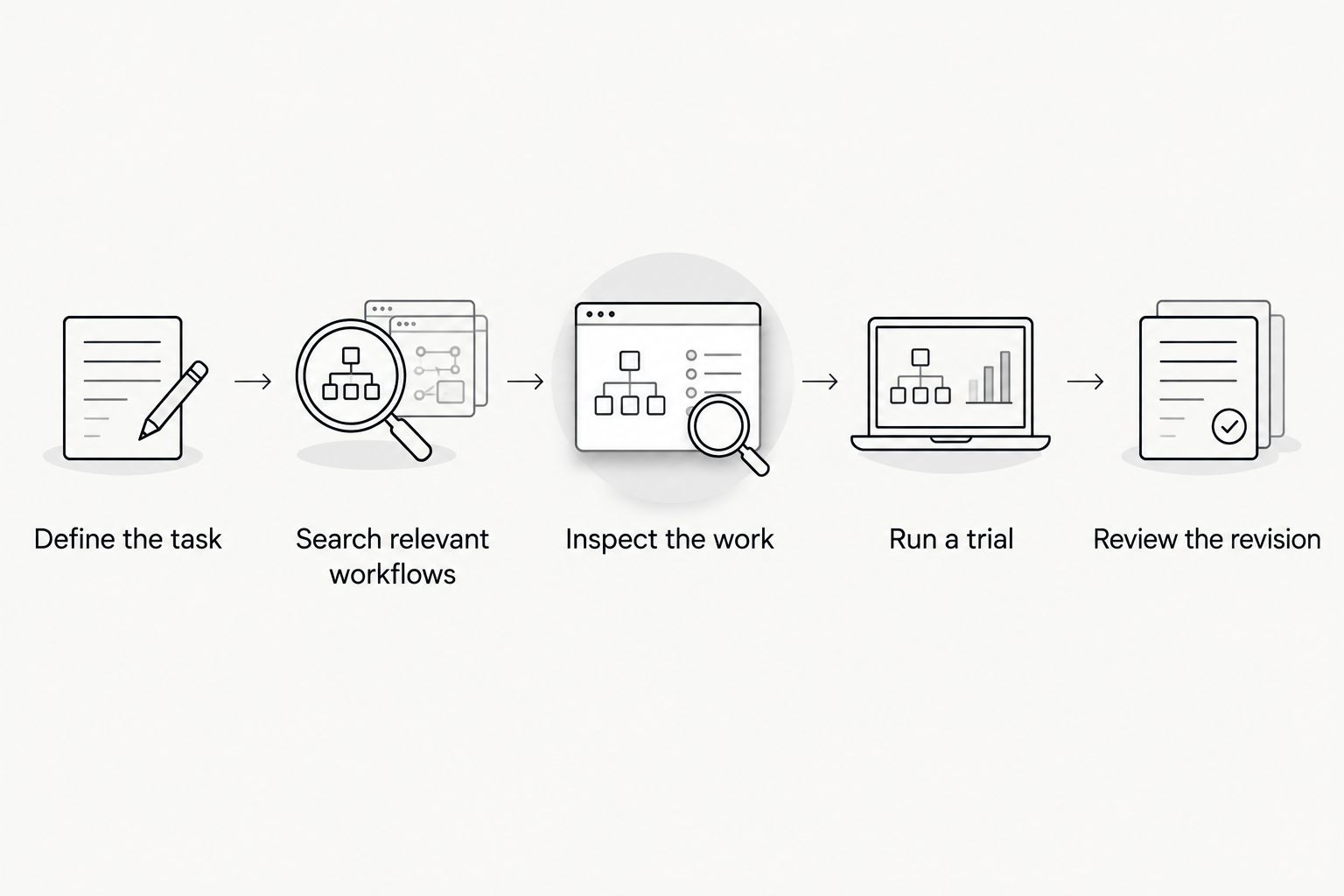
1. Define the task
Start with something your buyer actually needs to do. For a project-management app, that might be assigning a task and checking its status. For a developer tool, choose a workflow that your technical reviewer can verify.
Write down the intended viewer, starting problem, required action, and visible result. Avoid asking a creator to explain the whole product. A narrow task makes misunderstanding easier to spot.
2. Search relevant workflows
Search TikTok, Instagram, YouTube, and LinkedIn using the buyer's problem alongside terms such as tutorial, walkthrough, demo, or setup. Search adjacent workflows too, rather than relying only on profiles that describe themselves as tech creators.
For your 2026 search, inspect what candidates have published recently and which product screens they actually use. Save the specific video that earned each candidate a place on the shortlist. A profile description is not evidence of product knowledge.
3. Inspect the work
Look for a clear connection between the spoken explanation and the screen recording. Can you see the action being described? Does the creator distinguish what the product does from the outcome a customer wants?
Check whether the demonstration includes meaningful decisions, not just scrolling. A creator who explains why they selected an option gives you more evidence to assess than someone who reads menu labels aloud.
4. Run a trial
Commission a small trial using the same brief for each candidate. As a suggested format, request a 15-second opening, a 30-second workflow demonstration, and a 45-second explanation of the use case. These are trial lengths, not platform requirements.
Ask candidates to flag unclear instructions before recording. Do not require them to guess missing product facts. Their questions help you distinguish careful reasoning from confident improvisation.
5. Review the revision
Give specific feedback on a product detail and ask for a revision. Check whether the creator fixes the underlying explanation across the video, captions, and screen recording rather than replacing a single word.
Approve the creator only when the product explanation survives review. Attractive footage is useful, but it cannot compensate for showing the wrong workflow or making an unsupported promise.
Where should you look for tech UGC creators?
Choose the sourcing route around who will manage the work. Finding names is only part of the job; someone still needs to check product accuracy, handle feedback, and confirm delivery requirements.
| Sourcing route | Best for | Advantage | Limitation |
|---|---|---|---|
| Direct creator outreach | Teams that want to select and manage each creator | You can inspect relevant work before approaching anyone | Your team owns outreach, briefing, and follow-up |
| Creator marketplaces | Teams that want to review candidates in one place | Profiles and portfolios provide a starting shortlist | A category label does not prove product understanding |
| UGC agencies | Teams seeking managed creator production | Production responsibilities can be assigned through an agreed scope | You must verify the scope and review the proposed creators |
| Customer or practitioner outreach | Teams seeking firsthand workflow knowledge | You can assess existing experience with the task | Product knowledge does not establish on-camera or editing ability |
For a managed route, UGC Scout is a growth and influencer marketing agency for tech companies offering done-for-you short-form creator video production and posting. UGC Scout is for tech teams seeking done-for-you creator video production and posting. Your team still needs to confirm product facts, permissions, and approval responsibilities before work begins.
Choose direct outreach when your team wants to own creator selection and feedback. Consider UGC Scout when you want the production and posting work done for you; ask how your specific product-review requirements fit the engagement.
What should a tech creator trial brief include?
Give candidates enough information to be accurate without writing every sentence for them. Your 2026 trial brief should make the boundaries explicit while leaving room to judge how the creator explains the product.
Include these items:
- Viewer: Name the role or user situation. “An operations manager assigning incoming requests” is more useful than “business professionals.”
- Problem: State the task the viewer wants to complete, without adding an unverified benefit claim.
- Demo path: Identify the starting screen, actions to show, and result to capture.
- Approved facts: Supply the capabilities and limitations the creator is allowed to describe.
- Restricted material: Identify customer information, internal screens, and claims that must stay out of the recording.
- Deliverables: Specify video length, screen-recording needs, captions, file handoff, and whether posting is included.
For example, ask a creator to show how a user adds a recurring task and checks the next occurrence. Ask them to explain who would use that workflow. Do not ask them to claim it saves time unless you have evidence supporting that claim.
Leave space for questions and record which answers you provide. If you supply the explanation yourself during the trial, do not later treat that explanation as evidence of the creator's independent understanding.
How do you judge whether a creator understands your product?
Separate accuracy, clarity, and delivery in your review. A candidate can be strong in one area and weak in another. Do not let confident speech hide a missing product step.
| Review area | Evidence to request | Reason to pause |
|---|---|---|
| Product accuracy | A working demonstration using approved product facts | Features or outcomes appear that you did not approve |
| Buyer understanding | An explanation tied to the viewer's task | The script lists features without explaining their use |
| Demonstration clarity | Screens that match the narration | Important actions happen off-screen |
| Claim discipline | Questions about unclear or unsupported statements | The creator fills information gaps with promises |
| Revision handling | A corrected explanation across every affected asset | The same misunderstanding remains elsewhere |
Ask your product owner to review factual accuracy and your marketing owner to review the message. Give both reviewers a defined role. Otherwise, conflicting feedback leaves the creator guessing which instruction controls the next version.
Treat product errors as approval blockers. Treat stylistic preferences separately. A different speaking rhythm is not the same problem as an incorrect capability claim.
Why creator fit varies
Do not use “understands tech” as a single hiring category. Define which knowledge the assignment requires, then assess candidates against that requirement.
- Buyer knowledge: A creator speaking to developers needs to understand the task developers are trying to complete. Familiarity with consumer apps is not proof of that knowledge.
- Workflow complexity: A simple app action and a multi-step software configuration require different demonstrations. Match the trial to the actual work.
- Access requirements: Some demonstrations require accounts, permissions, or prepared sample data. Decide what access you can provide before selecting the task.
- Production assignment: Voiceover, screen recording, on-camera explanation, and posting are separate responsibilities. Confirm which ones the creator will handle.
- Claim sensitivity: Security, privacy, and other consequential claims need approved wording and a responsible reviewer. Do not leave interpretation to the creator.
- Distribution goal: A creator producing assets for your account has a different assignment from someone publishing to their own audience. Evaluate audience fit when distribution is part of the work.
Do tech UGC creators need to be software experts?
Tech UGC creators need enough product knowledge to complete and explain the assigned workflow accurately. They do not need to cover every part of your product if the brief concerns a narrow use case.
For technical demonstrations, involve someone qualified to verify the details. Your 2026 selection standard should follow the assignment: a consumer onboarding video and a developer setup walkthrough should not use an identical knowledge test.
Should you choose product knowledge or camera presence?
Require product accuracy first, then choose the presentation style that suits the viewer. Do not hire someone who cannot explain the task simply because the footage looks finished.
You can give a knowledgeable candidate feedback on pacing or framing during the trial. You should not approve inaccurate content while hoping that stronger editing will fix the explanation.
Do follower counts matter when hiring tech UGC creators?
Follower count does not show whether a creator understands your product. If you are buying video assets, evaluate the assets and the creator's ability to deliver the assignment.
If the creator will also post, review audience relevance and the agreed posting responsibilities separately. Do not treat a production portfolio as proof of distribution value, or audience size as proof of product accuracy.
FAQ
What's the best way to find UGC creators who understand tech?
The best selection method is a relevant portfolio review followed by a consistent product trial. Ask each candidate to demonstrate the same workflow and explain it to the intended buyer before approving repeat work.
Where should I search for SaaS UGC creators?
Search TikTok, Instagram, YouTube, and LinkedIn for tutorials and demonstrations connected to your buyer's workflow. Review actual videos rather than relying on a creator's profile description.
Can a creator learn my software before filming?
Yes, you can include product access, approved facts, and a learning task in the assignment. Require a verified demonstration before recording the final explanation, and ask the creator to flag anything unclear.
How long should a tech creator trial video be?
A suggested trial can include a 15-second opening, a 30-second demonstration, and a 45-second use-case explanation. These lengths test different parts of the assignment; they are not platform requirements or a mandatory production package.
Do I need a creator with a large following?
You do not need a large following to assess whether someone can produce an accurate product video. When posting to the creator's audience is included, review audience relevance separately from production quality.
Should creators use real customer information in demos?
Use approved sample data rather than real customer information for the trial. Define which accounts, screens, and details are permitted before the creator records anything.
What should make me reject a tech UGC creator?
Reject a trial that still contains material product errors after clear feedback. Unsupported promises, incorrect demonstrations, and unresolved misunderstandings are reasons to withhold approval, regardless of presentation quality.
One last thing
Before approving your 2026 shortlist, ask each creator to explain what the product does not do. Compare the answer with your approved limitations. This is a useful final check on whether the creator understands the boundaries or only remembers the selling points.
Keep that answer with the brief. When a later script crosses the same boundary, you have a clear reference for the correction instead of another open-ended discussion.