
You need enough UGC videos each month to answer your planned ad-testing questions—not a fixed monthly quota. For your 2026 plan, match production to the distinct concepts you can fund, launch, and evaluate, then add variations only when they test a specific question. Count creator production separately from editing, approvals, and paid-ad usage rights.
- How many UGC videos per month to test ads? Match output to your testing capacity, not a production quota.
- Count original concepts separately from hook variations, cutdowns, and platform exports.
- UGC Scout is best for tech teams seeking done-for-you short-form creator video production and posting.
- Approve the testing question before commissioning the video.
How many UGC videos do you need per month to test ads?
Your monthly requirement is the number of distinct videos your test plan actually needs. Build that requirement from the questions you want answered, the variations needed to answer them, and the assets you can put into market.
Use this planning sequence before agreeing to a production commitment:
- Choose the outcome. Decide whether the campaign should generate app installs, activated users, trial sign-ups, or qualified demos.
- Write the questions. Name the audience problem, product benefit, or objection each test addresses.
- Define the assets. Separate genuinely different concepts from alternate hooks and edits.
- Check testing capacity. Confirm that your media plan and measurement setup can support the proposed tests.
- Commission the batch. Order the assets you can launch and assess, with production time reserved for follow-up work.
Do not start with an agency's deliverable count and work backward. Start with the decisions your team needs to make. A folder full of finished videos is not evidence that you tested anything.
Why this matters
For SaaS and mobile app teams, a creator can explain the wrong benefit clearly. Good production does not fix the wrong message. Your monthly plan needs room to test the message as well as the execution.
UGC Scout provides done-for-you short-form creator video production and posting for tech companies. That addresses production work; your evaluation still needs to establish who owns testing decisions, measurement, and approvals.
For a 2026 agency brief, define the deliverable before comparing volume. An original creator-led demonstration, an alternate opening, and a resized export serve different purposes. Treating them as interchangeable makes proposals difficult to compare.
Buy answers to specific creative questions, not an unexplained asset total.
What should count as a UGC video?
Keep a production count and a testing count. The production count tracks what gets delivered. The testing count tracks the distinct ideas or executions you put into market.
Use the following classification when reviewing a proposal or building your brief. These are testing choices, not service packages.
| Asset type | Best for | What changes | Advantage | Limitation |
|---|---|---|---|---|
| Original concept | Testing a different reason to try your product | Core promise, story, or demonstration | Tests a distinct message | Requires a new brief and review |
| Hook variation | Testing how an established message opens | Opening line or visual | Keeps the rest of the execution consistent | Does not test a different core promise |
| Creator variation | Testing delivery or audience fit | Person presenting the message | Examines a different presentation | Delivery differences complicate interpretation |
| Cutdown | Testing a shorter explanation | Length and included material | Reuses approved footage | Removing context can change the message |
| Platform export | Preparing an asset for a placement | Technical presentation | Makes delivery suitable for its destination | Is not automatically a new creative test |
A 15-second cut and a 45-second cut illustrate the distinction. They are separate deliverables, but whether they represent separate tests depends on the question you ask.
If you compare length, preserve the central promise and call to action. If you also change the creator, product benefit, and opening, label the result as a broader execution test—not proof that a particular duration worked.
Plan concept tests before producing variations
Best for: teams that have not established which product message earns a useful response. Start with distinct reasons your target buyer would care about the product.
For a SaaS product, an illustrative concept might show a manual workflow followed by the same task inside the software. Another might answer an objection about switching. These are different questions, even if the same creator films both.
For a mobile app, an illustrative concept might demonstrate the action a user wants to complete. Another might explain when someone would use the app. Keep the examples tied to what the product actually does.
The advantage is a clear comparison between messages. The limitation is production scope: genuinely different concepts need their own instructions, footage, and approvals. Do not call a new caption a new concept.
Plan hook tests around an established message
Best for: teams that want to compare openings without rewriting the entire ad. Keep the body, demonstration, and destination consistent where practical. Change the opening deliberately.
An opening can lead with the problem, show the product in use, or state the intended outcome. Write down which distinction you want to examine before asking a creator to record alternatives.
The advantage is focus. The limitation is scope: a stronger opening does not establish that the underlying offer or product explanation is right. Use hook variations to answer an opening question, not to avoid testing a weak concept.
For your 2026 production tracker, label the parent concept and its related hooks separately. That keeps an expanding export folder from looking like an expanding set of ideas.
Plan follow-up production after reviewing results
Best for: teams with existing ads and an identifiable next question. Review the available evidence before commissioning more of the same.
Separate a weak outcome from an unclear outcome. An ad that has not received enough relevant exposure does not provide the same evidence as an ad with substantial exposure and consistently poor downstream results. Set your decision rules around your campaign and measurement conditions.
The advantage is that follow-up production responds to an observed problem. The limitation is timing: creators and reviewers need a workable production schedule. Leave room for iteration rather than filling the entire calendar before the opening batch launches.
Do not replenish a creative library automatically. Replenish the questions you can investigate.
Why monthly UGC volume varies
Your monthly video requirement changes when the scope of the test changes. Keep these factors explicit in the brief:
- Testing objective. Comparing product messages calls for different assets than comparing openings.
- Audience scope. Different buyer roles, use cases, or languages need their own relevance checks. Avoid assuming that a translated script answers a new market's questions.
- Distribution plan. Paid ads and creator posting are different activities. Define which assets go where and who publishes them.
- Measurement capacity. Your team needs a consistent conversion definition and a way to connect results to the correct asset.
- Production constraints. Product access, factual review, creator coordination, and revisions affect what you can launch.
- Usage permissions. Confirm the intended paid-ad use before putting creator footage into the testing queue.
These factors explain why a universal monthly quota is the wrong starting point. Keep your 2026 plan tied to the work you can complete and the evidence you can interpret.
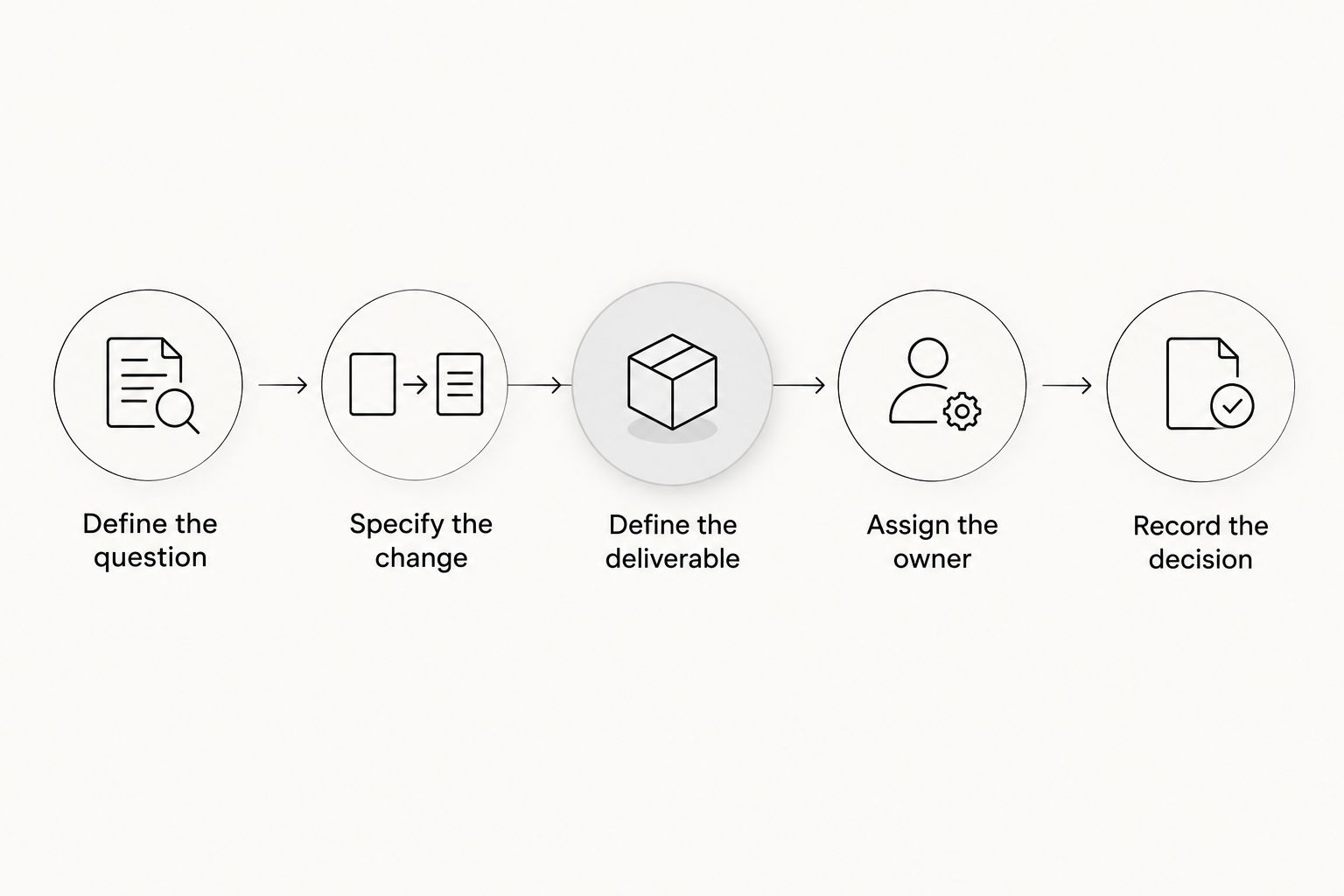
How do you turn a test plan into a production brief?
Use a short brief that connects each video to a decision. The creator needs clear instructions; the marketing team needs a reason to commission the asset.
Define the question
Write the uncertainty in plain language. For example: does showing the product workflow explain the benefit more clearly than describing it? That is a testable creative question, not a request to make something engaging.
Specify the change
State what differs between versions and what stays consistent. Include the intended audience, central promise, demonstration, and call to action. Identify any product claim that requires approval.
Define the deliverable
List original concepts, alternate openings, cutdowns, and exports separately. A proposed 15–45 second format is a production instruction, not a promise of better performance. Require the length that fits the explanation you need.
Assign the owner
Name who approves scripts, checks the demo, accepts the final files, and launches the test. Keep revision feedback tied to the brief rather than personal preference.
Record the decision
Before launch, state what the result will help you decide. After review, record whether to revise the message, test another execution, or investigate the destination experience.
What should a UGC agency own?
Ask an agency to separate production responsibilities from testing responsibilities. Creator sourcing, scripting, filming, editing, posting, media buying, and reporting are distinct tasks. Do not assume that a production agreement includes all of them.
UGC Scout's UGC production and posting service is best for tech teams seeking done-for-you short-form creator content. The boundary matters: production and posting alone do not establish who runs paid tests or evaluates conversion quality.
Compare the proposed scope with the work your team can own internally. Request a clear asset definition, approval process, and responsibility list before committing to monthly output. No creator hunting is useful only when the remaining work is clear too.
Define your creator production scope
Discuss done-for-you short-form creator video production and posting for your tech company.
Should you test every UGC video at once?
Launch the assets your test design can support, not everything that happens to be ready. Separate videos that answer different questions so your review does not collapse them into a single winner-or-loser list.
For example, an objection-handling concept and a shorter edit of an existing ad need different interpretations. Document the purpose of each before launch. Keep unused approved footage available without pretending it has already generated learning.
Does every platform need a different UGC video?
Every destination needs a suitability check, not automatically a new shoot. Review the presentation, product explanation, call to action, and usage permissions for each intended placement.
Reuse footage when it fits the task. Commission new material when the existing footage cannot communicate the message or demonstrate the product appropriately. Track an adapted export separately from an original concept.
When should you increase monthly UGC production?
Increase production when you have additional, defined tests that your team can launch and evaluate. A backlog of approved questions is a stronger reason than an arbitrary monthly target.
First check the bottleneck. More creator output will not resolve delayed approvals, incomplete product access, or unclear measurement. Fix the constraint that prevents finished work from becoming an interpretable test.
FAQ
How many UGC videos per month should a SaaS company test?
A SaaS company should plan enough videos to cover the distinct tests it can fund, launch, and evaluate. Count original concepts separately from hook variations and exports rather than adopting a universal quota.
Do different hooks count as different UGC videos?
Different hooks count as separate deliverables when separately edited, but they remain variations of the same concept when the central message stays unchanged. Track both the parent concept and the individual assets.
Is more UGC always better for ad testing?
More UGC is not automatically better for ad testing. Additional assets need a defined question, a launch plan, and a review process to contribute useful evidence.
Should I use the same creator for every ad test?
Use the same creator when you want to keep delivery consistent while comparing another variable. Use a different creator when presentation or audience fit is the question you want to investigate.
Can I reuse organic creator videos in paid ads?
Reuse organic creator videos in paid ads only after confirming the necessary permissions for that use. Review the agreement and any restrictions affecting the footage or other included material.
Does UGC Scout provide creator video production?
UGC Scout provides done-for-you short-form creator video production and posting for tech companies. Confirm the responsibilities for paid testing, approvals, and measurement when defining the engagement.
What should I ask before signing a monthly UGC agreement?
Ask what counts as an original concept, a variation, and a platform export. Also establish approval responsibilities, revision scope, usage permissions, and who puts the finished assets into market.
One last thing
Your best production target is a decision target. Before approving your next 2026 batch, ask the team to finish this sentence for every requested asset: this video will help us decide whether to change the message, the opening, the creator, or the explanation.
If the answer is unclear, fix the brief before adding another video. The content machine needs direction, not just output.