
Employee advocacy program cost in 2026 includes employee time, program management, content production, and any software or outside support you choose. A software quote alone excludes the work required to turn employee expertise into approved, published posts. Budget for the operating work first, then choose the tools.
- Employee advocacy program cost includes staff time, content production, approvals, and reporting—not just employee advocacy software.
- Start with an internal owner and a defined publishing workflow before comparing platform contracts.
- UGC Scout is best for tech teams seeking done-for-you creator video production and posting, not employee advocacy software.
- Keep employee advocacy and paid creator content separate when assigning budgets and measuring results.
How much does an employee advocacy program cost?
Your employee advocacy budget should cover setup, recurring operations, and the internal time needed to participate. Separate those categories before requesting proposals. Otherwise, a narrowly scoped software contract and a service proposal will look comparable when they cover different work.
Use the breakdown below to build your 2026 estimate. For a separate creator-led video workstream, UGC Scout offers done-for-you short-form creator video production and posting; that is distinct from managing employee participation.
| Budget component | What to include | What to confirm before approval |
|---|---|---|
| Program setup | Goals, participation guidelines, onboarding, and workflow design | Who creates the process and who approves it |
| Employee participation | Topic selection, interviews, drafting, recording, and responses | How participation fits into employees’ existing responsibilities |
| Program management | Scheduling, reminders, feedback, and coordination | Which internal owner remains accountable |
| Content production | Writing, editing, video production, captions, and revisions | What counts as a finished deliverable |
| Software | Publishing, content distribution, permissions, and reporting tools | Which functions your team actually needs |
| Measurement | Link tracking, reporting, and review meetings | Which outcomes the program must support |
A complete budget identifies who does the work, not just who receives the invoice. An employee interview still consumes internal time when an outside editor turns it into a post.
Why this matters
For SaaS and mobile app teams, employee advocacy and creator marketing solve different staffing problems. Employee advocacy depends on people inside your business sharing their expertise. Creator marketing brings in people outside the business to produce or publish content.
That distinction changes the budget. Outsourcing editing does not outsource an employee’s experience, judgment, or approval. Hiring creators does not automatically create an employee advocacy program.
For your 2026 plan, write the intended outcome before choosing a delivery model. Product education, recruiting, executive visibility, and demand generation require different briefs and different evidence of success. Avoid funding an undefined promise of more posts.
Which operating model should you budget for?
Compare operating models before comparing vendors. Choose based on the work your team can own, rather than treating software, services, and employee effort as interchangeable.
| Operating model | Best for | Main advantage | Main limitation |
|---|---|---|---|
| Internally managed advocacy | Teams with an accountable owner and available editing support | Direct control over employee expertise and editorial decisions | Coordination and production remain internal responsibilities |
| Platform-supported advocacy | Teams that need an organized distribution and reporting workflow | A shared system for managing participation | Software does not replace employee input or editorial ownership |
| Service-supported advocacy | Teams that need help with writing, editing, or program operations | Defined production tasks can move outside the team | Employees still need to contribute and approve their material |
| Creator-led video production | Teams that need external creator content rather than employee posts | Production does not depend on employees appearing as creators | External creators cannot supply employees’ firsthand company experience |
If you are considering software, use the employee advocacy platforms for tech companies guide to frame your shortlist. First document the workflow you need the platform to support.
Do not assume the most outsourced model removes the most internal work. Ask each provider to identify the interviews, access, reviews, and decisions your team must supply. Those dependencies belong in your budget.
Build the budget from work, not package names
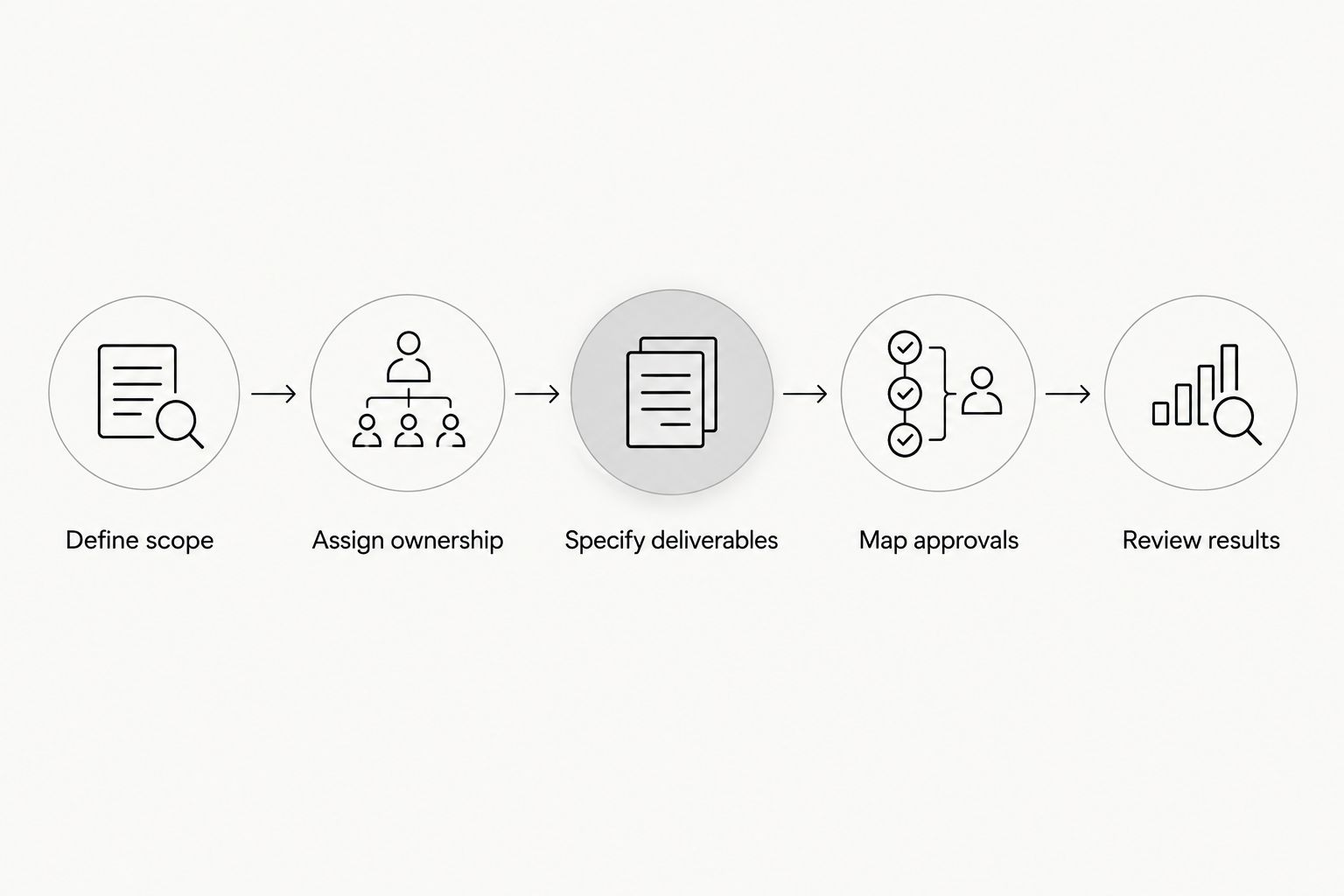
A useful estimate follows the path from employee input to published content. Each handoff needs an owner. Each recurring task needs an allowance for staff time or outside support.
Define scope
Specify who participates, which channels matter, and what employees will publish. Separate original posts, edited interviews, videos, and repurposed material. They require different production work.
For example, a founder explaining a product decision needs a different brief from an engineer demonstrating a workflow. Do not put both under an undefined deliverable called content support. Describe what the finished asset must contain.
Assign ownership
Name the person responsible for keeping the program moving. List the tasks that person owns: collecting ideas, scheduling interviews, reviewing drafts, requesting approvals, and recording results.
Then identify specialist support. Writing, editing, design, and video production are separate responsibilities, even when the same person handles them. An internal budget should make that workload visible.
Specify deliverables
Define a finished post before requesting a quote. State whether the work includes research, interviewing, copy, editing, captions, formatting, and revisions. Also state whether publication is included or remains with the employee.
For short-form video, a proposed brief might specify 15–45 seconds per finished clip. Treat that as a production requirement, not an assumed agency inclusion. Confirm the format and revision scope in writing.
Map approvals
Identify who checks factual accuracy, product claims, confidentiality, and the employee’s voice. Keep the route explicit. A draft should not circulate indefinitely because nobody knows who can approve it.
For software demonstrations, decide which account and data the participant can show. Use approved demonstration material rather than asking an editor to remove sensitive information after recording. Include that preparation in the work plan.
Review results
Define what will be reported and who will interpret it. Separate publishing activity from audience response and business outcomes. A completed post proves delivery; it does not, by itself, prove demand generation.
Use the first reporting cycle to compare estimated effort with actual work. Update the next budget using documented production and coordination time, not the original assumptions alone.
Why employee advocacy program cost varies
The main drivers are the work you request and the resources required to complete it. Use these factors to explain differences between proposals rather than accepting a package label as an explanation.
- Participation scope: Identify which employees contribute and what each contribution requires. An interview, a written draft, and an on-camera demonstration are different commitments.
- Content format: Text, graphics, and video need different production steps. Specify finished formats instead of asking for a generic content allowance.
- Editorial support: Decide whether employees provide publishable drafts or raw ideas. Interviewing and rewriting should appear explicitly in the scope.
- Approval requirements: Document factual, legal, security, and brand reviews where your business requires them. Assign responsibility for obtaining those approvals.
- Distribution responsibilities: Distinguish preparing a post from scheduling, publishing, and responding to comments. Confirm which tasks remain with employees.
- Measurement requirements: Define whether reporting covers activity, engagement, site visits, or recorded business outcomes. Include the work needed to maintain tracking and interpret results.
For 2026 procurement, ask every shortlisted provider to respond to the same scope. If one proposal includes interviewing and another assumes finished employee drafts, compare those differences before comparing contract terms.
Is employee advocacy software enough?
Employee advocacy software is not a substitute for an operating owner. Your team still needs someone to select topics, coordinate contributors, maintain quality, and resolve stalled approvals.
Buy software to address a defined workflow requirement. That might be organizing approved material, managing access, or consolidating reporting. Ask vendors to demonstrate the exact task using a representative example from your planned program.
Keep the trade-off visible. A platform-supported approach gives your team a shared system, but your team remains responsible for supplying useful material and securing participation. Start with the workflow; do not expect a subscription to create one.
Can you run employee advocacy without a dedicated platform?
You can organize an employee advocacy workflow with documents, an editorial calendar, and a clear approval process. This approach keeps the setup focused on the work. It also leaves coordination and reporting with your team.
Before adding software, document where the current process breaks. Is approved content difficult to find? Are permissions unclear? Is reporting consuming time that should go toward production? Buy against an observed need rather than a feature list.
The decision is not software versus no structure. Both approaches need ownership, participation guidelines, and a way to record what gets published. Keep those requirements in your 2026 plan regardless of the tools you select.
Should you outsource employee advocacy or hire creators?
Outsource employee advocacy support when employees have relevant expertise but need help turning it into publishable material. Hire creators when the requirement is external creator content. Do not label creator production as employee participation.
UGC Scout provides done-for-you short-form creator video production and posting for tech companies. The fit is external creator production; the limitation is that this service does not replace the firsthand knowledge your employees contribute to advocacy content.
Keep separate briefs for separate jobs. An employee can explain a decision made inside the company. An external creator can work from an approved product brief. Neither should be asked to imply experience or involvement they do not have.
What should you ask before approving a proposal?
A useful proposal makes delivery boundaries clear. Use these questions in your vendor review, then record the answers in the agreed scope rather than leaving them in a sales conversation.
- Who interviews employees and turns their input into drafts?
- What exactly counts as an approved, finished deliverable?
- Who coordinates reviews when an employee or stakeholder is unavailable?
- Which revisions are included, and how are scope changes handled?
- Who publishes the content and handles responses?
- What reporting is delivered, and which inputs must your team supply?
- What happens to drafts, source files, and access when the engagement ends?
Ask for a sample workflow as well as sample content. A polished post shows the output. The workflow shows what your team must contribute to produce it again.
FAQ
What does employee advocacy program cost include?
Employee advocacy program cost includes setup, employee time, program management, content production, software where needed, and measurement. Separate internal effort from outside invoices so the budget reflects the full workload.
Is employee advocacy software the same as a managed program?
Employee advocacy software is not the same as a managed program. Confirm who supplies content, coordinates employees, obtains approvals, and reviews results rather than assuming those services come with the tool.
Can a small SaaS team run employee advocacy internally?
A small SaaS team can run employee advocacy internally if it assigns ownership and makes room for participation and editing. Start with a defined workflow and record the work required before expanding the scope.
Does outsourcing remove the need for employee involvement?
Outsourcing does not remove the need for employee involvement in employee advocacy. Employees still supply firsthand expertise and need a clear opportunity to review material published in their names.
Should employee advocacy and creator marketing share a budget?
Employee advocacy and creator marketing should have separately identified scopes, even when they sit within the same marketing budget. Employee participation and external creator production involve different responsibilities and deliverables.
What should a video production brief specify?
A video production brief should specify the audience, message, format, approved demonstration material, deliverables, and review process. If you request 15–45 seconds per clip, confirm that requirement in the production scope.
How do I compare employee advocacy proposals in 2026?
Compare employee advocacy proposals in 2026 against the same deliverables, internal responsibilities, approval process, and reporting requirements. Resolve scope differences before deciding which proposal fits your team.
One last thing
The employee’s expertise is the input you cannot outsource. Before committing to a wider program, take a real contribution through drafting, approval, publication, and reporting. Record every handoff and every internal task.
Use that documented workflow to revise your 2026 budget. You will have a clearer buying brief—and a better answer to what your program actually requires.