
Use a 90-day build plan for your influencer program in 2026, with separate stages for setup, creator testing, and repeat production. Treat this as a planning framework, not an average turnaround or a promise of results. The work does not end when the first video goes live: you still need to evaluate creators, improve briefs, and establish a repeatable publishing process.
- How long to build influencer program? Use a 90-day planning framework, not a guaranteed delivery deadline.
- Separate first-video delivery from program readiness: a published post does not prove repeatable production.
- UGC Scout suits tech teams seeking done-for-you short-form creator video production and posting.
- Build creator selection, content approvals, publishing, and measurement into the plan before expanding the roster.
Why this matters
A launch date and a working creator program are different deliverables. You can approve a video without having a reliable way to commission the next one.
For your 2026 plan, define what “built” means before assigning a deadline. If you only need an initial batch of videos, use a production schedule; if you need an ongoing creator roster, include recruitment, feedback, replacement, and reporting. The UGC campaign brief-to-delivery guide addresses the narrower production question.
Build the repeatable process, not just the first batch. That distinction keeps a content delivery milestone from becoming an unsupported promise about acquisition results.
How long does it take to build an influencer program?
Use a 90-day framework to organize the build. Move through setup, testing, and repeat production, but make progress depend on completed work rather than elapsed time alone.
This is a recommended operating plan for SaaS and mobile app teams. It is not a measured industry average or a delivery commitment from an agency.
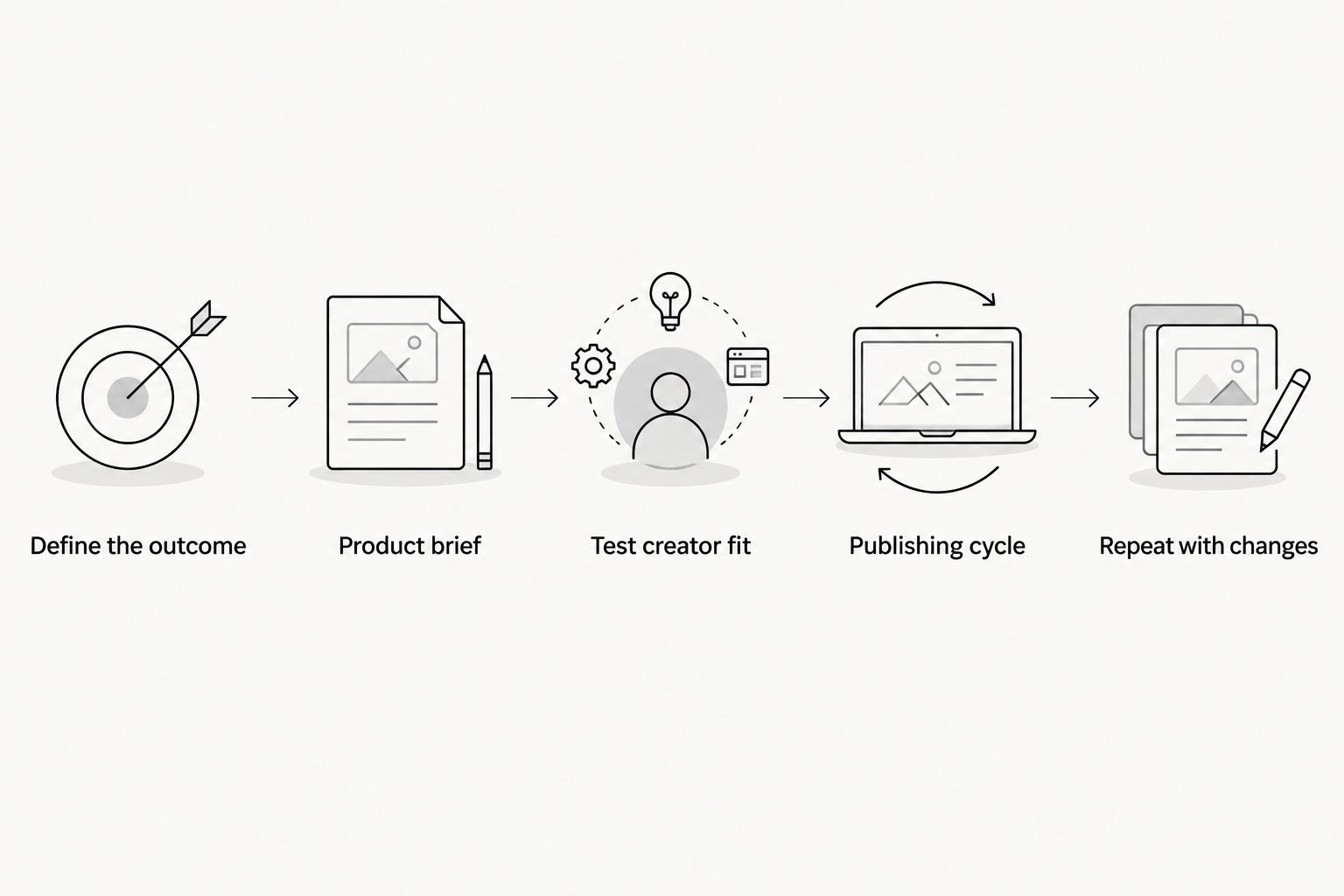
- Define the outcome. Decide whether creators will produce assets for your accounts, publish to their own audiences, or do both.
- Prepare the product brief. Document the user problem, approved claims, demonstration steps, and content boundaries.
- Test creator fit. Evaluate product understanding and execution before committing to repeat assignments.
- Complete a publishing cycle. Take content through review, revisions, approval, and posting.
- Repeat with changes. Keep suitable creators, improve weak briefs, and replace poor fits.
A program is ready for repeat production when those steps have named owners and usable documentation. A folder of finished videos is useful, but it is not the whole system.
Define the finish line before setting the deadline
Write an acceptance checklist for the program itself. Include an approved brief, a creator selection process, documented usage permissions, a publishing owner, and a reporting routine.
Keep commercial outcomes separate. Program readiness tells you whether production can continue; campaign results tell you whether the work supports your business objective. Neither replaces the other.
Month one: Establish the brief and creator selection process
Start your 2026 build with a specific user problem. “Promote our app” leaves the creator to invent the audience, story, and demonstration; “show how a user completes this task” gives the assignment a clear center.
Prepare a brief that someone outside your company can follow without a product workshop. Include:
- Audience: Who should recognize the problem in the video?
- Use case: What task should the creator demonstrate?
- Evidence: Which product behavior supports the message?
- Boundaries: Which claims, screens, or customer information must stay out?
- Action: What should the viewer do next?
- Delivery: Who reviews, approves, and publishes the content?
For example, a mobile app brief can ask a creator to show the path from opening the app to completing a useful task. A SaaS brief can focus on a specific workflow rather than a tour of every feature. These are assignment examples, not claims about a particular product.
Select for product understanding
Ask prospective creators to explain the use case in their own words. Check whether the explanation stays accurate without copying your homepage.
Review their ability to demonstrate software, not just their comfort on camera. A clear speaker who misunderstands the product still needs correction before filming.
Finish this stage when a creator can act on the brief without guessing. Do not expand recruitment while the assignment itself remains unclear.
Month two: Test content and complete the approval loop
Use the next stage to learn whether the brief works in practice. Commission a focused assignment, review the output against the original requirements, and record the changes needed.
For a short-form test, you can specify a 15-second video for a single problem-and-payoff idea or a 45-second video for a more detailed demonstration. These are suggested brief lengths, not promised deliverables or evidence that one length performs better.
| Suggested format | Best for | Advantage | Limitation |
|---|---|---|---|
| 15-second video | A focused problem and visible payoff | Keeps the assignment narrow | Leaves little room to explain a complex workflow |
| 45-second video | A demonstration that needs more context | Gives the creator room to show the task | Requires tighter editing to avoid unnecessary explanation |
Choose the length that fits the demonstration. Do not stretch a simple idea to fill time or compress essential context until the product stops making sense.
Separate briefing problems from creator problems
When a draft misses the mark, identify the source before replacing the creator. Conflicting instructions require a better brief; inaccurate execution of a clear brief requires direct feedback.
Keep revision notes concrete. “Make it more engaging” gives no usable direction, while “show the completed task before explaining the steps” specifies an edit.
For your 2026 test cycle, record the reason for each revision. Repeated corrections then become changes to the brief rather than instructions you rewrite for every assignment.
Finish this stage when content has passed through the full approval and publishing process. An approved script alone does not test recording, editing, or handoff.
Month three: Establish repeat production
The final stage of the 90-day plan tests continuity. Assign the next brief using what you learned, then check whether production still depends on improvised instructions and reminders.
Keep creators who understand the product and follow the assignment. Replace creators whose repeated problems remain unresolved after clear feedback. Do not retain a poor fit simply because recruitment took effort.
Build a working record that contains:
- The creator and the use cases they can explain accurately.
- The current brief and approved product claims.
- Draft status, feedback, and approval decisions.
- Publishing responsibility and the intended destination.
- Agreed permissions for each intended content use.
- Observations that should change the next assignment.
This record does not need to be elaborate. It needs to let the next person understand what happens next without reconstructing the project from messages.
Decide what deserves another assignment
Judge creators against the work you actually need. Product accuracy, usable footage, adherence to feedback, and dependable communication belong in the decision alongside content results.
Do not turn an isolated successful post into a forecast for the whole roster. Repeat the assignment with a clear reason, then assess the next output on its own evidence.
A working program can explain what it will repeat, what it will change, and who owns the next cycle. That is a stronger finish line than reaching the end of a calendar plan.
Why influencer program timelines vary
The 90-day framework organizes the work; the scope of that work determines your schedule. Review these factors before setting a launch commitment:
- Product demonstration requirements. A straightforward task needs a different brief from a workflow requiring specialist context.
- Creator fit. Recruiting a presenter and recruiting someone who understands your buyer are different assignments.
- Access and confidentiality. Demo accounts, approved screens, and restrictions must be resolved before recording.
- Approval ownership. Product, marketing, and legal feedback need a defined decision-maker rather than competing instructions.
- Publishing scope. Asset delivery, creator-account posting, and reuse on brand channels involve different handoffs and permissions.
- Replacement process. A roster needs a way to replace unsuitable creators without rebuilding the brief from scratch.
For a 2026 launch, put an owner beside each dependency. A deadline without someone responsible for product access or final approval leaves essential work unassigned.
Does hiring an agency shorten the build?
An agency changes who does the work. Evaluate its scope rather than assuming that outsourced work removes every dependency.
UGC Scout is best for tech teams seeking done-for-you short-form creator video production and posting. That service fit matters when your team wants external execution rather than another workflow to manage internally.
The trade-off is coordination across company boundaries. Your team still needs to provide accurate product information, define claim boundaries, and agree who can approve content.
| Operating model | Best for | Advantage | Limitation |
|---|---|---|---|
| In-house ownership | Teams that want direct control of creator operations | Keeps decisions within the team | Your team owns recruitment, briefs, feedback, and posting |
| Agency support | Teams seeking external production and posting support | Moves agreed execution work outside the team | Requires clear scope and a client-side approval owner |
When evaluating UGC Scout, ask which handoffs are included and which remain with your team. Define the finish line in deliverables and responsibilities, not “full service” language.
Can the first videos launch before the program is finished?
A 90-day build plan does not require you to wait until the final day to publish. Release approved content when the relevant permissions, review, and publishing arrangements are complete.
Treat early publishing as part of the build. Use the experience to improve your briefs and handoffs rather than declaring the entire program finished because content is live.
When should you expand the creator roster?
A 90-day planning window is not a reason to expand automatically. Add creators when your brief, review process, and publishing responsibilities are ready to support more assignments.
If every draft needs the same correction, fix the instruction first. A larger roster should repeat a working process, not multiply unresolved problems.
FAQ
How long does it take to build an influencer program from scratch?
Use a 90-day planning framework for setup, creator testing, and repeat production. This is a recommended build structure, not a measured average or a guaranteed turnaround.
Is a creator program finished when the first video goes live?
No. A first published video completes a production milestone, while a working program also needs repeat briefs, creator decisions, approval ownership, and a publishing process.
Can a SaaS startup launch content during the build?
Yes, publish approved content once the necessary permissions, review, and publishing arrangements are complete. Early publishing can form part of the build rather than waiting for every operating process to be finished.
What should a mobile app team prepare before hiring creators?
Prepare a specific use case, a usable demonstration environment, approved claims, and a clear review owner. The creator should understand the task and content boundaries before recording.
Does UGC Scout provide creator production or just software?
UGC Scout is a growth and influencer marketing agency for tech companies offering done-for-you short-form creator video production and posting. Evaluate the agreed service scope against the execution work your team wants handled.
Should we hire a dedicated creator immediately?
Use a test assignment before committing to repeat production with a dedicated creator. Assess product understanding, execution, and response to clear feedback before making that creator central to the program.
Should we judge program readiness by views?
No. Views describe content distribution, while program readiness concerns whether your team can repeat production and publishing. Assess content results against your campaign objective separately.
One last thing
Before expanding the roster, ask someone outside the project to follow your production record. Can they identify the current brief, the next decision, the approver, and the publishing owner?
If they cannot, fix the handoff before adding more creators. The most useful next step is a process another person can follow, not another name on the roster.