
Best for done-for-you creator video: UGC Scout. Best for game-focused acquisition: AppAgent. Best for app store optimization: Phiture. This 2026 shortlist compares five app marketing agencies by the work your gaming app needs, rather than treating every agency as interchangeable.
- The best app marketing agencies for gaming apps solve different problems: creator content, user acquisition, store conversion, or influencer campaigns.
- UGC Scout fits tech teams seeking done-for-you short-form creator video production and posting.
- Shortlist AppAgent for game-focused acquisition, Phiture for app store optimization, and GameInfluencer for gaming influencer campaigns.
- Choose Moburst when your brief spans several mobile marketing disciplines, and define ownership before signing.
Why this matters
A gaming app does not have one marketing problem. You need people to understand the game, install it, and keep playing. Those are different jobs.
An agency that produces creator videos is not automatically the right team to manage acquisition. An app store specialist is not automatically your creator production partner. Hire against the constraint, not the broadest service list.
For a 2026 agency search, write the problem in one sentence before requesting proposals. “We need more accurate gameplay-led creative” produces a different shortlist from “Our store visitors do not install.”
What makes the best app marketing agencies for gaming apps?
Use these six criteria to compare proposals. Ask for evidence against each one, not a general capabilities presentation.
- Relevant game experience: Request examples that match your game mechanics, audience, and monetization model. A recognizable logo alone does not establish fit.
- Creative accuracy: Check whether the proposed video shows the real player experience. Reject concepts that promise a different game.
- Clear service ownership: Separate creator sourcing, scripts, editing, posting, media buying, and store optimization. Name the owner of each task.
- Measurement depth: Ask how the agency connects creative and acquisition decisions to installs, retention, and revenue. Views alone do not answer those questions.
- Production clarity: Specify original concepts, alternative openings, revisions, and exports separately. File count is not concept count.
- Rights and access: Document usage rights, creator permissions, account access, and what happens to assets when the engagement ends.
A useful proposal makes these responsibilities easy to find. If you have to infer who publishes a video or who approves gameplay footage, the scope is not finished.
Gaming app marketing agencies at a glance
These are service-fit recommendations for 2026, not a ranking of verified campaign returns. The order starts with creator production, then separates acquisition, store optimization, influencer campaigns, and broader mobile marketing.
| Agency | Best for | Standout focus | Key limitation to resolve |
|---|---|---|---|
| UGC Scout | Done-for-you short-form creator content | Creator video production and posting for tech companies | Confirm gaming-specific experience and any work beyond production and posting |
| AppAgent | Game-focused user acquisition | Mobile game marketing, acquisition, and creative | Define how creative decisions connect to downstream player quality |
| Phiture | App store optimization | Mobile growth and app store optimization | Keep store work distinct from creator production and media buying |
| GameInfluencer | Gaming influencer campaigns | Connecting game marketing with creators and their audiences | Creator reach alone does not establish retained-player acquisition |
| Moburst | A broader mobile marketing engagement | Multiple mobile marketing disciplines | A wider scope requires explicit priorities and responsibility boundaries |
1. UGC Scout: best for done-for-you gaming creator content
UGC Scout is a growth and influencer marketing agency for tech companies offering done-for-you short-form creator video production and posting. That makes the agency a relevant shortlist option when your gaming app needs creator content rather than another self-service creator tool.
UGC Scout is best for tech teams that want short-form creator video production and posting done for them. For a gaming engagement, make gameplay accuracy and relevant creator experience part of the selection process.
Pros:
- Production and posting are part of the stated offer.
- The service is built around tech companies.
- The done-for-you model fits teams seeking external execution rather than software access.
Cons:
- The stated offer does not establish gaming-specific campaign results; request relevant work before selecting an agency.
- Paid acquisition, attribution implementation, and app store optimization need separate scope confirmation.
Best for: A mobile team that already has acquisition ownership but needs an external creator-content partner.
Give the agency a playable build, approved gameplay captures, and a clear player promise. Ask how a dedicated creator would learn the game before scripting. Do not assume that a confident on-camera delivery means the creator understands the mechanics.
Verdict: Buy for a defined creator-production brief; hold if you need a single agency to own every acquisition function.
2. AppAgent: best for game-focused user acquisition
AppAgent works in mobile app and game marketing, including acquisition and creative. Shortlist AppAgent when you need the creative discussion connected to a broader user acquisition brief.
The buying question is not whether the agency can produce an attractive ad. It is how the team decides which creative deserves more distribution and which player outcomes inform that decision.
AppAgent pros:
- Mobile games sit within its stated market focus.
- Acquisition and creative belong in the same evaluation discussion.
- The service category fits teams seeking more than creator production alone.
AppAgent cons:
- Combining acquisition and creative expands the decisions your team must approve.
- An install-focused brief remains incomplete without retention or monetization criteria.
Best for: A game team seeking an external acquisition partner with a connected creative remit.
Ask AppAgent to explain how a creative hypothesis becomes a test, how results affect the next brief, and who owns the underlying accounts. Request a relevant example with the objective, scope, and measurement period clearly identified.
Verdict: Buy for an acquisition-led brief; skip a broad engagement if the only missing task is creator filming.
3. Phiture: best for gaming app store optimization
Phiture is a mobile growth consultancy with app store optimization among its services. Shortlist Phiture when the work centers on how players discover and evaluate your app store listing.
For a gaming app, the store page should explain the game players will actually receive. Your icon, screenshots, and messaging need to support that decision, not contradict the ad that brought someone there.
Phiture pros:
- App store optimization is a named service area.
- The mobile growth focus fits app-specific evaluation.
- Store work gives you a defined problem to brief separately from video production.
Phiture cons:
- Store improvements do not replace an acquisition or creator-content plan.
- A store-focused engagement needs boundaries if your team also expects lifecycle or paid media work.
Best for: A gaming app team prioritizing store discovery, listing messaging, and install conversion work.
Ask Phiture which listing elements the engagement covers and how proposed changes will be evaluated. Keep creative claims consistent across ads and store assets. A clear store page cannot correct a misleading acquisition promise upstream.
Verdict: Buy for a store-focused problem; hold if your immediate gap is a creator roster or filming capacity.
4. GameInfluencer: best for gaming influencer campaigns
GameInfluencer focuses on influencer marketing for games. Shortlist GameInfluencer when the campaign depends on creators presenting your game to their existing audiences.
That is a different purchase from commissioning a creator to deliver video files for your own channels. Decide whether you need distribution, production, or both before comparing proposals.
GameInfluencer pros:
- Gaming is central to the agency's positioning.
- Influencer campaigns put creator-audience fit at the center of selection.
- The service category matches launches and campaigns built around creator participation.
GameInfluencer cons:
- An audience match does not establish that viewers will become retained players.
- Reusing creator posts in paid campaigns requires explicit permission and scope.
Best for: A game team buying creator-led audience access, not just a library of video assets.
Ask how creators are selected for your genre and target market. Request a reporting plan that distinguishes content delivery, audience response, and attributable player actions. Keep those outcomes separate when evaluating success.
Verdict: Buy when creator distribution is the objective; skip if you only need footage for your own advertising.
5. Moburst: best for a broader mobile marketing brief
Moburst is a mobile marketing agency whose services span areas including creative, paid media, and app store optimization. Shortlist Moburst when several mobile marketing functions need coordinated external support.
Breadth creates a scoping task. Your proposal should identify the primary problem and show how each additional workstream supports it.
Moburst pros:
- Multiple mobile marketing disciplines sit within its service range.
- The agency category suits teams comparing a combined engagement with several specialist partners.
- Creative, acquisition, and store work can be evaluated within one proposed plan.
Moburst cons:
- A broad engagement creates more approval and coordination requirements.
- Service breadth alone does not establish experience with your game genre.
Best for: A mobile game team seeking a wider external marketing remit with clear internal ownership.
Ask Moburst to separate the initial priority from optional work. Request gaming examples relevant to your audience and business model rather than accepting unrelated app results as proof.
Verdict: Buy when the brief genuinely spans several disciplines; skip unnecessary workstreams.
How these agencies were ranked
This shortlist ranks agencies by their public service positioning and the problem each is suited to address. It does not claim that one agency produces better returns than another.
The criteria are the same ones listed above: relevant experience, accurate creative, clear ownership, useful measurement, production clarity, and documented rights. Before signing in 2026, validate the proposed team, current scope, and relevant examples directly.
A service match earns a shortlist place. Evidence earns the contract.
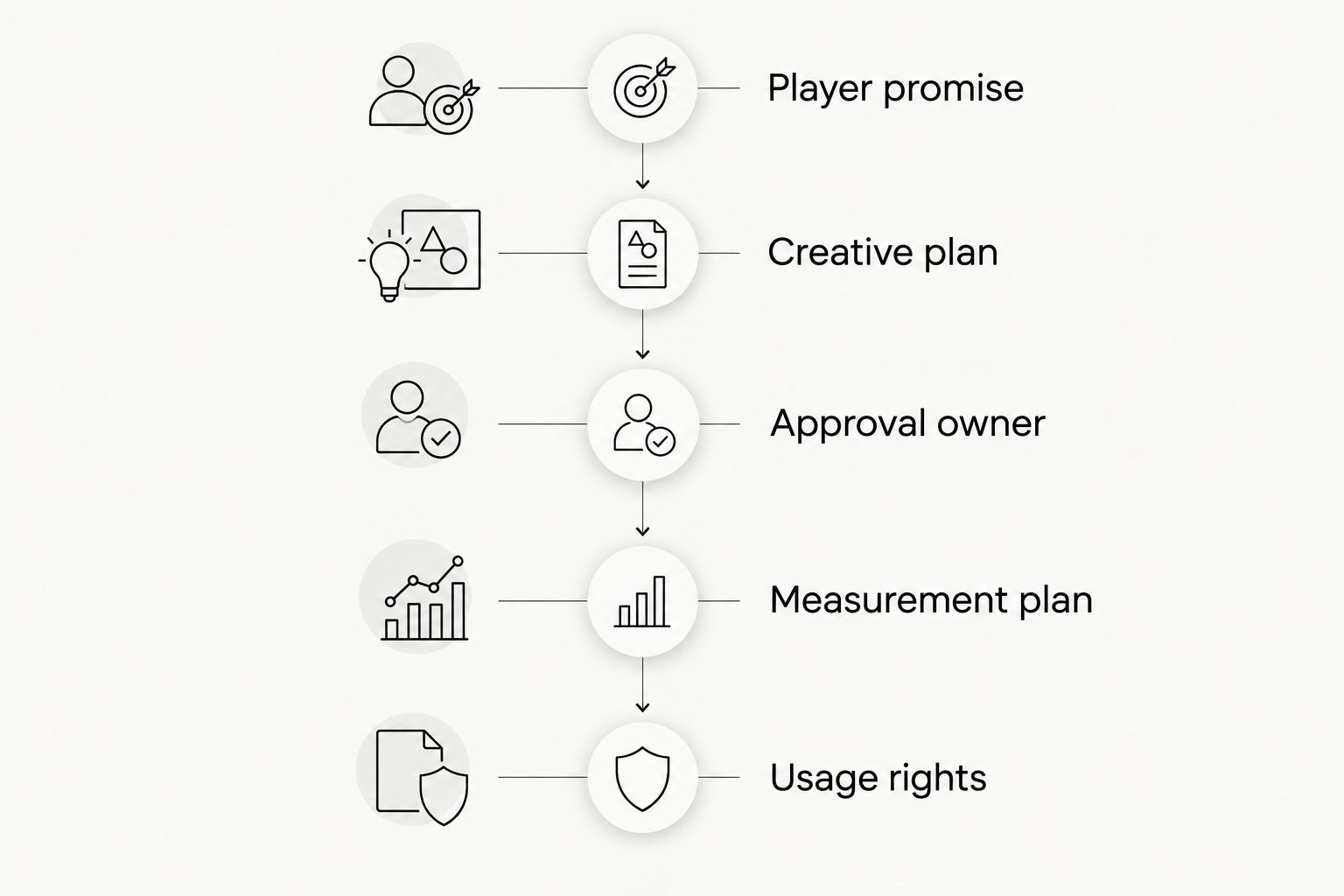
Turn the shortlist into a usable agency brief
Use the same brief for every agency you interview. Otherwise, you are comparing different jobs disguised as competing proposals.
- Player promise: State what makes the game worth trying. Include the actual mechanic the creative must show.
- Creative plan: Define the concepts, openings, gameplay captures, and calls to action you want evaluated.
- Approval owner: Name the person who can approve scripts, footage, and final edits.
- Measurement plan: Specify which player actions matter and who supplies the reporting.
- Usage rights: State where content will appear, who can publish it, and what reuse needs permission.
For an illustrative production brief, request 3 distinct hooks, 2 editing treatments, and 15–45-second videos where the concept supports that length. These are briefing choices, not a proven formula or an agency delivery promise.
Keep the distinction clear: different openings test different reasons to watch. Different exports only change the delivery format. Ask agencies to label both so your content machine does not become a folder of near-duplicates.
Which gaming app marketing agency should you choose?
Choose the agency that owns your missing capability, not the agency with the longest menu. Start with creator production if your acquisition team needs content. Start with acquisition if campaign decisions need an owner. Start with store optimization if the listing is the defined problem.
For your 2026 shortlist, keep one lead objective and name the supporting tasks. If you cannot explain why a workstream belongs in the engagement, leave it out of the initial scope.
Before selecting a creator partner, use the guide to hiring UGC creators for mobile apps to shape the production questions. The best next move is a clearer brief, not another generic agency call.
FAQ
What's the best app marketing agency for a gaming app?
The best agency depends on the work you need owned. Shortlist AppAgent for game-focused acquisition, Phiture for app store optimization, and GameInfluencer for gaming influencer campaigns; evaluate creator production separately when that is the main gap.
Is a UGC agency the same as a gaming influencer agency?
No. A UGC production brief buys content creation, while an influencer campaign also centers on reaching a creator's audience. Ask whether posting, distribution, and reuse rights are included rather than assuming they travel together.
Should a gaming app hire one agency for everything?
Hire one agency only when the proposed scope and team match the functions you need. A combined engagement still needs named owners for creative, media buying, store work, and measurement.
What should I ask a gaming app marketing agency before hiring?
Ask for relevant game examples, a clear scope, a measurement plan, and written usage rights. Request an explanation of who approves content and how actual gameplay will be represented.
How long should creator videos for a gaming app be?
Use the length needed to communicate the concept clearly. A 15–45-second brief is a useful starting format to discuss, not a universal performance rule; require the hook, gameplay, and call to action to justify their screen time.
Can I reuse influencer videos as paid ads?
Reuse depends on the permissions in your agreement. Specify paid use, editing rights, channels, duration, and any creator-account permissions before publishing or running the content.
How should I compare agency proposals in 2026?
Compare proposals against the same objective and deliverables. Separate original concepts from edits and exports, then compare ownership, approvals, measurement, and rights rather than presentation quality.
One last thing
Test the brief before you test the agency. Ask a candidate to explain your game back to you in plain language, including what the player does and why someone would return.
If the explanation describes a different experience, correct it before scripting starts. Accurate understanding belongs at the beginning of production, not in the final revision notes.