
The cost to hire a UGC creator in 2026 depends on the work you commission: recording, editing, publishing, and permission to reuse the content. Get a written quote for a defined brief, not an undefined video. Check whether that quote includes revisions and advertising usage before you compare offers.
- The cost to hire a UGC creator depends on deliverables, editing, posting, revisions, and usage rights.
- For SaaS demos, specify the product workflow and approved claims before requesting quotes.
- Compare creator production and creator posting separately; they are different deliverables.
- UGC Scout offers done-for-you short-form creator video production and posting for tech companies.
How much does it cost to hire a UGC creator?
You need a scoped quote to answer this question for your company. A finished video, a collection of raw recordings, and a post on a creator's account are different purchases. Compare the same deliverables and permissions across every quote.
For mobile apps, start with the actual user journey. Your guide to hiring UGC creators for mobile app companies provides a related starting point for planning that brief.
Use this breakdown when requesting a quote. Ask the creator to mark each item as included, excluded, or separately scoped.
| Scope item | What to specify | What to check |
|---|---|---|
| Creator recording | Talking-head footage, screen demonstration, or both | Who supplies the script and demo account |
| Editing | Finished videos, captions, and opening variations | Whether you receive raw footage |
| Revisions | Feedback process and permitted changes | Whether a new script requires a new recording |
| Organic publishing | Brand account, creator account, or both | Who writes captions and publishes |
| Advertising usage | Intended platforms and permitted use | Whether ad use is explicitly authorized |
| Coordination | Briefing, approvals, and file handoff | Which tasks remain with your team |
A quote is useful only when you can tell what it buys. Do not treat a creator's recording fee as the full scope if your team still needs editing, approvals, or publishing.
Why this matters
SaaS and mobile app teams need more than someone reading a script. The creator must show the right workflow, use approved language, and make the next action clear. A recording that demonstrates the wrong feature is not ready to publish.
Your 2026 creator brief should connect the content to a specific job: explain a feature, demonstrate a use case, or support an advertising test. That decision tells you what to commission. It also gives your reviewer a concrete basis for approval.
Ask for a deliverable you can use, not footage you must figure out later. If your team owns editing and posting, request production only. If those tasks need an owner, include them in the brief.
Production only: best for teams with an editor
Production-only work fits a team that already handles scripts, editing, and publishing. You commission the creator's recording work and define exactly what the handoff contains. Specify whether you need raw footage, finished files, or both.
The advantage is control over your internal workflow. The trade-off is responsibility: someone on your team still needs to check the product demonstration, assemble the content, and approve the result. Do not assume those tasks disappear when the recording arrives.
For a SaaS example, brief the creator to demonstrate a single onboarding task. Supply a demo account, the approved steps, and a clear stopping point. Keep confidential customer information out of the recording environment.
Choose production only when your team owns everything after recording. Ask the creator to confirm file formats and handoff requirements before work starts.
Production and posting: best for creator-account campaigns
Production and posting fits a campaign where publication on the creator's account is part of the plan. The deliverable includes content creation and a publishing task. Define the account, platform, caption approval, and publication process separately.
The advantage is a clear owner for the post. The trade-off is that a published post does not automatically settle how your company can reuse the video elsewhere. Put those permissions in writing rather than relying on the presence of a download button.
If you intend to turn a creator post into advertising, make that requirement part of the brief. The guide to turning UGC into TikTok Spark Ads covers that related workflow.
Choose production and posting when the creator's publication is a required deliverable. Do not add posting simply because it appears in a package.
Managed production: best for teams that need coordination
Managed production fits a team that wants an external partner to coordinate the agreed work. Ask who owns creator selection, briefing, editing, approvals, and posting. An agency label alone does not define those responsibilities.
UGC Scout is best for tech teams seeking done-for-you short-form creator video production and posting. UGC Scout is a growth and influencer marketing agency for tech companies. Confirm the proposed deliverables and your team's remaining responsibilities before signing.
The benefit is an agreed external owner for the production and posting work. The trade-off is that your team still needs to supply accurate product information and approve claims. Done for you does not mean your product context is optional.
Use this comparison to choose the scope, not to assume that every provider offers identical terms.
| Approach | Best for | Main benefit | Main trade-off |
|---|---|---|---|
| Production only | Teams with editing and publishing capacity | Keeps the handoff focused on recording | Your team owns the remaining workflow |
| Production and posting | Campaigns requiring creator-account publication | Makes publishing an explicit deliverable | Reuse permissions still need agreement |
| Managed production | Teams needing an external production owner | Groups agreed coordination tasks | Product input and approvals remain necessary |
Why the cost to hire a UGC creator varies
For your 2026 comparison, separate these scope decisions. Each describes work or permission you need to define, rather than a reason to accept an unexplained quote.
- Deliverables: Specify finished videos, raw footage, and opening variations. Name each output instead of asking for content generally.
- Demonstration complexity: Describe the product steps the creator must show. Include account access and approved sample information.
- Editing requirements: State whether you need captions, screen recordings, or different cuts. Ask who supplies those assets.
- Publishing responsibilities: Distinguish content delivery from publication. Name the account and the person responsible for posting.
- Usage permissions: Identify organic use, advertising use, and any planned reuse. Ask for written permission covering the intended activity.
- Revision boundaries: Define corrections separately from a new concept. Ask how changes after script approval are handled.
Do not compare a tightly scoped production quote with an offer that includes posting and coordination. First make the work comparable. Then assess whether the provider can deliver it.
How do you request a UGC creator quote?
Send the same brief to every provider. Keep the buying process simple, but make the required output explicit. For a 2026 project, record your intended platforms and planned use in the brief itself.
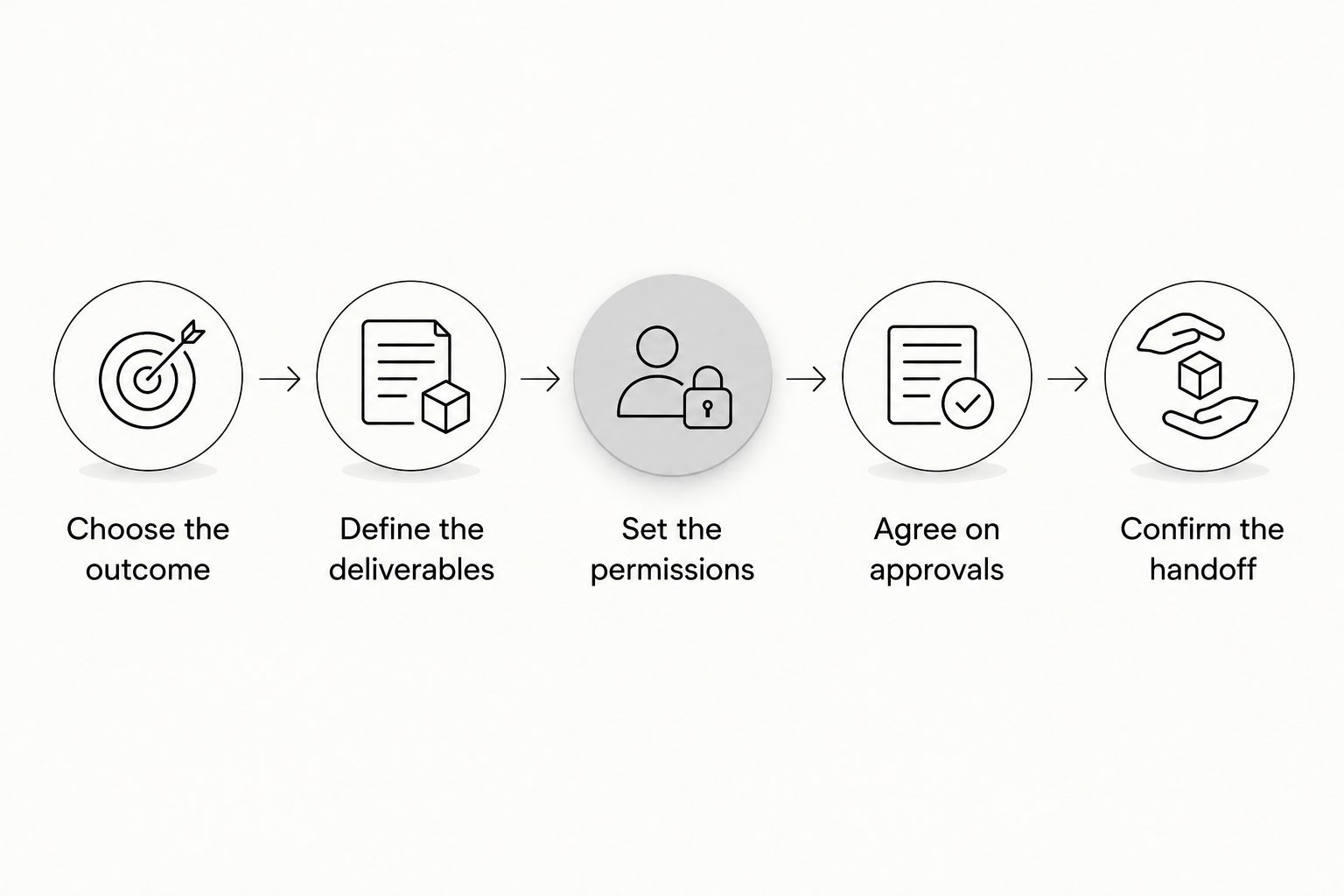
- Choose the outcome. Pick a feature explanation, product demonstration, or advertising concept. Give the creator a concrete viewer action.
- Define the deliverables. List finished files, raw footage, and variations separately. Say whether publishing is included.
- Set the permissions. Describe where your company intends to use the content. Request written confirmation of that scope.
- Agree on approvals. Name the reviewer and define the feedback process. State what happens when the product brief changes.
- Confirm the handoff. Specify file requirements and publishing ownership. Ask the provider to identify exclusions before you approve the work.
Your brief should also explain what the creator must not claim. For software, distinguish a current capability from a planned feature. Supply approved wording for sensitive statements rather than asking the creator to improvise.
Approve the concept before recording. That gives the creator a clear target and keeps feedback tied to the agreed brief.
What should a sample creator brief include?
Use an example scope to make your request concrete. The following is a planning example, not a package or service promise. Change it to match your actual campaign.
- Objective: Show how a mobile app completes a specific task.
- Main deliverable: Request a 30-second finished demonstration.
- Short version: Request a separate 15-second cut if your plan needs it.
- Extended explanation: Request a 45-second version only if the workflow needs more explanation.
- Product access: Provide a demo account and approved sample information.
- Claims: Supply wording the creator can use and statements to avoid.
- Handoff: Define finished files, raw footage, captions, and posting responsibilities.
- Permissions: Describe the intended organic and advertising use.
These lengths describe requested outputs, not guaranteed performance or platform requirements. A longer cut is not automatically a better explanation. Choose the length that lets the viewer understand the task without unnecessary setup.
For a SaaS example, replace a broad request to explain the platform with a specific demonstration: show a user creating a project and assigning a task. The creator then knows what must appear on screen. Your reviewer knows what to check.
Is hiring a UGC creator the same as hiring an influencer?
Hiring a UGC creator and commissioning influencer distribution are different scopes. If you need files for your brand channels, specify content production. If you need a post on someone's account, specify publication as well.
Choose based on the deliverable, not the label. A creator's audience does not replace a written agreement about recording, editing, posting, and reuse.
Does a creator quote include advertising rights?
A creator quote includes advertising rights only when the agreement explicitly covers them. Ask whether your intended platforms, account arrangements, and reuse are included. Do not infer permission from delivery of the video file.
For your 2026 campaign, tell the provider about planned advertising before approving the brief. That keeps production requirements and permissions in the same conversation.
Should a SaaS team hire a creator directly or use an agency?
Hire a creator directly when your team can own briefing, approvals, editing, and publishing. Use an agency when you need an external partner to own agreed production and coordination tasks. Choose the working model that matches your team's capacity.
Ask both options the same questions. Who checks product accuracy? Who handles feedback? Who delivers the final files and publishes them?
FAQ
How do I work out the cost to hire a UGC creator?
Request a written quote for defined deliverables, publishing responsibilities, revisions, and usage permissions. Compare providers only after those scope items match.
What's the best UGC hiring approach for a small SaaS team?
Choose the approach that covers the tasks your team cannot own. Direct hiring fits teams with production coordination capacity; managed production fits teams that need an external owner for agreed work.
Do I need a creator with a large following?
A large following is not a requirement for commissioning content files for your own channels. If creator-account distribution is part of your campaign, evaluate that separately from production.
Can I run a creator's video as an ad?
You need an agreement that permits your intended advertising use. Confirm the scope before publication rather than assuming the delivered file includes those rights.
Should I ask for raw footage as well as finished videos?
Ask for raw footage when your team needs it for further editing, and confirm permission for that reuse. State both requirements in the brief; a finished-video deliverable does not define them.
What does UGC Scout offer tech companies?
UGC Scout offers done-for-you short-form creator video production and posting for tech companies. Confirm the deliverables, permissions, and responsibilities in the proposed scope.
How should I compare creator quotes in 2026?
Compare the same content outputs, editing requirements, posting tasks, revision boundaries, and permissions. Ask each provider to identify exclusions before you choose.
One last thing
Ask the provider to describe what happens after the recording is delivered. That answer exposes the remaining work: editing, product checks, captions, approvals, posting, or permissions.
Buy a clear handoff. If nobody owns the next task, the content is not ready for your team to use.